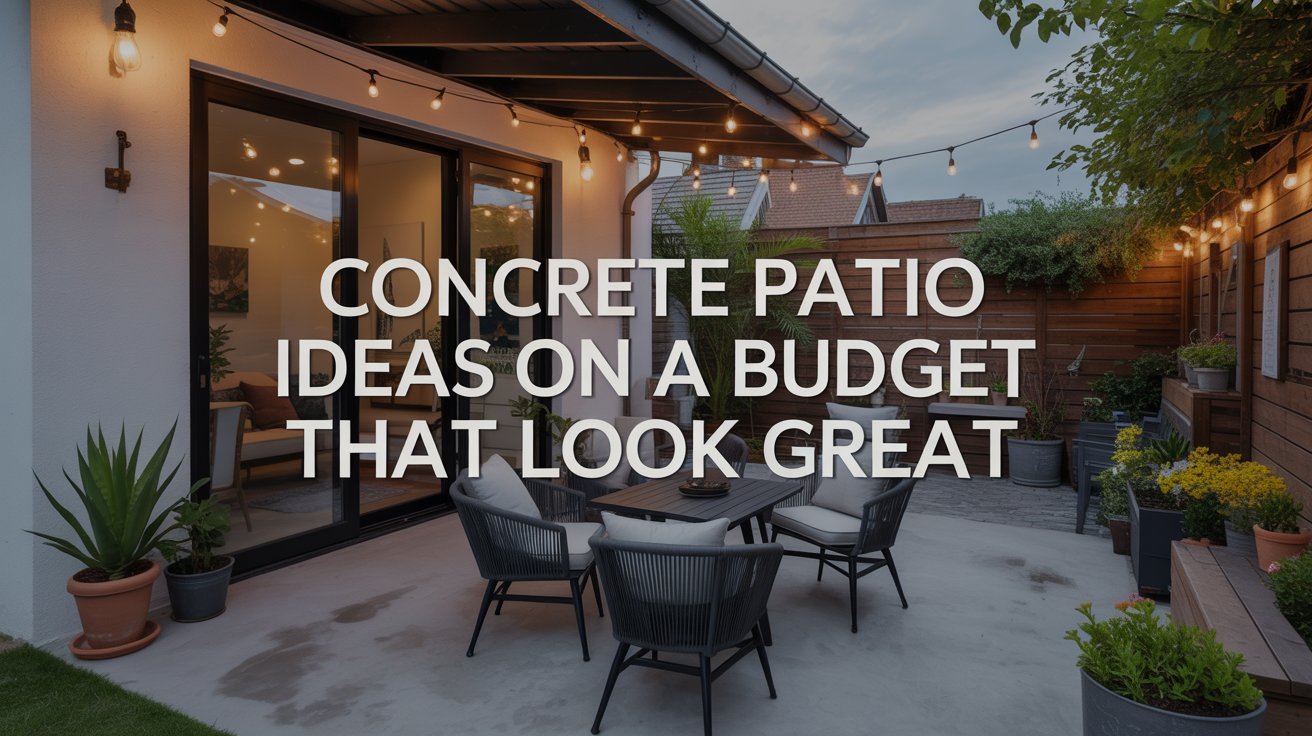
Want to create a beautiful outdoor space but worried about the cost? You’re not alone. Many homeowners think a nice patio means spending thousands of dollars, but that’s not true.
Concrete is one of the best materials for budget-friendly patios. It lasts for decades, works in any climate, and costs less than stone or brick. Plus, you can customize it in many ways without breaking the bank.
In this guide, you’ll find 9 concrete patio ideas on a budget that look great and save you money. We’ll also share tips to cut costs even more while building a patio you’ll love for years. Whether you have $500 or $5,000 to spend, there’s an option that works for you.
Let’s look at how you can create the outdoor space you’ve dreamed about without overspending.
Budget-Friendly Concrete Patio Ideas for Your Outdoor Space
Creating a great patio doesn’t mean you need to spend a fortune. These concrete patio ideas on a budget give you plenty of options to choose from, starting with the most affordable choices first.
1. Broom Finished Concrete Patio
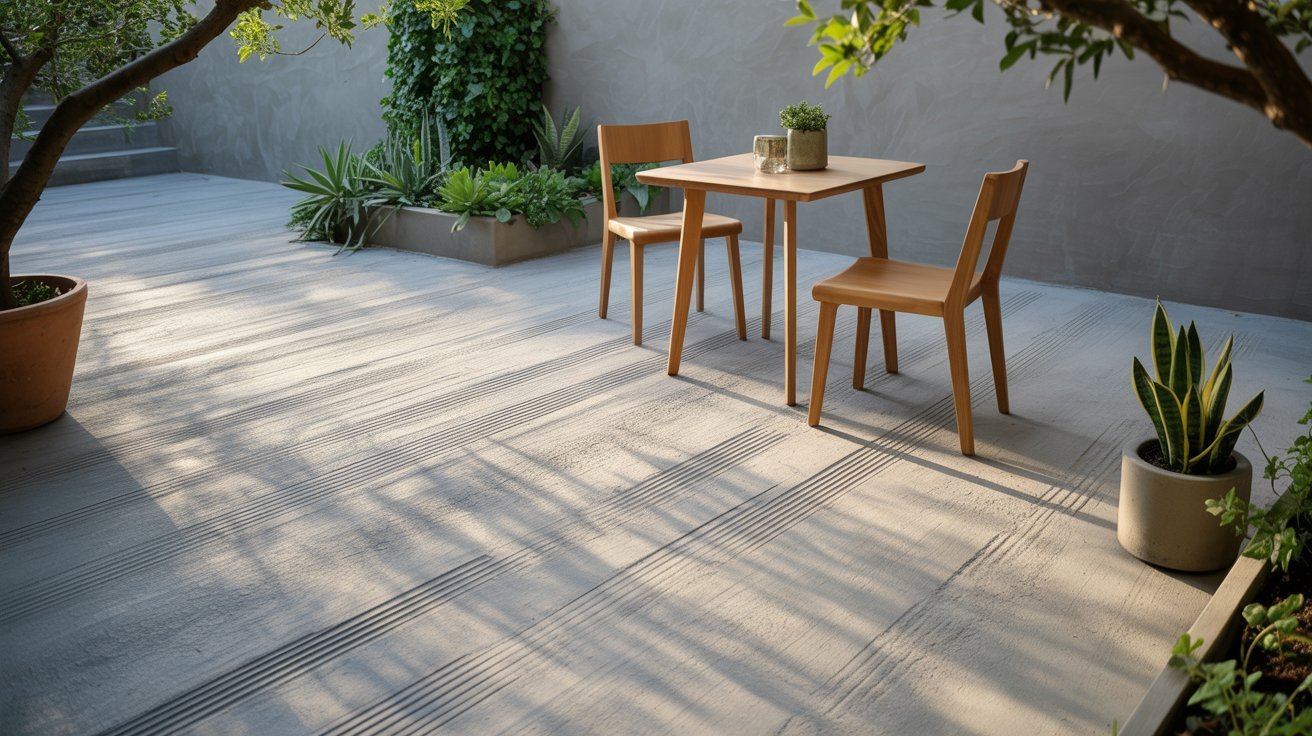
A broom-finished patio is the most affordable concrete option you can get. Workers pour the concrete, then drag a stiff broom across the surface while it’s still wet. This creates texture that prevents slipping and looks clean and simple.
This basic finish costs the least because it needs no special tools or extra materials. You can make it more interesting by adding color to the concrete mix or creating bands of smooth concrete between textured sections.
The simple look fits any home style and works great if you plan to add outdoor furniture and plants later.
2. Exposed Aggregate Finish
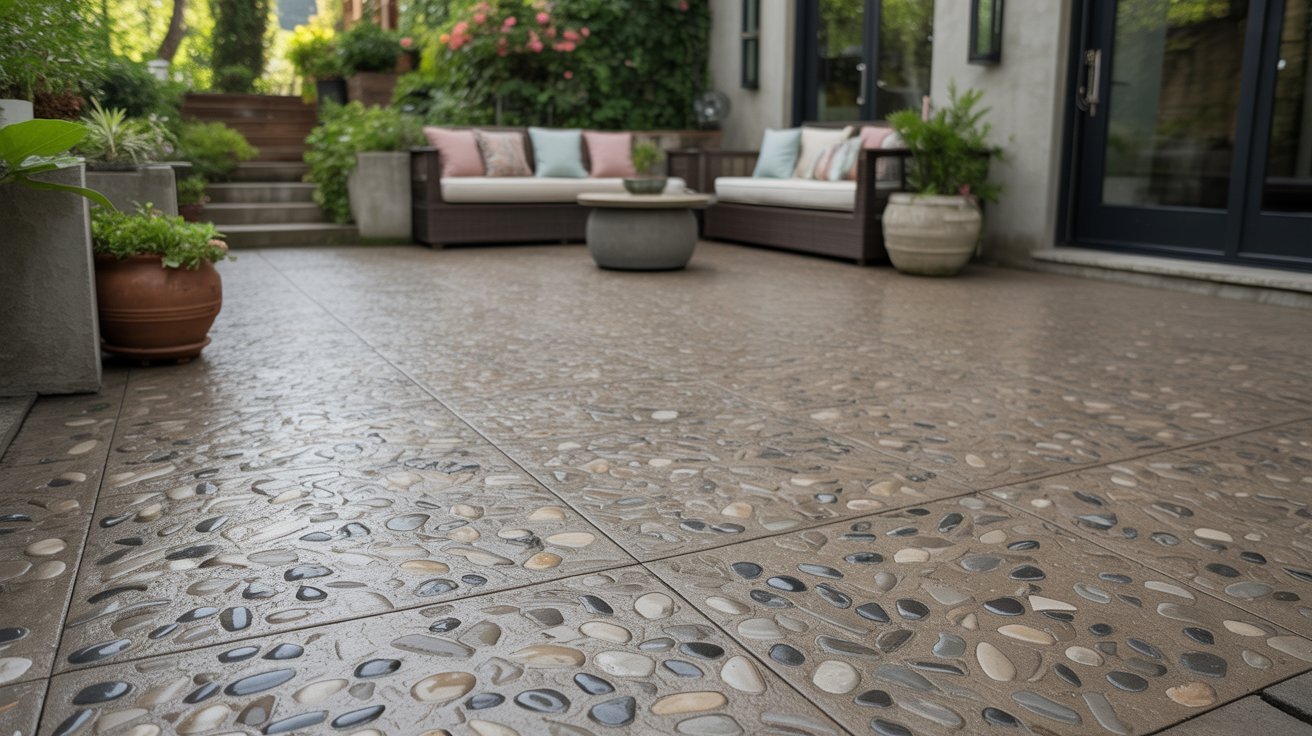
Exposed aggregate gives your patio a unique textured surface at a reasonable price. After pouring the concrete, workers wash away the top layer of cement to show the small stones mixed inside. You can choose different types of stones like river rock, crushed granite, or colorful pebbles.
This finish costs more than basic broom-finished concrete but less than stamped patterns. The textured surface hides stains well and needs very little care over the years.
It also provides good traction when wet, making it safe for families with kids or elderly relatives.
3. Stained Concrete Patio
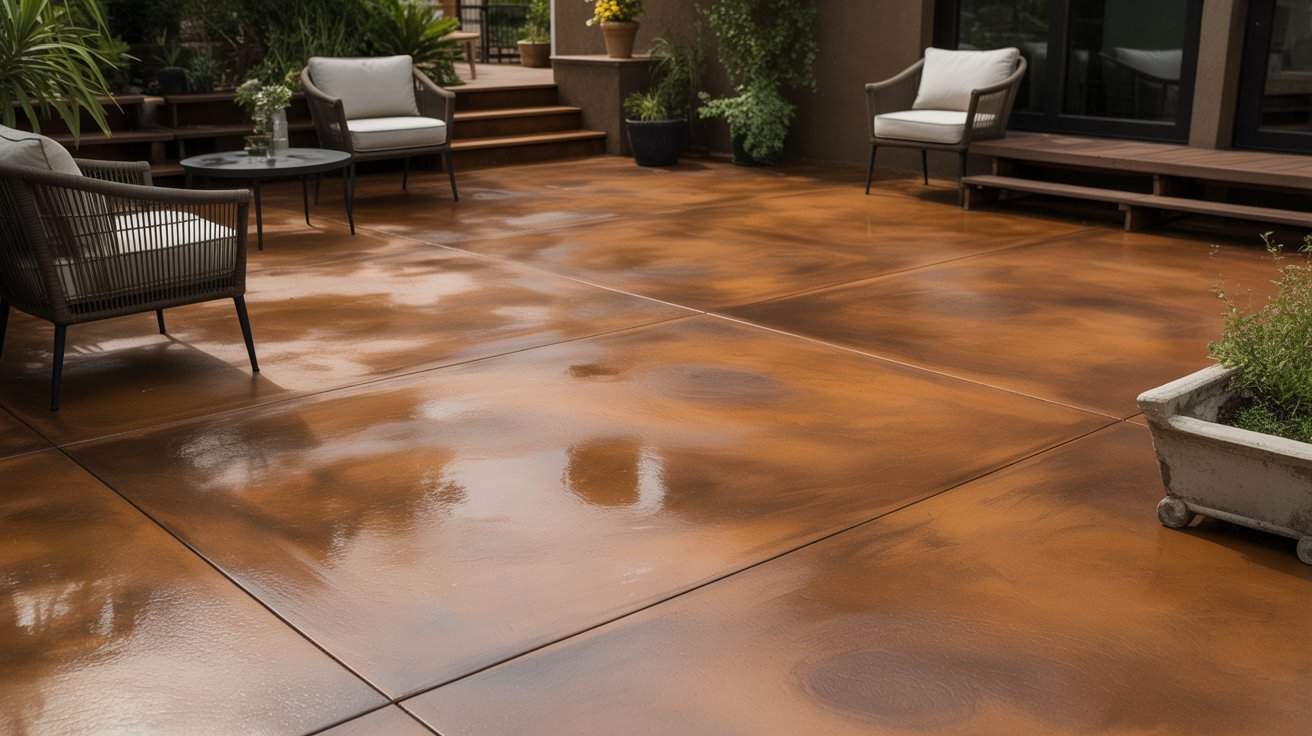
Concrete staining adds rich, natural colors to your patio for much less money than stamped concrete.
The stain soaks into the concrete and creates earthy tones like brown, tan, gray, or red. Using just one color keeps costs down the most.
The color won’t chip off because it becomes part of the concrete itself. Stained concrete resists fading from sunlight and lasts for many years. This option works great for homeowners who want something beyond plain gray concrete but need to stick to a tight budget.
4. Integrally Colored Concrete
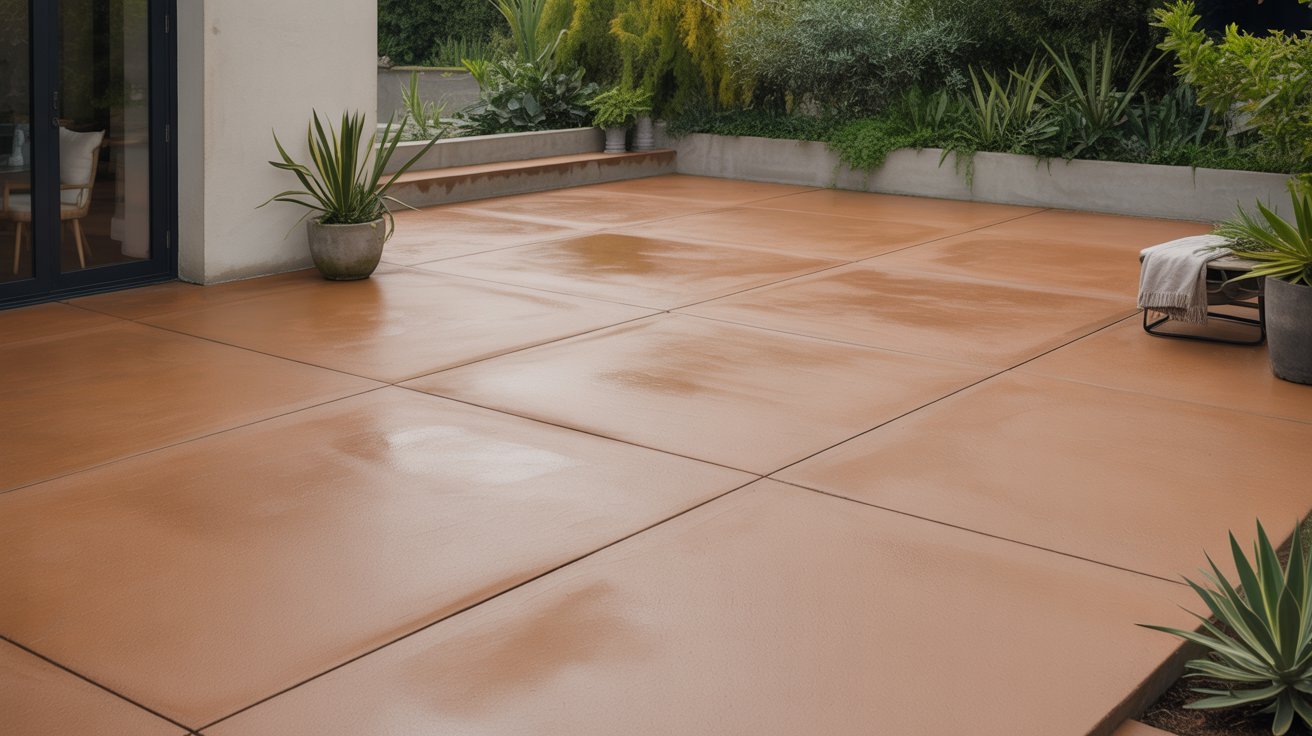
Integral color means the color goes all the way through the concrete slab, not just on top. The color is mixed right into the wet concrete before pouring.
This means if the surface gets scratched or chipped, the color underneath matches.
This method costs less than applying stain or other finishes after the concrete dries. You can pick from dozens of colors, from soft beiges to bold reds.
The color stays consistent and won’t wear off over time, making it a smart choice for concrete patio ideas on a budget.
5. Downsized Patio Design
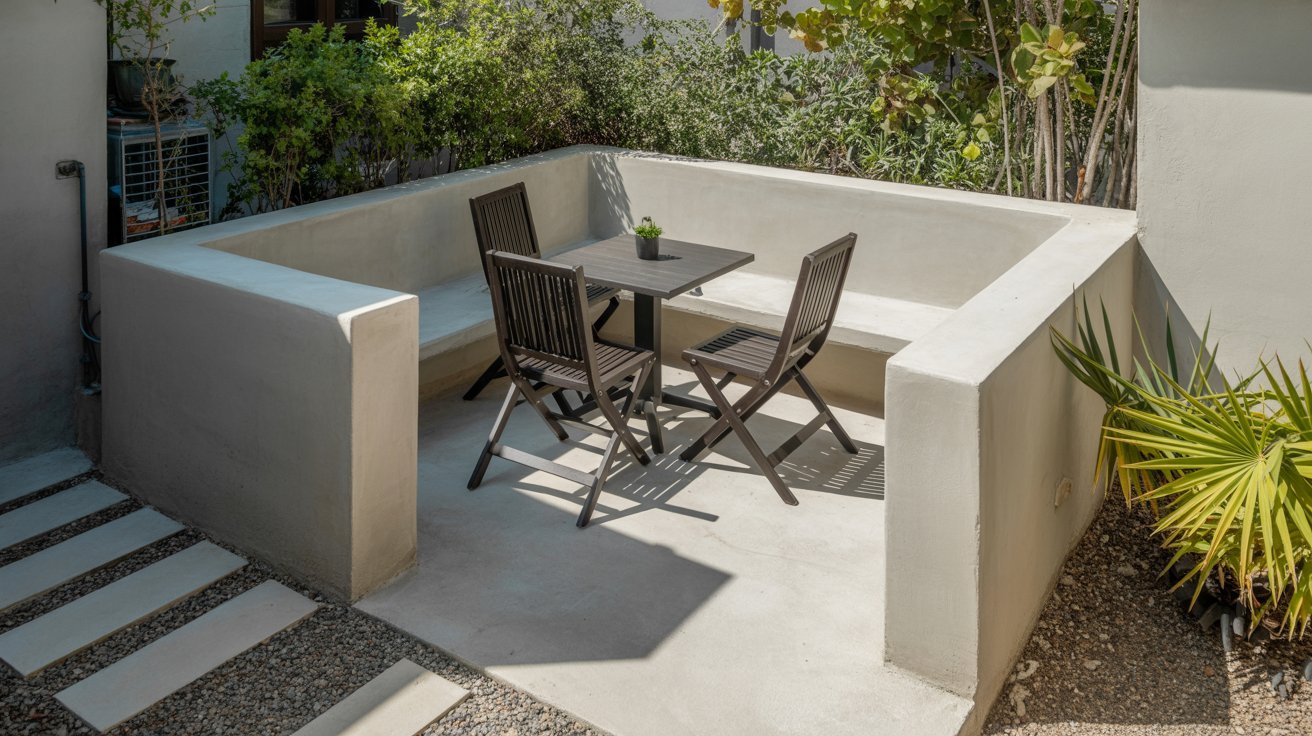
Building a smaller patio is one of the easiest ways to save money. Less square footage means you pay less for materials and labor. A well-designed small patio can still fit a table with chairs or a cozy seating area.
Think about how you’ll actually use the space. Do you need room for large parties, or just a quiet spot for morning coffee?
Place your patio near the house or in a spot that gets afternoon shade. A compact, well-placed patio works better than a huge one in the wrong location.
6. Resurfaced or Overlayed Concrete
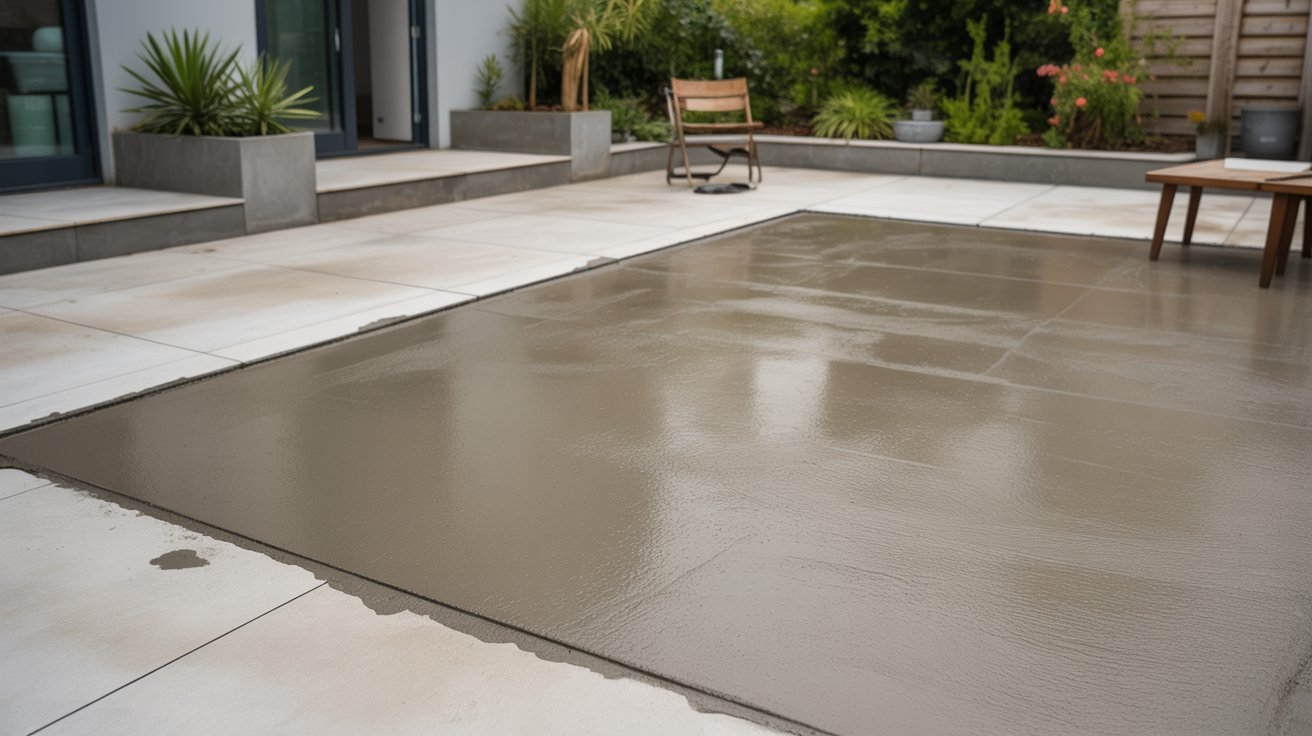
If you already have an old concrete patio with cracks or stains, resurfacing costs much less than tearing it out and starting over.
Contractors apply a thin layer of new concrete over the existing slab. This new layer can be colored, textured, or stamped.
Resurfacing works on patios that are still structurally sound but look worn out. The overlay bonds to the old concrete and gives you a fresh, new surface. You get the look of a brand new patio for a fraction of the price.
7. Concrete Pavers with Grass Grid Pattern
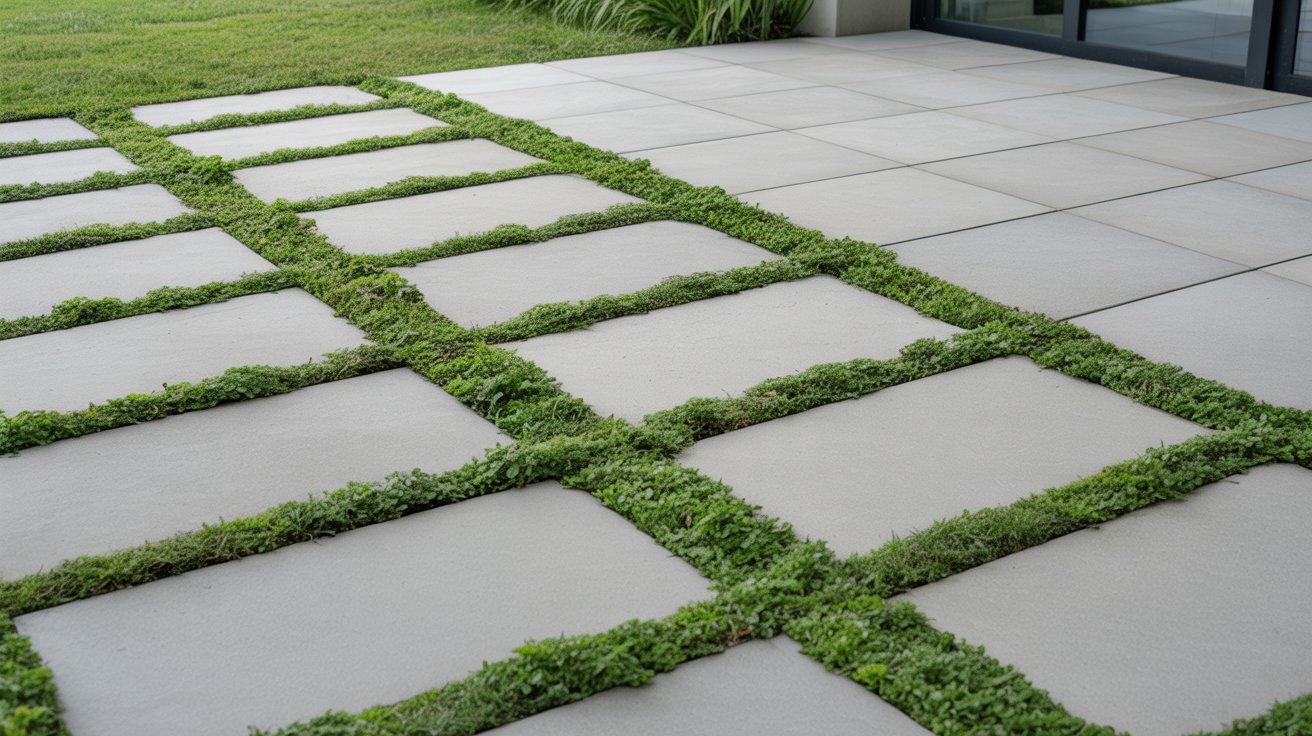
Breaking up solid concrete with strips of grass creates visual interest and cuts down on materials.
You pour concrete in a grid pattern, leaving spaces for grass or ground cover to grow between the pavers. This design uses less concrete overall, which saves money.
The grass softens the look and helps with drainage. This style works especially well for modern or casual outdoor spaces.
You can adjust the size and spacing of the concrete sections to fit your budget and design preferences.
8. DIY Stenciled Concrete Patio
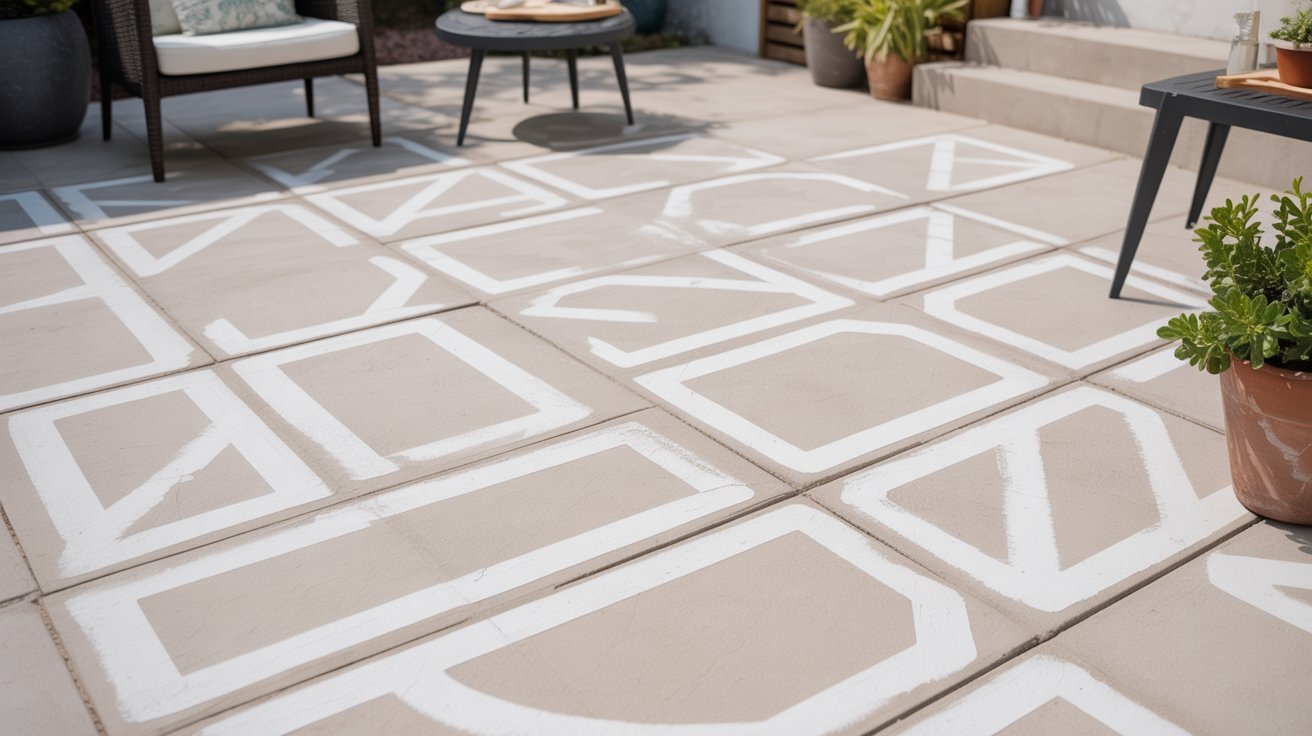
If you’re handy and have a weekend free, stenciling plain concrete creates dramatic results for very little money.
You can buy stencils online or at hardware stores, then use concrete paint to create patterns. Popular designs include tile patterns, geometric shapes, or medallions.
This project needs just paint, stencils, tape, and brushes. The materials cost under $100 for most patios.
Take your time with prep work and painting to get clean, professional-looking lines. This is one of the best concrete patio ideas on a budget for DIY lovers.
9. Simple Stamped Border or Accent
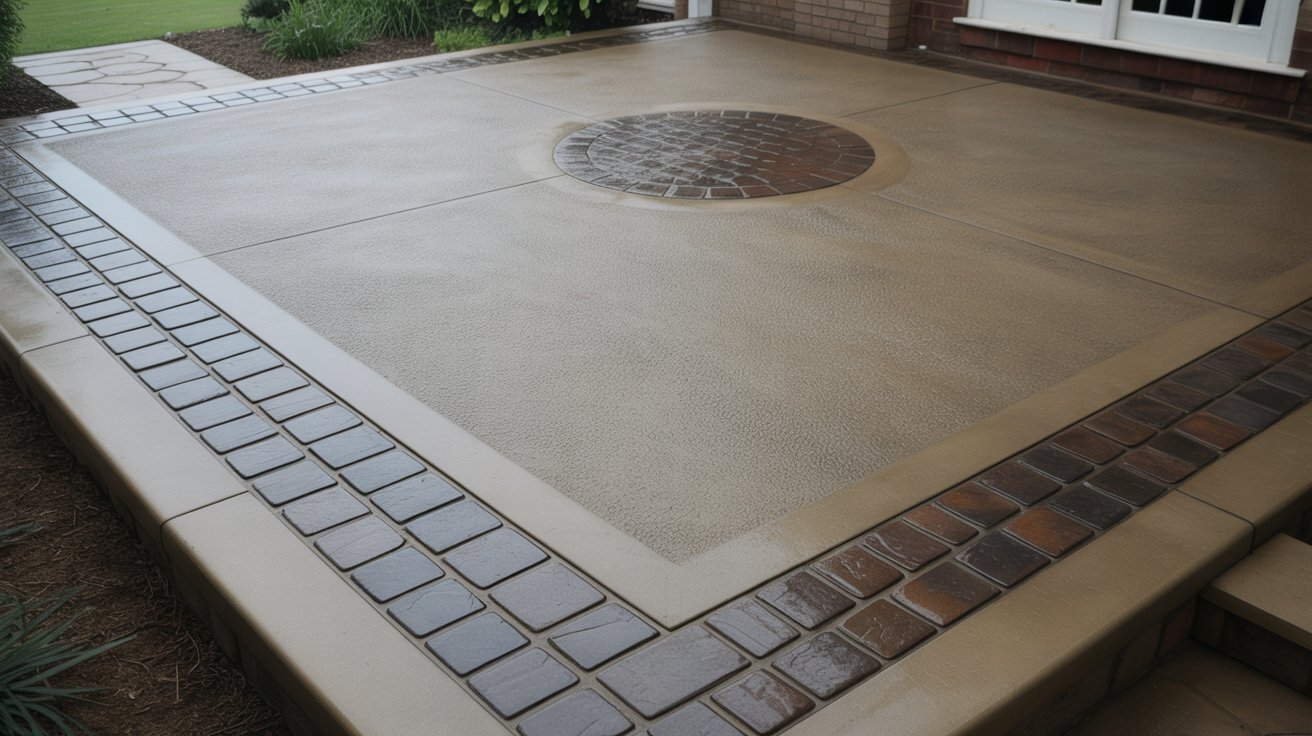
Full patio stamping costs a lot, but you can get a high-end look by stamping just the borders or a small accent area. Keep the main patio area in a basic finish like broom texture, then add stamped details around the edges or in one focal spot.
This gives you the decorative element you want without the high cost of stamping every square foot.
Popular choices include a stamped border that looks like cobblestone or a circular stamped area in the center of the patio. The contrast between plain and decorative sections actually makes both areas stand out more.
Smart Money Saving Tips for Your Concrete Patio Project
Beyond choosing affordable finishes, several strategies can cut your project costs even more. Small decisions add up to big savings when you plan carefully.
- Schedule your patio installation in fall or winter when contractors have fewer projects and may offer discounts.
- Keep your concrete slab at 4 inches thick, which is the standard minimum for a patio.
- Stick to one or two colors instead of complex color schemes that increase labor time.
- Consider doing simple projects yourself if you have basic construction skills and tools.
- Get quotes from at least three contractors and check their references before deciding.
- Choose one decorative treatment instead of combining multiple finishes.
- Measure your furniture before building to make sure you create the right size patio.
Remember that the cheapest option isn’t always the best value. Focus on finding the right balance between cost and quality. A slightly more expensive finish that lasts longer often saves money over time compared to the absolute cheapest option that needs repairs quickly.
Conclusion
You don’t need a huge budget to create a beautiful concrete patio. From basic broom finishes to creative stenciling, these concrete patio ideas on a budget prove that great outdoor spaces come in all price ranges.
The key is picking options that match both your budget and your style. Think about how you’ll use the space and what matters most to you. Maybe you want a low-maintenance surface, or perhaps color is important to create the right mood.
Good planning makes all the difference. Take time to compare options, get multiple quotes, and consider timing your project for the best deals. With smart choices, you’ll build a patio that looks great and lasts for decades.
Ready to start? Pick your favorite idea from this list and begin planning your patio project today.
Frequently Asked Questions
Can You Install a Concrete Patio Yourself?
Simple, small patios can be DIY projects if you have basic construction skills and the right tools. However, most homeowners hire professionals for proper site preparation, grading, and finishing. Mistakes with concrete are expensive to fix.
How Long Does a Concrete Patio Last?
A well-built concrete patio lasts 25 to 50 years or longer with proper maintenance. Factors like climate, soil conditions, and regular sealing affect lifespan. Resealing every 2 to 3 years protects the surface from damage.
What’s the Best Time of Year to Install a Concrete Patio?
Late spring through early fall offers ideal weather for concrete curing. However, installing during the fall or winter often gets you contractor discounts due to lower demand. Just avoid freezing temperatures during installation and curing.
Do Concrete Patios Add Value to Your Home?
Yes, concrete patios typically return 30 to 60 percent of their cost in home value. They improve curb appeal and create a usable outdoor living space that buyers want. Well-maintained patios are selling points for most homes.
How Do You Maintain a Concrete Patio?
Sweep regularly and wash with mild soap and water as needed. Reseal the surface every 2 to 3 years to protect against stains and weather damage. Fix small cracks promptly to prevent them from growing larger over time.
Leave a Reply