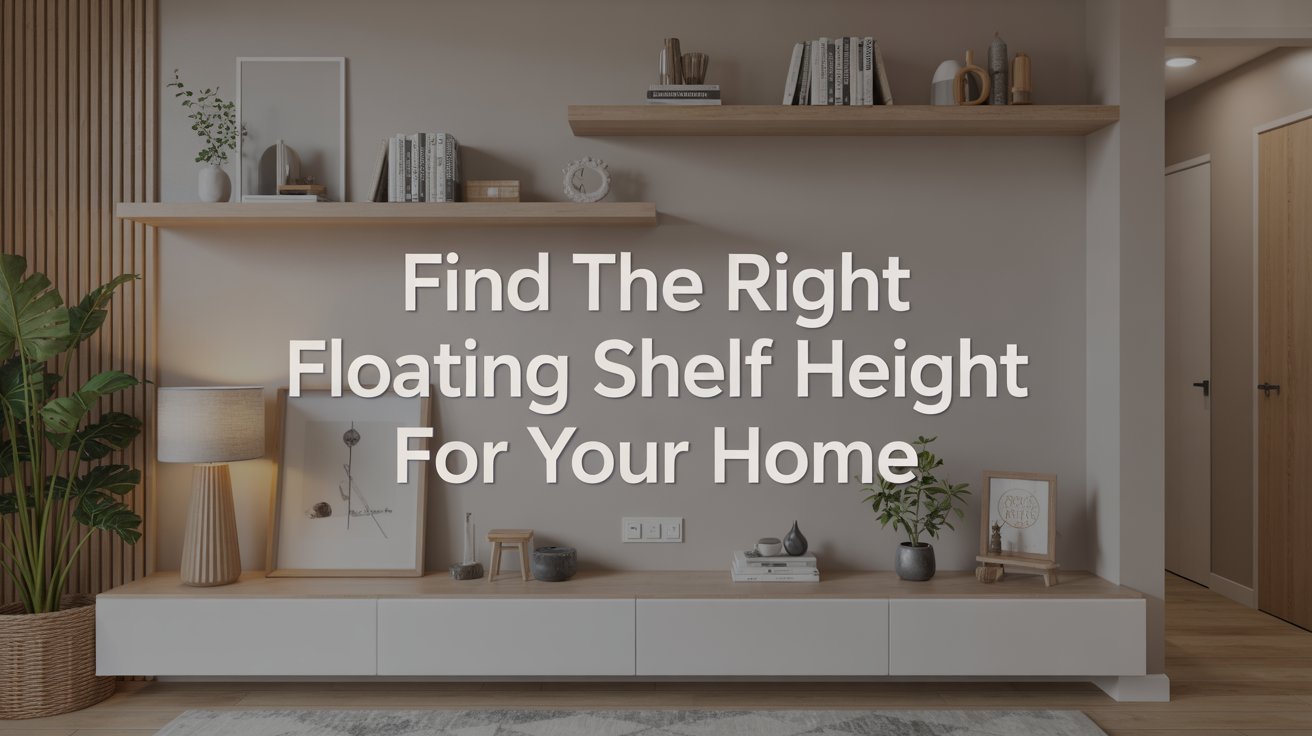
Getting your shelves at the right height can make or break a room’s look and usefulness. Too high, and you can’t reach your items. Too low, and they get in the way or look awkward.
The proper floating shelf height depends on which room you’re working with and what you plan to store or display. Each space in your home has different needs.
In this guide, you’ll learn the exact measurements for every room, from kitchens to bathrooms. We’ll cover standard rules and special cases so you can hang your shelves with confidence. Let’s start with the most common rooms in your home.
Ideal Floating Shelf Height by Room
The best placement changes based on where you’re installing your shelves and how you’ll use them. Here are specific guidelines for each room.
Kitchen Floating Shelf Height

Place shelves 18 to 24 inches above your countertop if you’re mounting them in a work area. This height lets you grab plates, cups, and cooking supplies without stretching or straining. The space also gives you room to use small appliances on the counter below.
For general kitchen wall placement away from counters, aim for 4 to 4.5 feet from the floor. This floating shelf height works well for storing items you don’t use every day but still want within easy reach. Make sure you can see what’s on the shelf without standing on your toes.
Living Room Floating Shelf Height
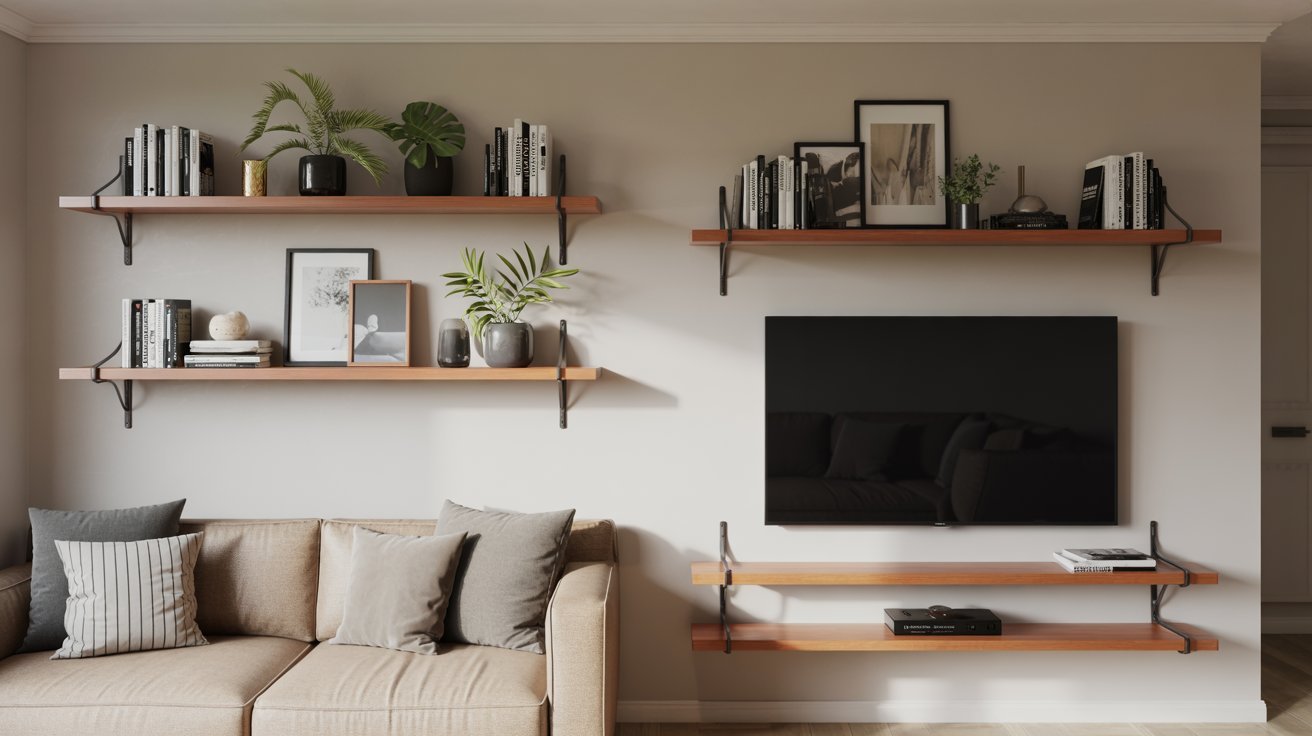
If you’re hanging a shelf above your couch, leave about 10 inches between the back of the sofa and the bottom of the shelf.
This creates enough space for people to sit comfortably without bumping their heads. It also gives you room to add decor that won’t feel cramped.
Above your TV, the right height depends on your screen size and where you like to look while watching.
Generally, place shelves at least 6 to 8 inches above the TV to avoid blocking the screen. For other living room walls without furniture below, the standard 4 to 4.5 feet from the floor works perfectly for displaying books, plants, or photos.
Bedroom Floating Shelf Height (Above Bed)
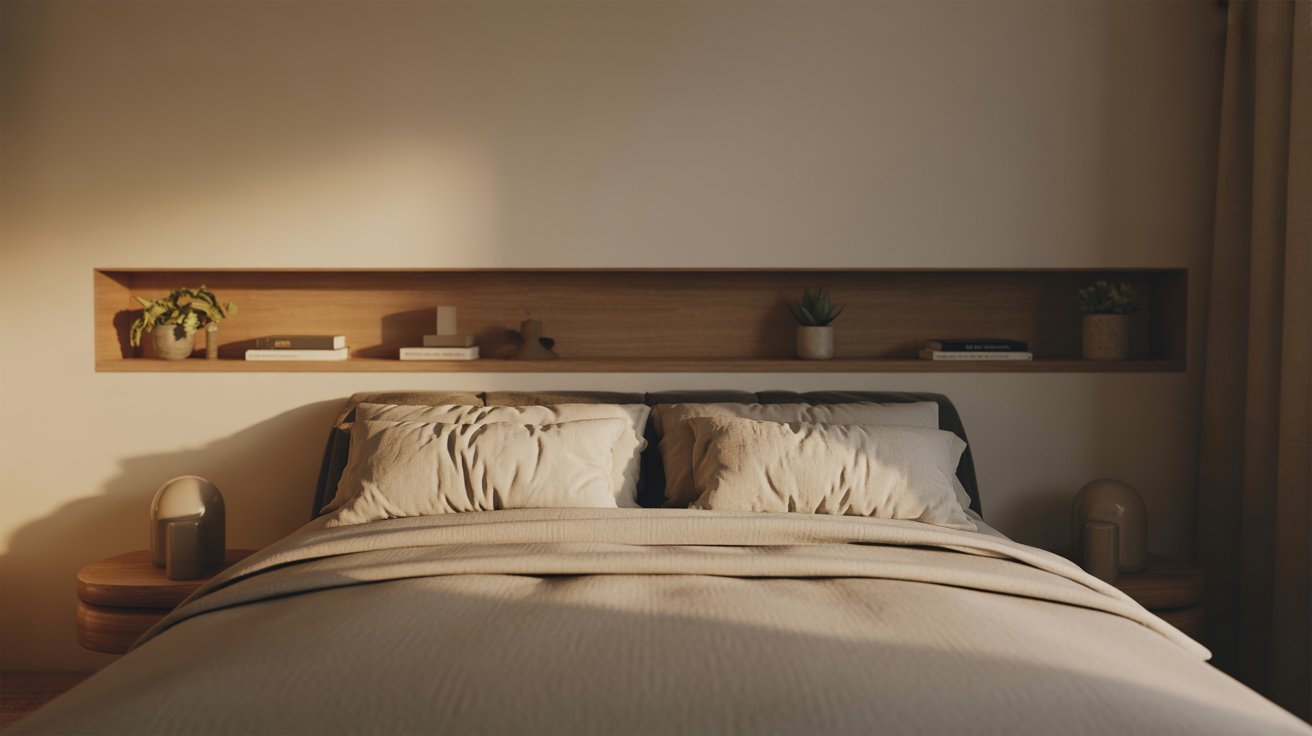
Mount bedroom shelves 8 to 12 inches above your headboard for the best look and function. This gives you space to add a lamp, phone, or small decor items without them feeling too far away.
Think about what you’ll put on the shelf before you drill. If you want just decor, you can go higher.
If you need to reach items like your phone charger or a book, stay on the lower end. Also, make sure there’s enough clearance when you sit up in bed so you don’t hit your head.
Bathroom Floating Shelf Height

Place shelves 2 feet (24 inches) above your toilet tank for the most common bathroom setup. This height keeps items easy to grab while looking balanced in the space. You can store extra toilet paper, towels, or small decor pieces here.
Near your mirror or above the vanity, consider 4 to 6 inches above the sink if you need quick access to everyday items like toothbrushes or soap.
Make sure the shelf doesn’t block your mirror view. If you have a towel bar, leave at least 50 inches from the floor to that bar and place shelves accordingly to avoid a cluttered look.
General Floating Shelf Height Guidelines
The most common rule for floating shelf height is the eye level standard, which sits between 4 and 5 feet from the floor. This measurement works for most people because it puts items at a natural viewing and reaching height.
Why does this work so well? Most adults can see and access this height without effort.
Key points to remember:
- The 4 to 5 foot range works in most rooms with standard 8 to 9 foot ceilings
- For rooms with higher ceilings (10 feet or more), you can go up to 5.5 feet
- For lower ceilings (7 feet or less), stick closer to 4 feet
- In hallways, place shelves 5 to 6 feet high since people walk under them
Always check your ceiling height before finalizing your measurements. Taller rooms need higher shelves to look proportional, while shorter rooms need lower placement to avoid making the space feel cramped.
Vertical Spacing Between Multiple Floating Shelves
When you hang multiple shelves on the same wall, spacing matters just as much as the height of each shelf. The right distance keeps things looking good and working well.
Standard Spacing Recommendations
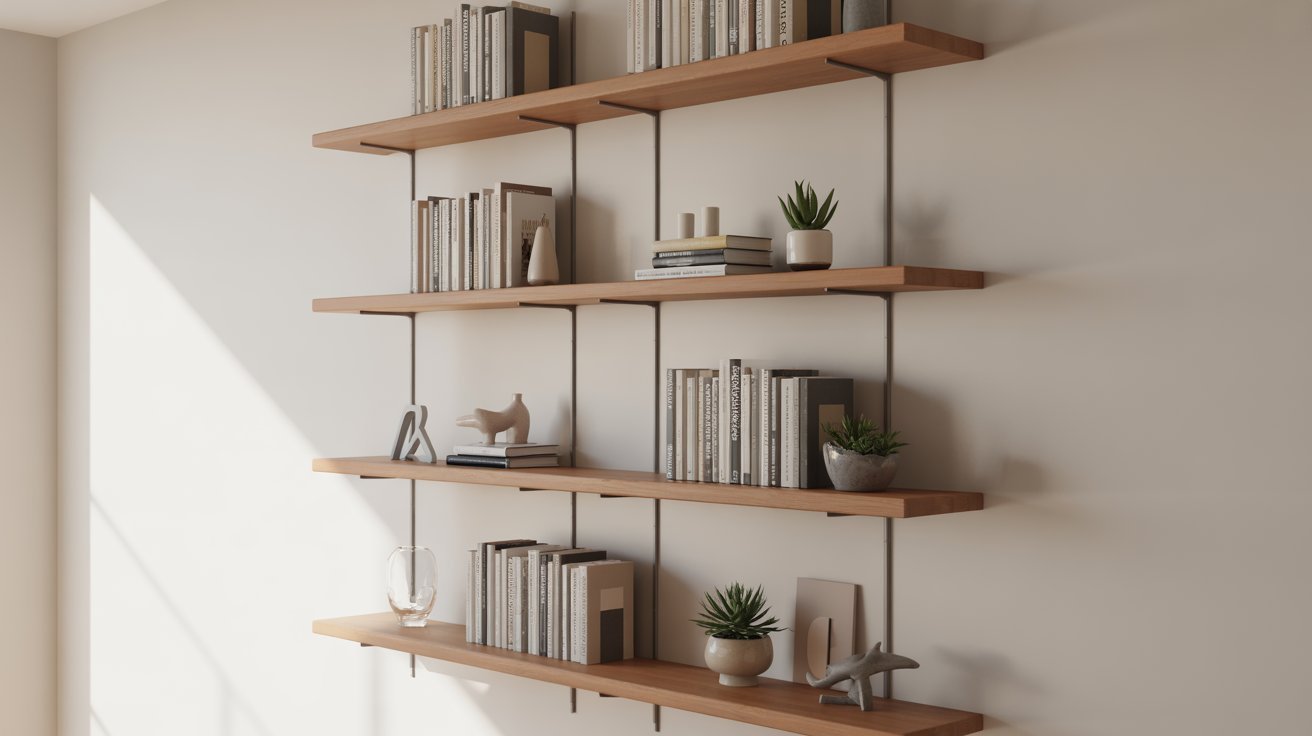
Keep at least 12 inches between each shelf as a minimum. This gives you enough room for most books, small plants, and common household items. Going less than 12 inches makes the wall look crowded and limits what you can display.
A range of 8 to 16 inches works for most situations, depending on what you’re storing. Measure your tallest items first, then add 2 to 3 inches for easy access. This extra space prevents you from having to squeeze items onto shelves or struggle to pull them down.
Room Specific Spacing

Kitchen shelves need more space because you store larger items like mixing bowls, pitchers, and appliance parts. Aim for 15 to 21 inches between kitchen shelves to fit these bigger pieces comfortably.
Living room display shelves can be closer together at 12 to 16 inches since you’re usually showing off smaller decor items.
If your shelves are purely for looks rather than heavy storage, you can go with tighter spacing. For functional storage where you grab items often, use wider spacing so things don’t feel packed in.
Additional Height Guidelines for Specific Situations
Some spots in your home need special floating shelf height rules. Here’s what to know for less common but still important placements.
Consider these specific situations:
- Above a desk: Place shelves 22 to 24 inches above the desk surface for supplies you use while working
- In entryways: Mount at 5 feet from the floor for keys, mail, and small items you need when leaving
- Corner shelves: Follow the same room rules, but account for sightlines from multiple angles
- With furniture below: Always measure from the furniture top, not the floor, and add buffer space
Each of these situations requires thinking about how you move through the space and what you’ll store. The goal is to make items easy to reach without creating obstacles in your daily routine.
Tips for Hanging Floating Shelves at the Right Height
Getting your measurements right the first time saves you from extra holes in your wall. Follow these tips for perfect placement every time.
Start by measuring your furniture dimensions if you’re hanging shelves above or near other pieces. Use those numbers as your starting point rather than guessing.
Important steps include:
- Download a level app on your phone or use a physical level tool for straight mounting
- Think about what items you’ll display and measure those first
- Leave clearance space where people walk by or sit nearby (at least 2 to 3 inches)
- Find your wall studs with a stud finder (they’re usually 16 inches apart)
- Mark your desired height with painter’s tape and live with it for a day to test
- Measure the height of decor items to ensure they fit with enough breathing room
- Double-check all measurements before drilling any holes
Testing with tape helps you see if the height feels right in real life, not just on paper. You can adjust the tape up or down until it looks perfect for your space and needs.
Conclusion
Choosing the right floating shelf height doesn’t have to be complicated. Each room has its own sweet spot, but these are flexible starting points, not strict rules.
Feel free to adjust based on your height, what you’re storing, and your room layout. A person who’s 5 feet tall will want different measurements than someone who’s 6 feet tall.
Remember the old saying: measure twice, drill once. Taking extra time to plan prevents mistakes and wasted effort. Use the guidelines in this post as your foundation, then customize them to fit your life and style.
Frequently Asked Questions
How Do You Determine the Best Height for a Floating Shelf?
Start with the eye level rule of 4 to 5 feet from the floor. Then adjust based on the room type, ceiling height, and what you plan to store or display on the shelf.
Can Floating Shelves Be Hung at Different Heights in the Same Room?
Yes, varying shelf heights can create visual interest and serve different purposes. Just make sure the overall look feels balanced and each shelf has a clear reason for its placement.
What Tools Do You Need to Hang Floating Shelves at the Correct Height?
You’ll need a measuring tape, a level tool or app, a stud finder, a pencil for marking, a drill, and painter’s tape for testing placement before making permanent holes.
Should Floating Shelf Height Change Based on Ceiling Height?
Yes, rooms with higher ceilings (10+ feet) can handle shelves at 5.5 feet, while lower ceilings (7 feet or less) need shelves closer to 4 feet for good proportions.
How Much Weight Can a Floating Shelf Hold at Different Heights?
Weight capacity depends on mounting method and stud placement, not height. Shelves anchored into studs hold 25 to 50 pounds per stud, regardless of how high you mount them.
Leave a Reply