Category: Blog

Your blog category

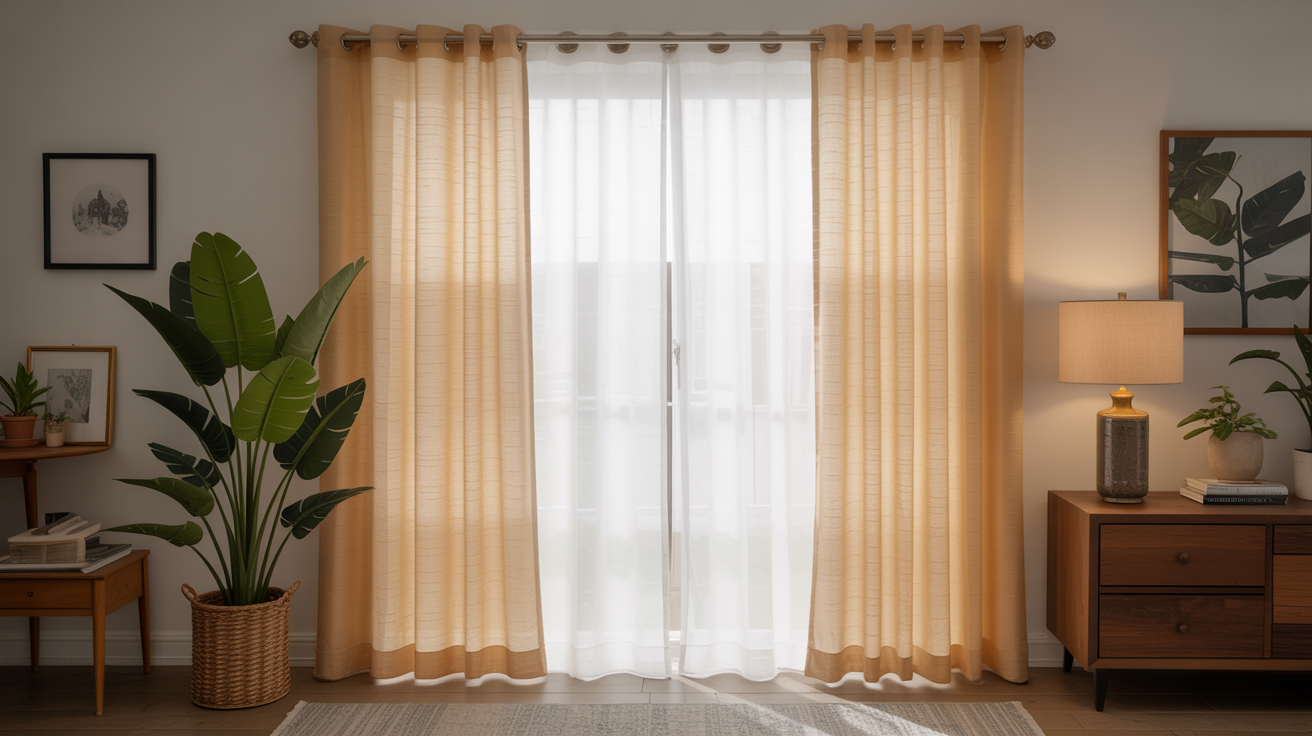
  • What Color Curtains Go With Beige Walls? 7 Beautiful Picks

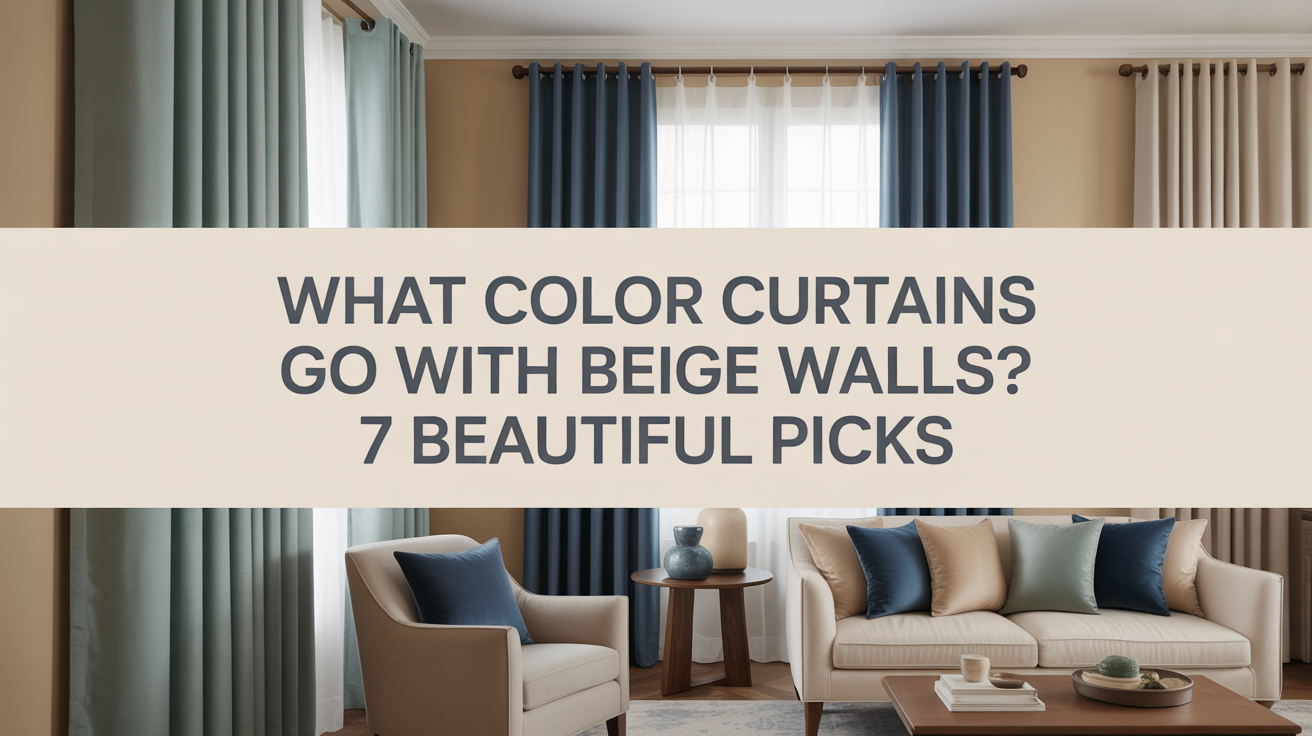
    What Color Curtains Go With Beige Walls? 7 Beautiful Picks

    Beige walls are everywhere, but finding the right curtains can feel impossible. You stand in the store, holding fabric samples, wondering if you’re about to make a huge mistake. I’ve been there too many times.

    This guide shows you 7 curtain colors that actually work with beige walls. No guessing. No expensive mistakes. You’ll see real color combinations that interior designers use, plus simple tips to match your room’s style. If your beige leans warm or cool, there’s a perfect option here.

    I’ve spent years testing color combinations in real homes, not just design studios. This isn’t a theory from someone. 

    You’ll get honest advice based on what actually looks good in everyday spaces. By the end, you’ll know exactly which curtains to buy and why they work. Your beige walls are about to look intentional instead of boring.

    Why Beige Walls Are So Popular?
    Why Beige Walls Are So Popular?

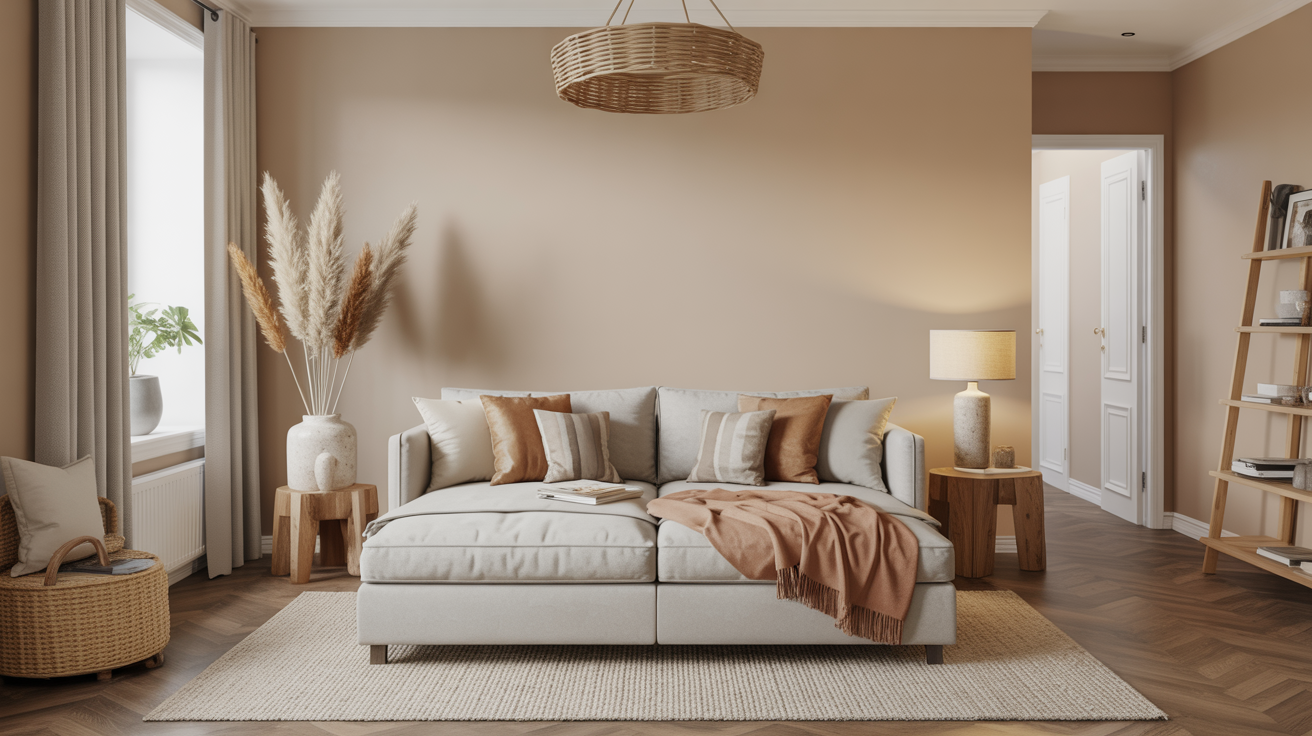
    Beige is a chameleon. It works in modern lofts, traditional homes, rustic cabins, and minimalist spaces. But here’s the secret: those warm undertones. Your beige might lean yellow, pink, or tan. Yellow-beige loves earthy greens. Pink-beige pairs with soft blues. Tan-beige welcomes browns and whites.

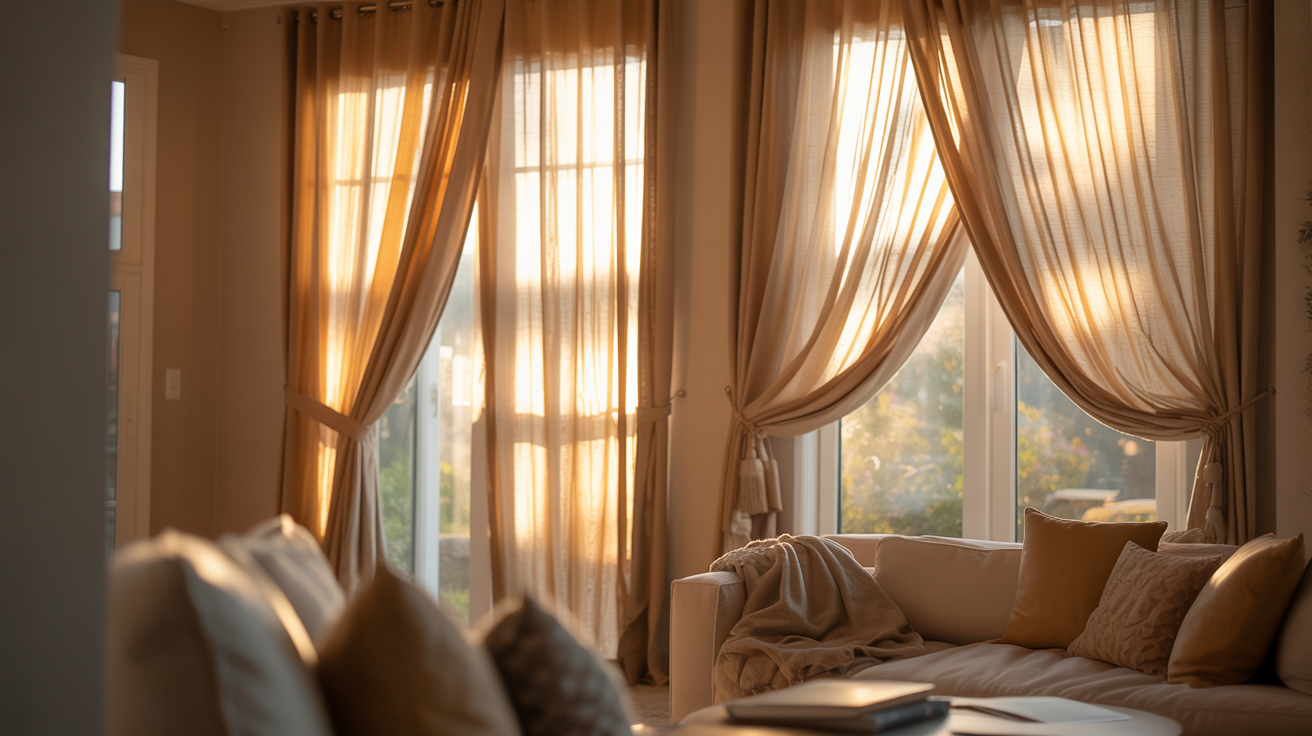
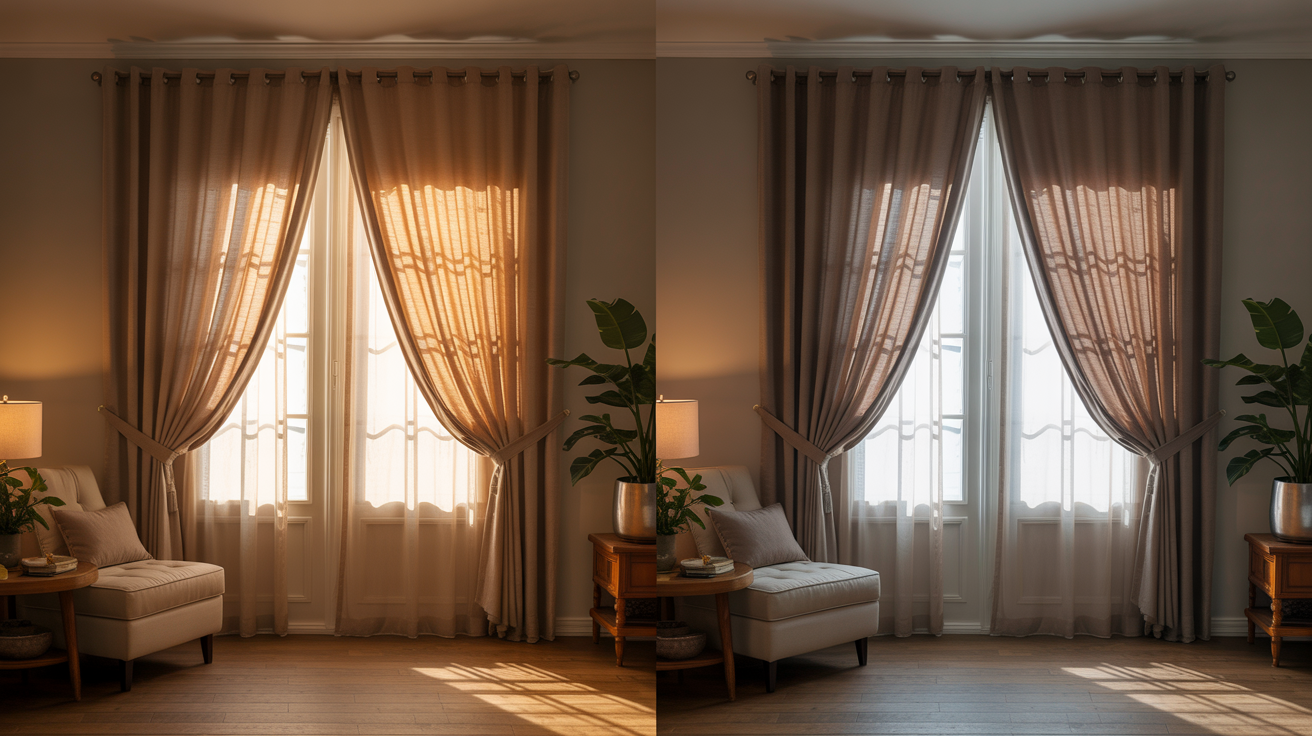
    Now, lighting changes everything. Natural sunlight makes beige glow warmer. LED bulbs can make it look cooler, even gray. Check your walls in morning light and evening light before choosing curtains.

    How Beige Interacts with Other Design Elements?
    How Beige Interacts with Other Design Elements?

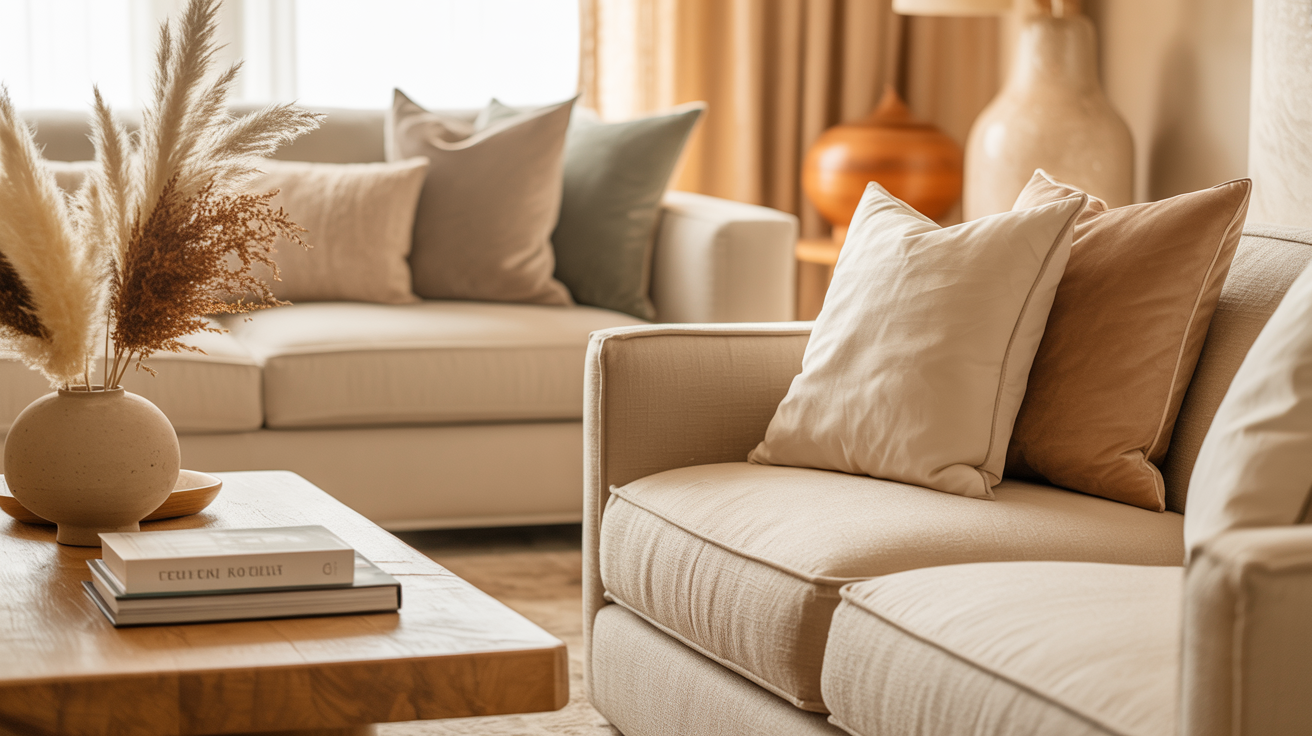
    Beige doesn’t pick sides. It works with warm tones like terracotta. It also works with cool tones like navy. This gives you freedom.

    Your beige walls already work with:

    • Wood furniture (oak, walnut, pine)
    • Area rugs in any pattern
    • Hardwood or tile flooring
    • Upholstered pieces

    Your curtains have two jobs. They can blend in for serenity. Or they can contrast for personality. Neither is wrong. It’s about the mood you want.

    How to Choose the Right Curtain Color for Beige Walls?

    Choosing curtains shouldn’t feel overwhelming. I’ve broken it down into three simple steps. Follow these, and you’ll find the perfect match.

    Step 1: Identify the Undertone of Your Beige
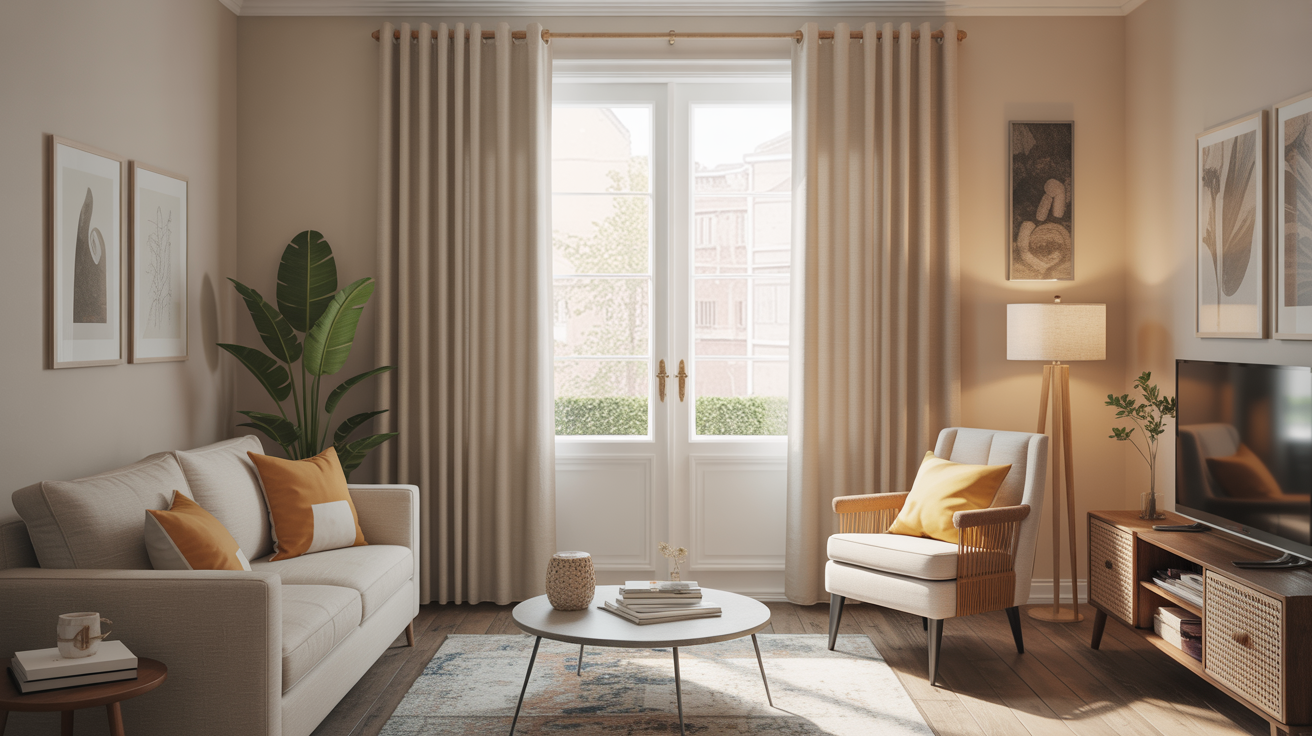
    Step 1: Identify the Undertone of Your Beige

    Your beige has a hidden personality. Find it first. Hold a white piece of paper next to your wall. Does your beige look yellow? Tan? Gray? Pink? That undertone is your guide.

    • Warm Beige: Pair with cool or deep tones like blue, green, or charcoal
    • Cool Beige: Pair with warm accents like gold, terracotta, or taupe

    This contrast creates balance. Warm walls with cool curtains. Cool walls with warm curtains. It’s that simple.

    Step 2: Consider Room Size and Lighting
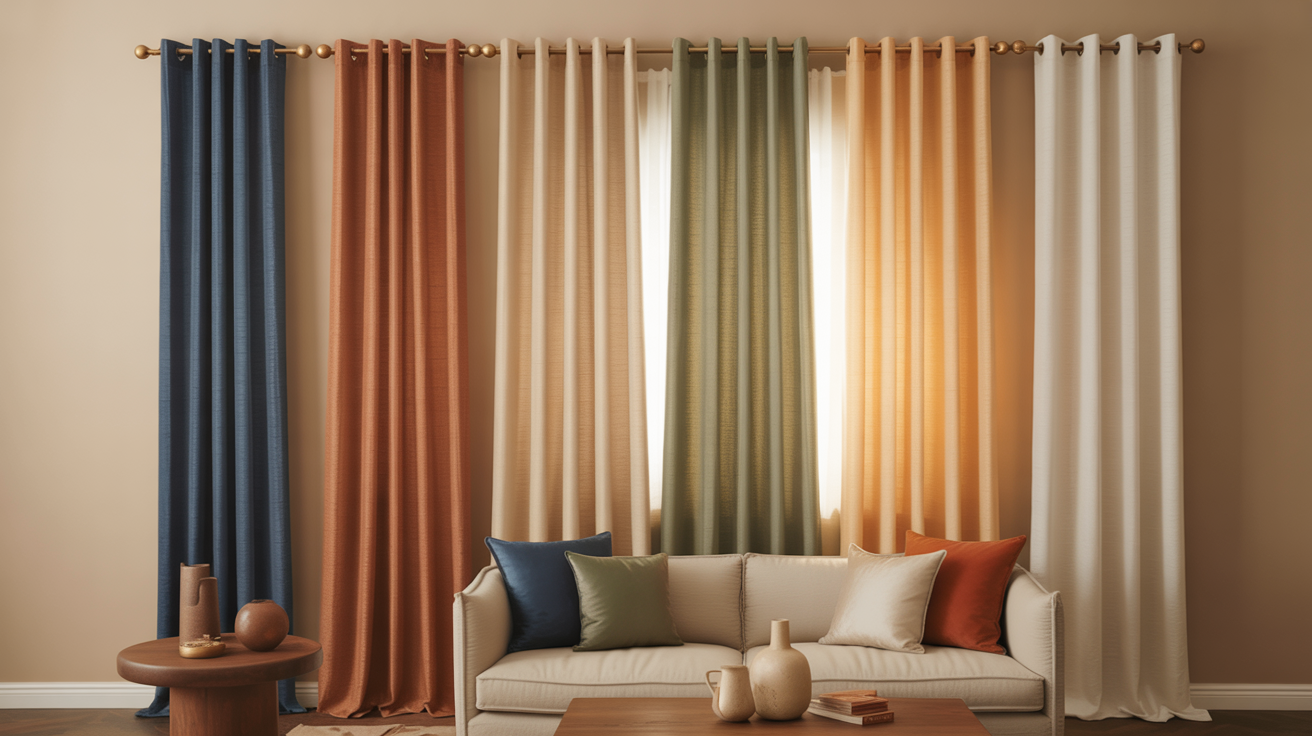
    Step 2: Consider Room Size and Lighting

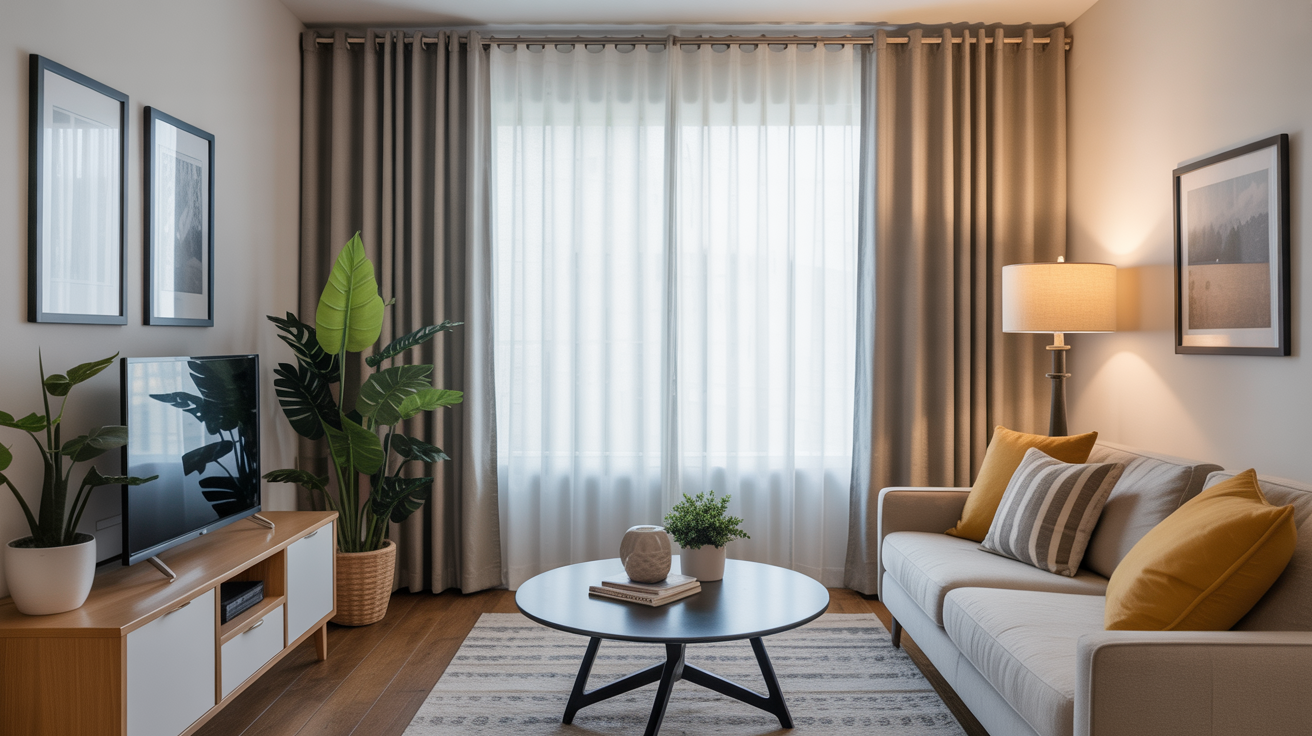
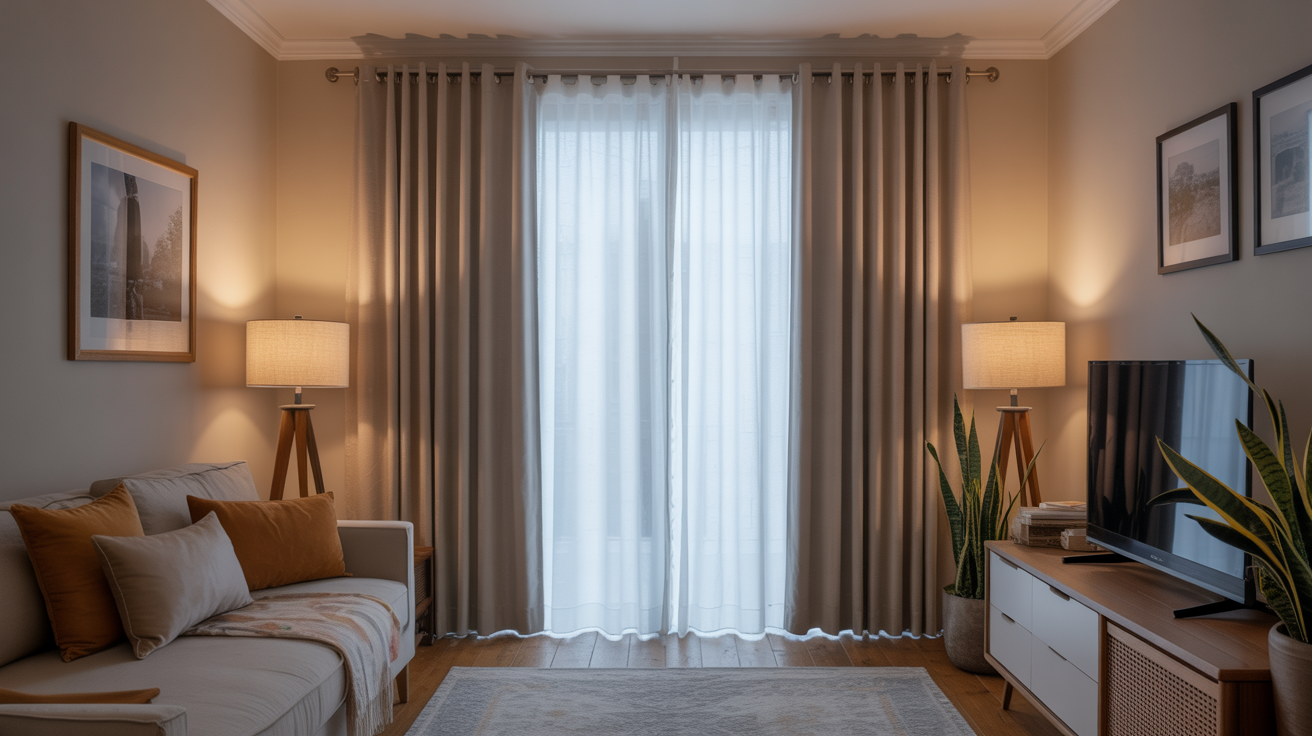
    Size matters. So does light. Lighter curtains (ivory, cream) make small spaces feel bigger. They reflect light. Darker curtains (navy, charcoal) add coziness in large rooms. They create boundaries.

    • Daylight makes beige glow warmer and richer
    • Artificial light can mute beige, making it look flat or gray
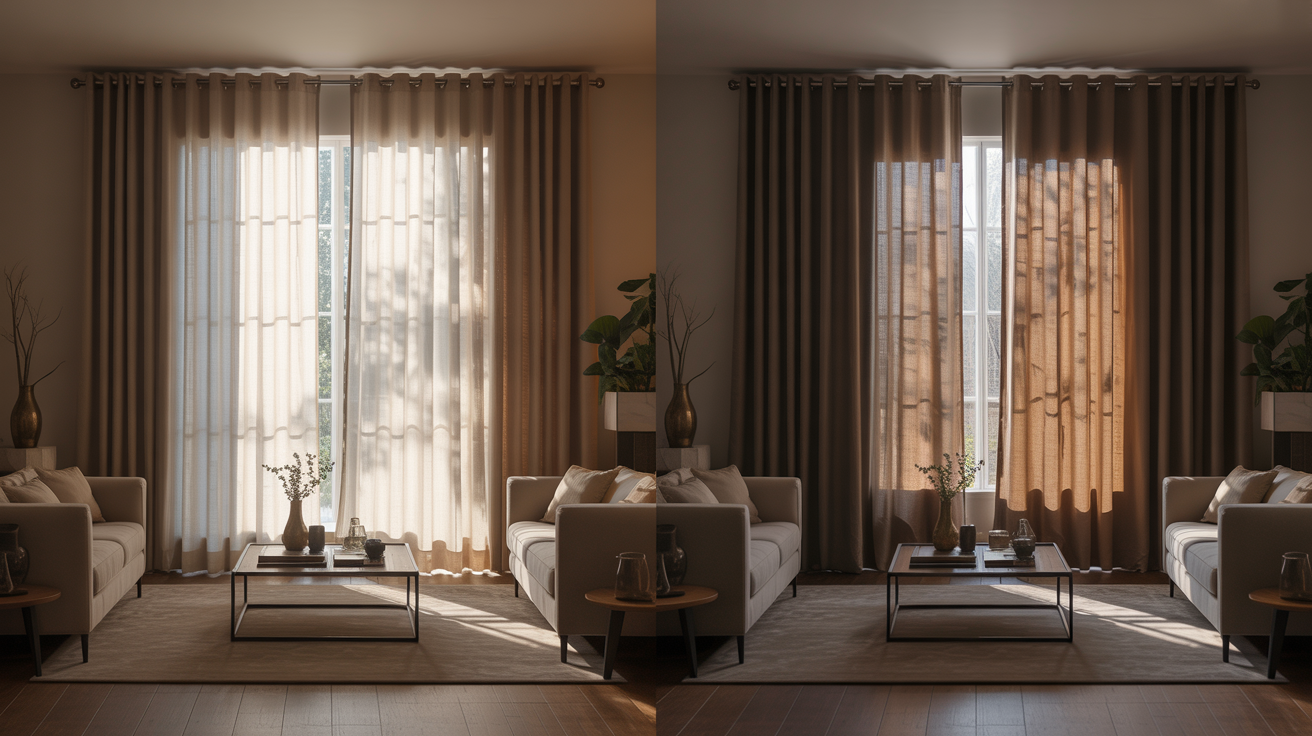
    • Test your curtain samples in both lighting conditions

    Morning sunlight might love your gray curtains. Evening lamplight might make them look dull. Always check twice.

    Step 3: Match Curtains with Room Elements
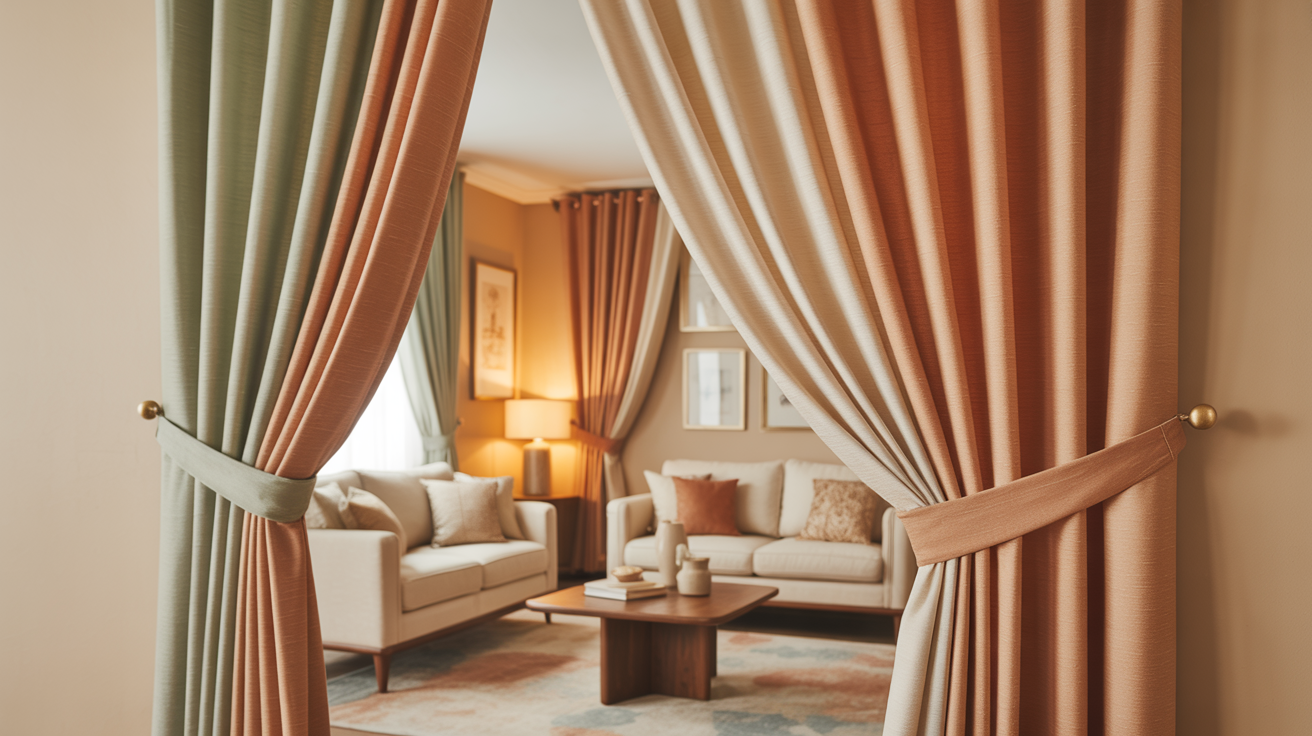
    Step 3: Match Curtains with Room Elements

    Your curtains don’t exist alone. They’re part of a team. Look at what’s already in your room: furniture, floors, and decor style.

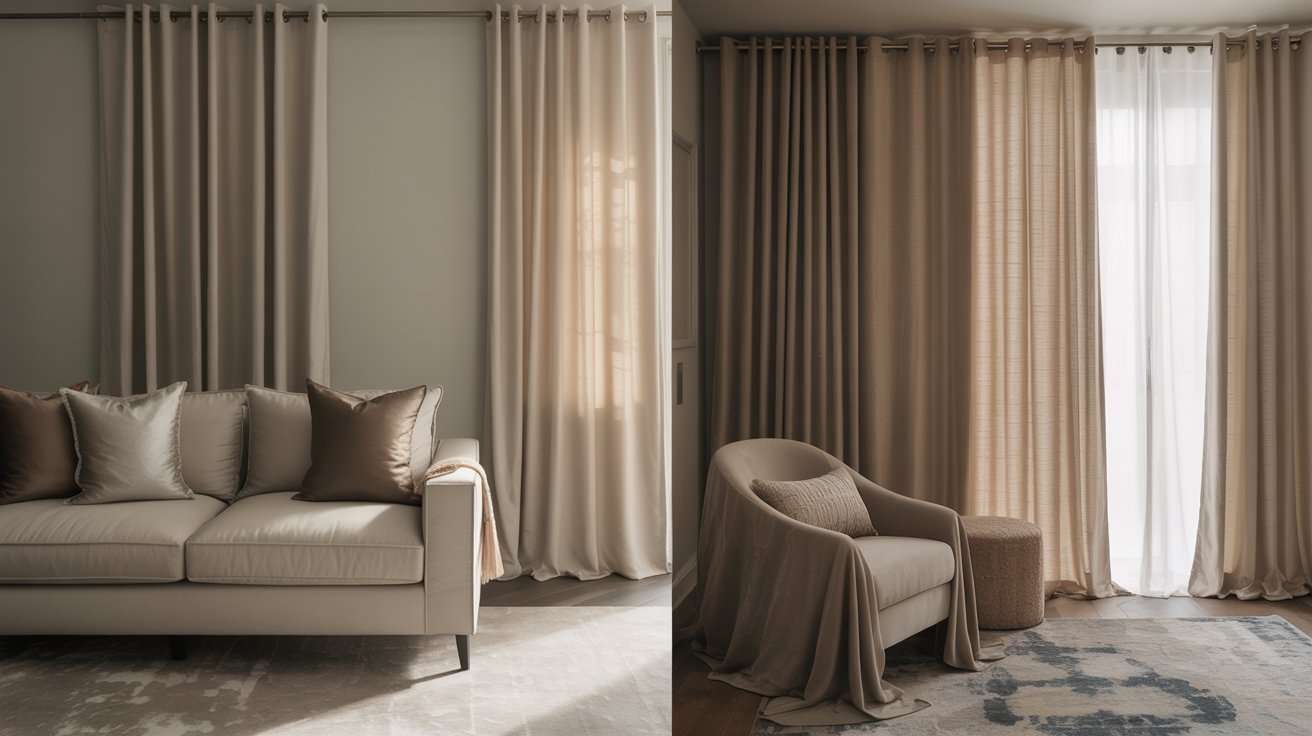
    • Furniture tone: Beige walls with dark wood pair best with ivory or taupe curtains
    • Floor color: Light floors need darker curtains for contrast, dark floors need lighter curtains to balance
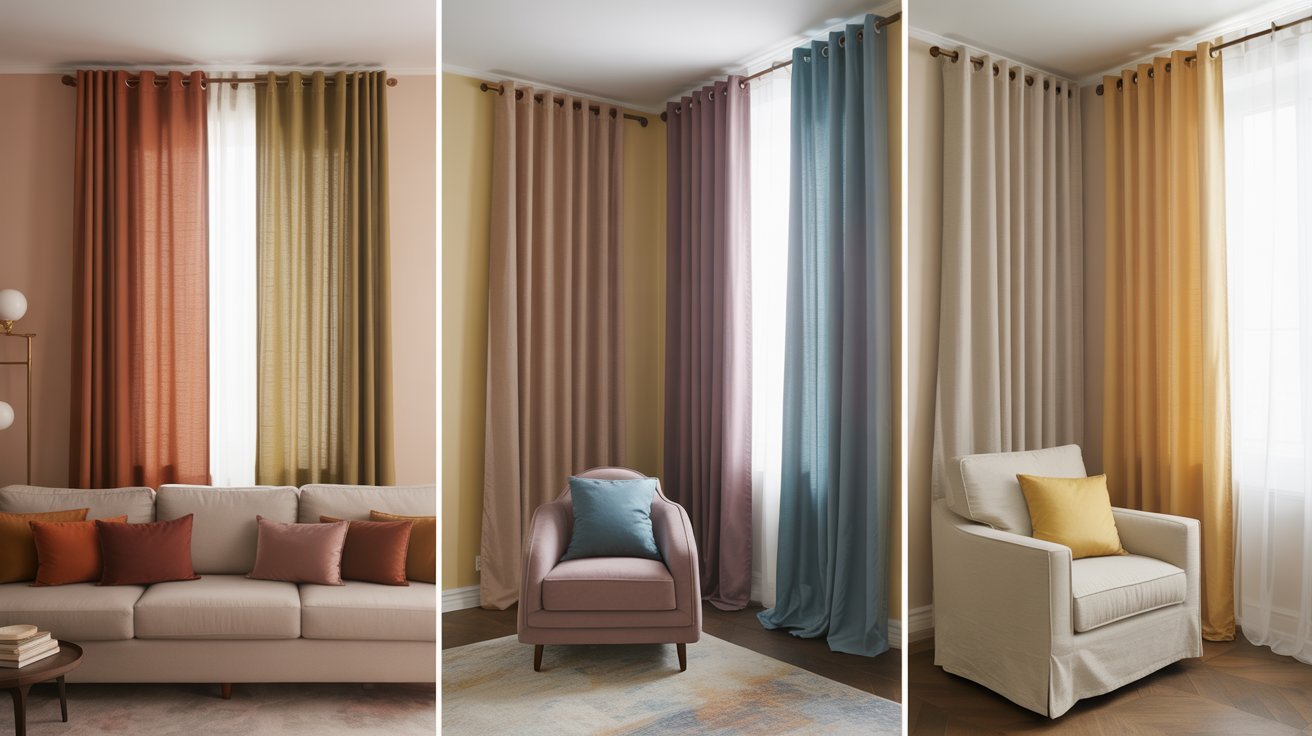
    • Decor theme: Modern uses gray, white, or navy, Boho uses rust, mustard, or sage,  Classic uses gold, cream, or taupe

    Your curtains should connect these elements. Not match everything perfectly, that’s boring. But they should feel like they belong in your room.

    Top Curtain Color Ideas for Beige Walls

    Beige walls are versatile. But choosing the right curtain color? That makes all the difference. I’ll walk you through the best options that actually work, no guesswork needed.

    1. Cream or Off-White: Timeless and Airy
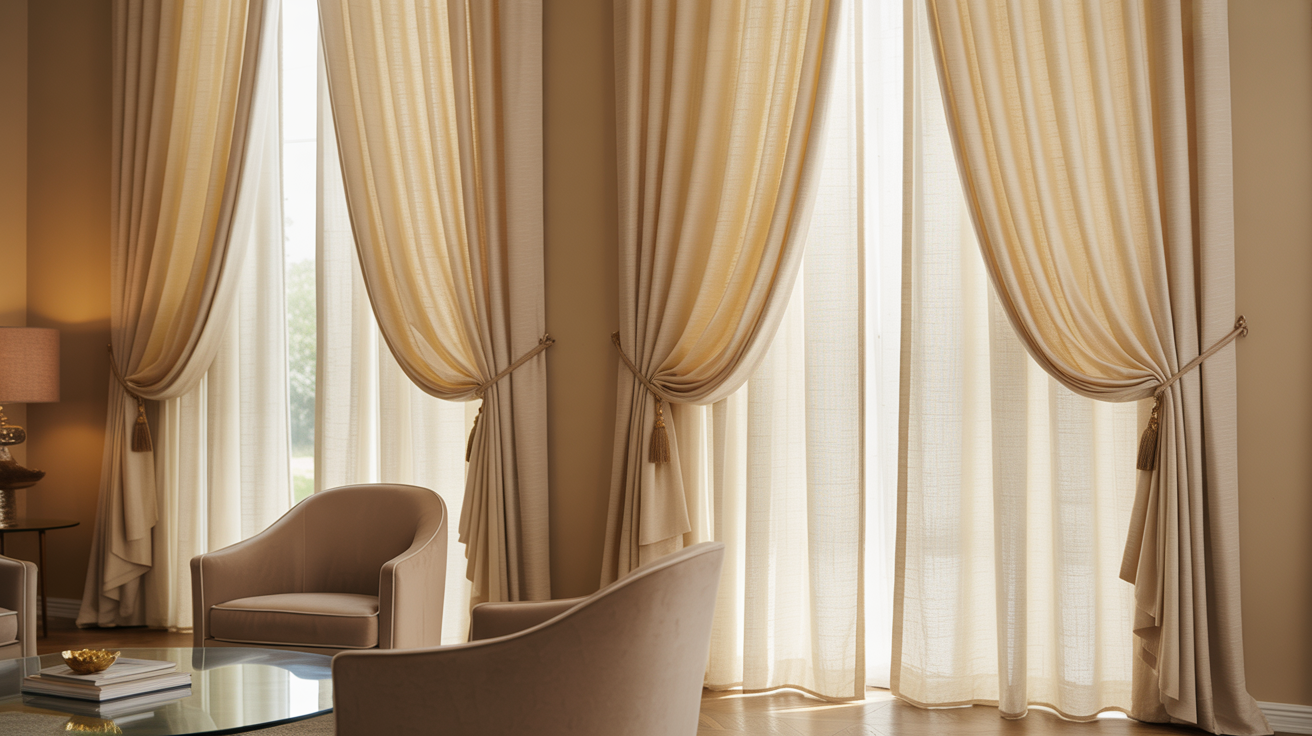
    1. Cream or Off-White: Timeless and Airy

    This is your safe bet. Cream curtains blend seamlessly with beige walls and keep things light. You won’t feel boxed in. 

    Here’s why this works:

    • Ideal for a soft, serene look that enhances natural light
    • Works beautifully in smaller rooms or minimalist spaces
    • Complements all furniture tones without overpowering

    Light tones open up a room. They don’t compete. They just flow.

    2. Taupe or Light Gray: Neutral with Depth
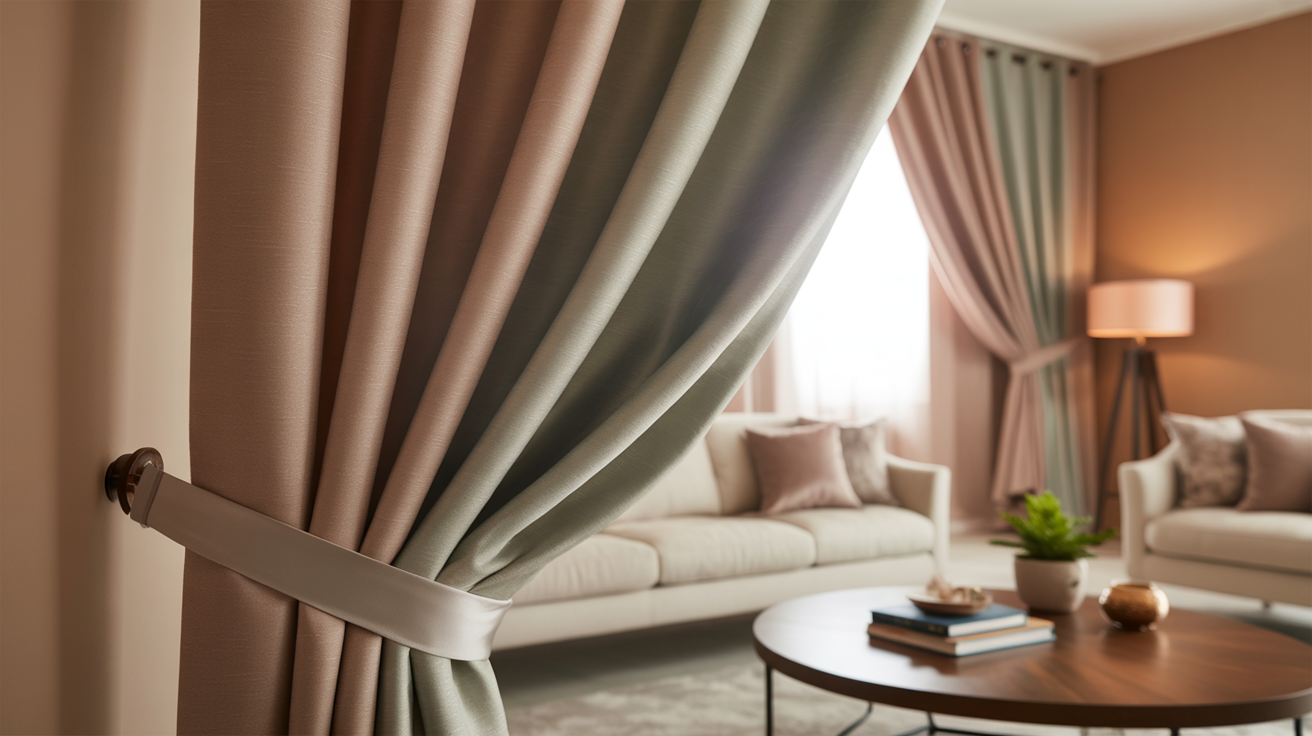
    2. Taupe or Light Gray: Neutral with Depth

    Want something subtle but not boring? Taupe is your answer. It adds layers without shouting for attention.

    • Adds subtle sophistication while keeping the palette balanced
    • Great for modern or transitional decor
    • Works especially well with dark brown or wooden furniture

    Gray-toned curtains feel current. They’re cooler than beige but still grounded. Perfect if you want a grown-up, polished look.

    3. Navy Blue: refined Contrast
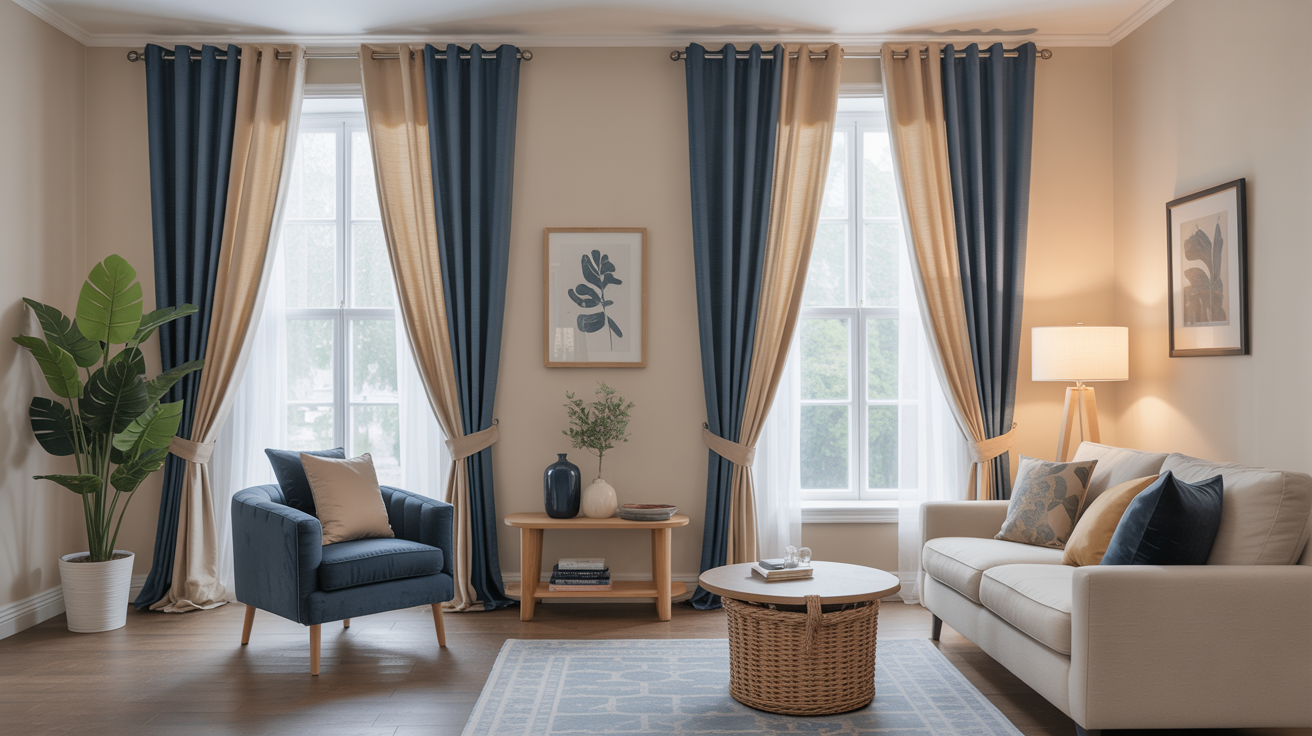
    3. Navy Blue: refined Contrast

    Here’s where you get bold. Navy against beige? Chef’s kiss. It creates structure and visual interest without feeling loud.

    • Offers a bold yet refined contrast with beige
    • Adds visual structure to living or dining areas
    • Pairs nicely with metallic or wooden accents

    I love this combo for spaces that need definition. Navy anchors the room. It draws the eye and adds serious style points.

    4. Olive Green: Earthy and Relaxing
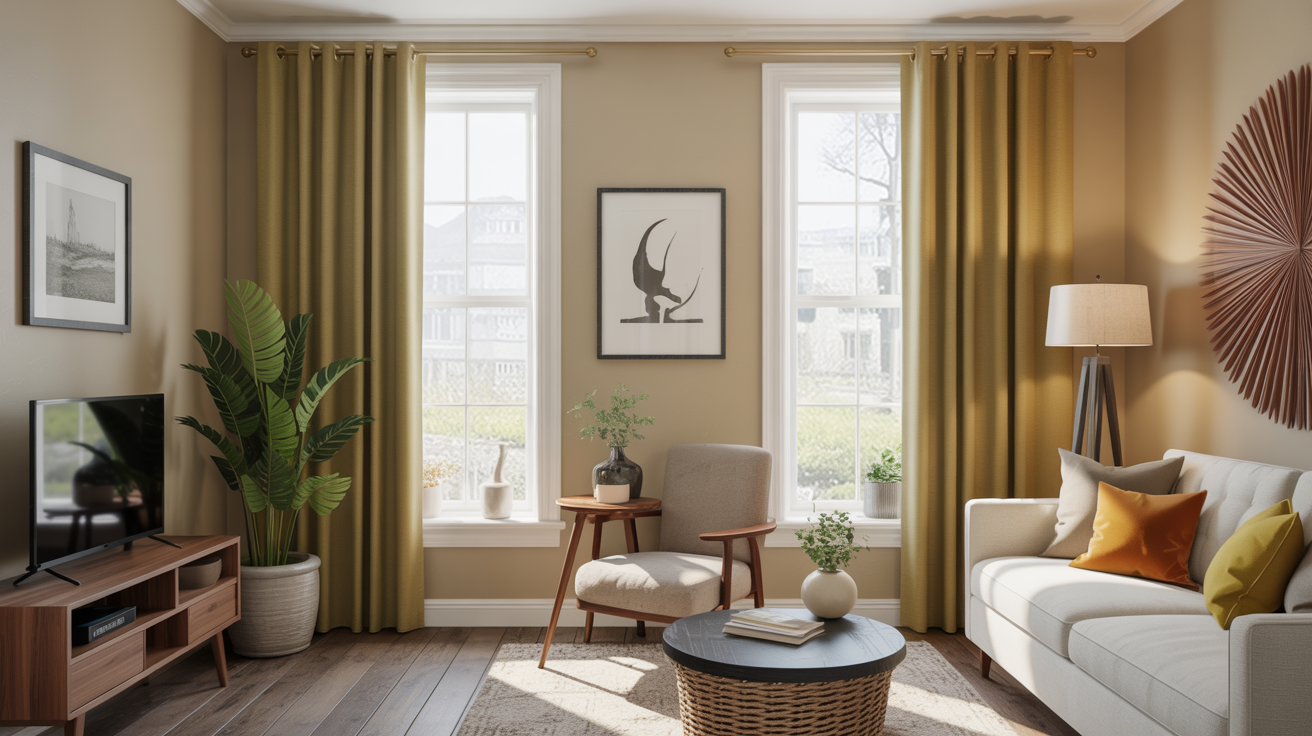
    4. Olive Green: Earthy and Relaxing

    This color brings the outside in. Olive green feels calm and natural, like you’re wrapped in a cozy forest.

    • Brings a natural, organic tone that complements beige’s warmth
    • Enhances rooms with plants or wood textures
    • Suggests calm and coziness,  ideal for living rooms or bedrooms

    Green tones work beautifully with beige. They’re soft but alive. You’ll feel more relaxed just looking at them.

    5. Mustard Yellow: Warm and Inviting
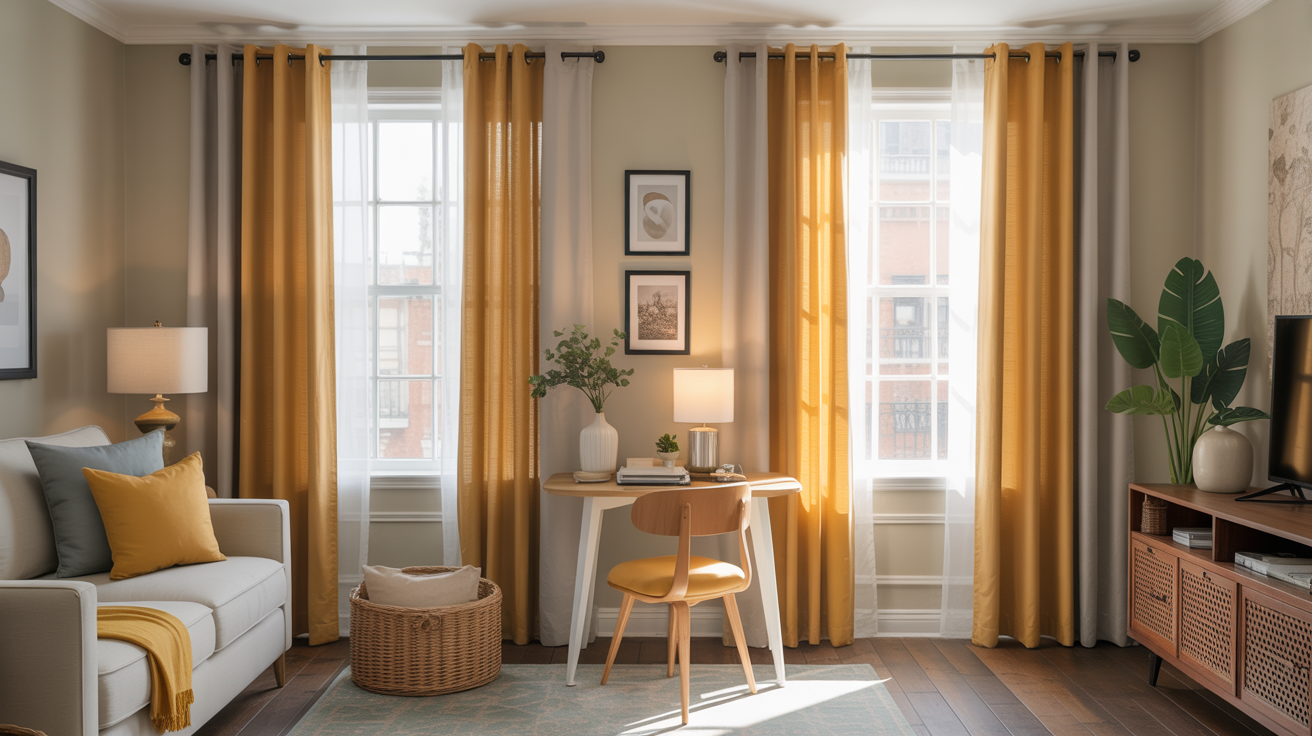
    5. Mustard Yellow: Warm and Inviting

    Need a little sunshine? Mustard yellow does the trick. It’s cheerful without being childish.

    • Adds a burst of cheerful color without overwhelming
    • Perfect for bohemian or rustic interiors
    • Creates a sunny, welcoming vibe in naturally lit spaces

    This shade has personality. It warms up the space instantly. Great for rooms that get good natural light.

    6. Gold or Bronze: Luxe and Sophisticated
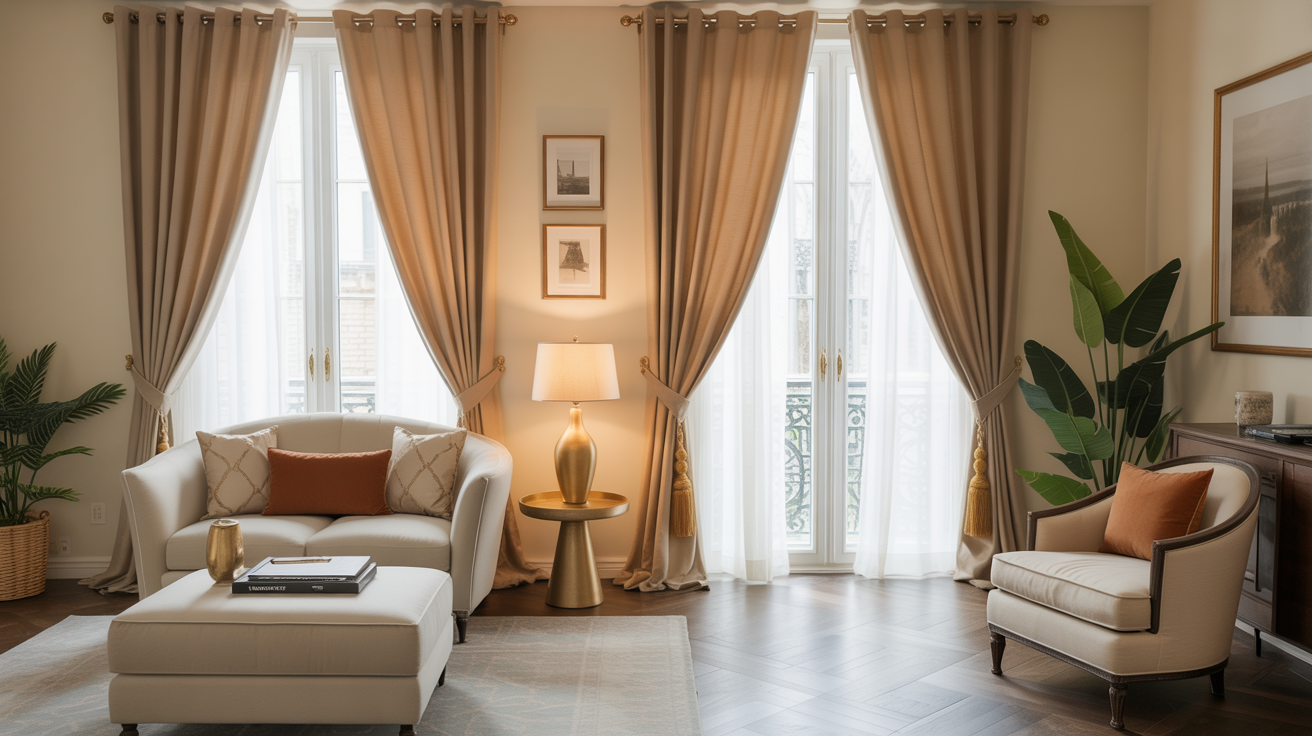
    6. Gold or Bronze: Luxe and Sophisticated

    Want to feel fancy? Metallic curtains catch light beautifully. They add a touch of glamour without trying too hard.

    • Introduces a subtle metallic shimmer for elegance
    • Reflects light beautifully, adding dimension
    • Best suited for formal settings or accent windows

    Gold tones elevate everything. They make beige walls look intentional and expensive. Use them sparingly for maximum impact.

    7. Burgundy or Deep Red: Bold and Dramatic

    This is for the confident decorator. Burgundy brings richness and warmth that changes the entire room.

    • Delivers warmth and intensity against beige walls
    • Ideal for cozy dens, dining rooms, or vintage-inspired decor
    • Balances beige’s neutrality with a touch of luxury

    Deep reds create drama. They make beige feel refined instead of safe. Perfect for spaces where you want people to linger and feel wrapped in comfort.

    Playing with Patterns and Textures

    I believe the right pattern or texture can change beige walls from boring to beautiful. You just need to know what works.

    Patterned Curtains
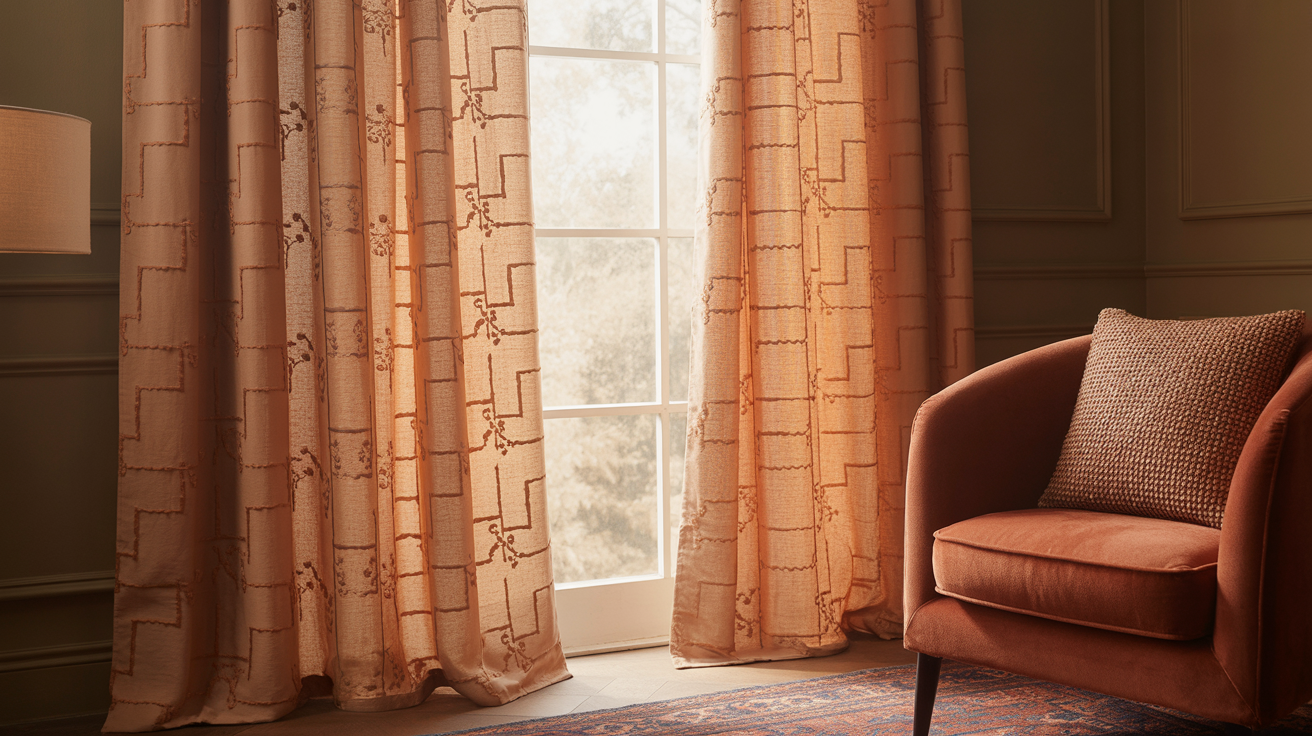
    Patterned Curtains

    Patterns are your secret weapon. They connect everything in the room.

    • Beige blue floral: Fresh and calming
    • Taupe stripes: Classic and clean
    • Geometric designs: Modern edge with soft colors

    Keep your large patterns subtle. Bold prints can overpower beige walls. Small to medium patterns integrate your wall color, furniture, and decor smoothly. They tie the whole room together without fighting for attention.

    Curtain Textures
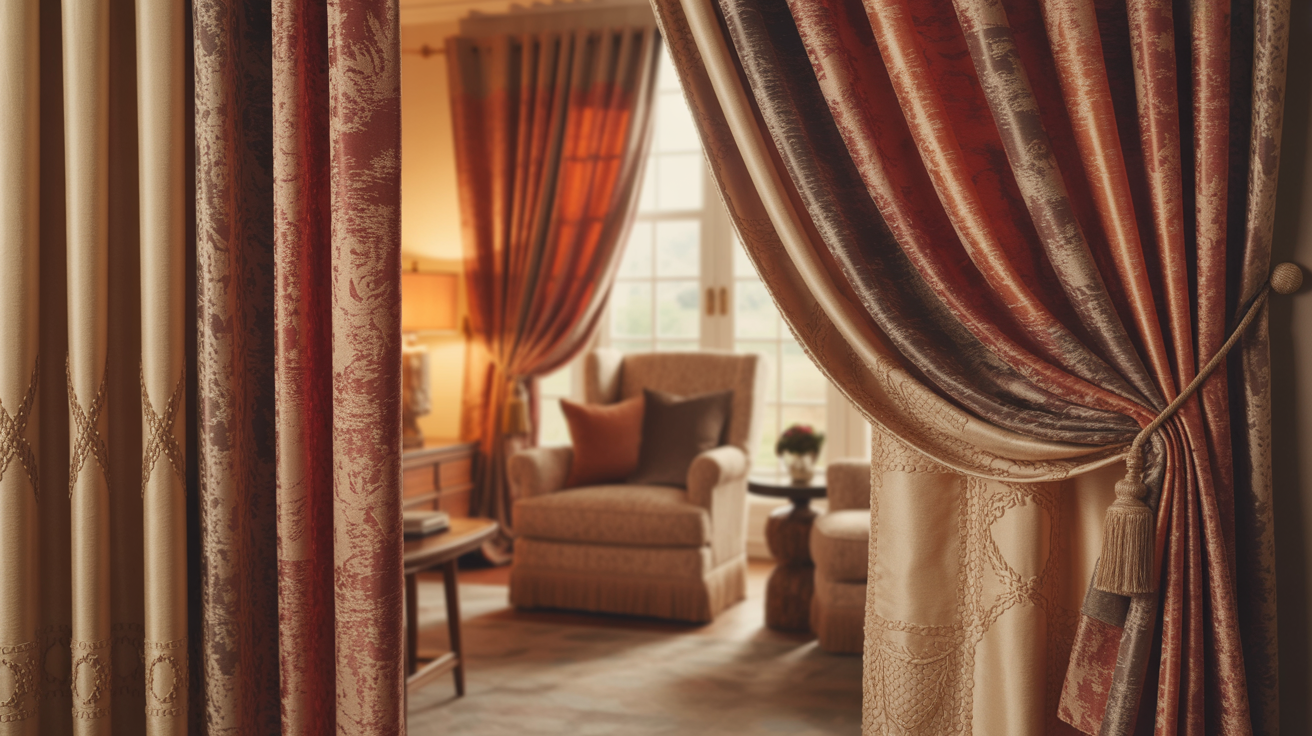
    Curtain Textures

    Texture changes everything. The same color feels completely different when you switch fabrics.

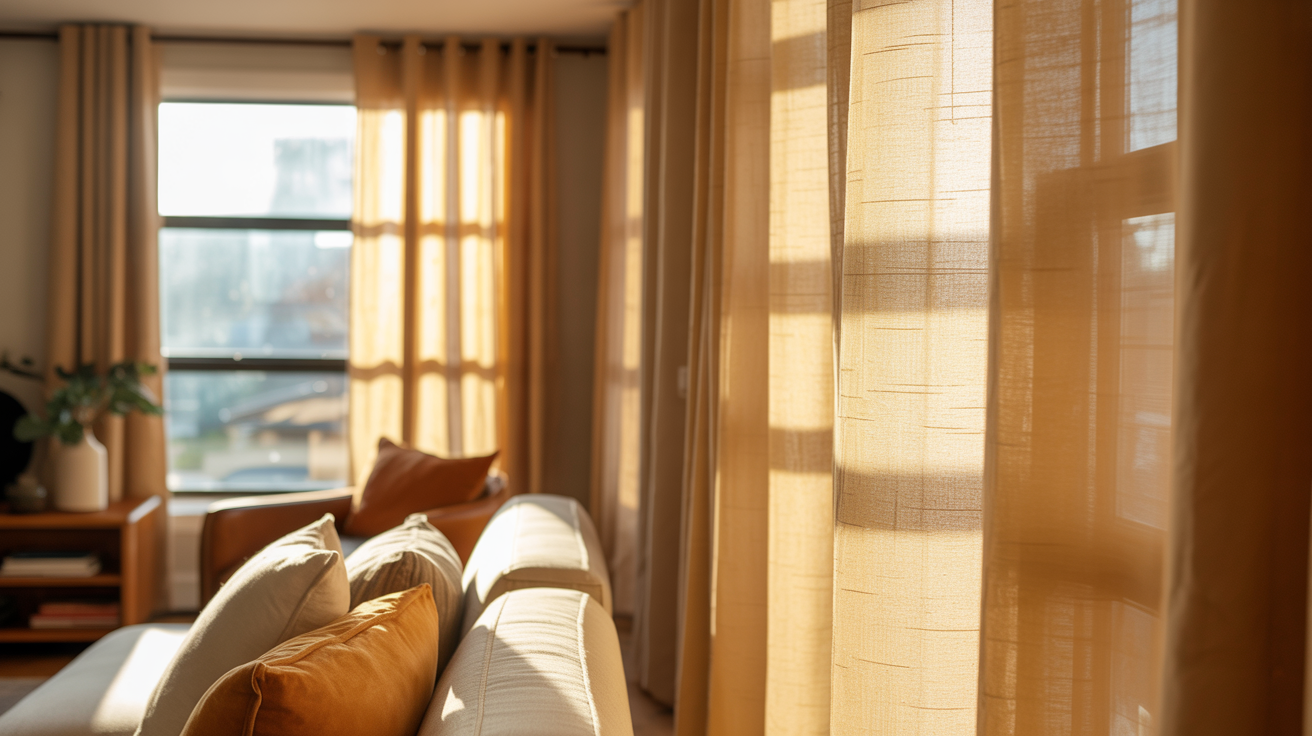
    • Linen: Breezy and relaxed, perfect for light-filled rooms
    • Velvet: Adds depth and formality to luxurious spaces
    • Sheer: Softens harsh light while keeping rooms open
    • Blackout: Controls privacy and temperature in bedrooms

    Choose based on your room’s purpose. Bedrooms need different textures than living rooms. Linen works for casual spaces. Velvet enhances formal areas. You can even layer sheers with blackout curtains for ultimate control.

    Design and Styling Tips

    I’ve learned that small design choices make the biggest difference. You don’t need complicated rules. Just follow these simple tips.

    • Light and shadow: Pair beige walls with lighter curtains for openness, or use darker shades to frame windows and create visual focus.
    • Accessories matter: Coordinate curtain tiebacks, rods, and trims with your furniture finishes, metallic finishes like gold, bronze, or matte black echo other decor accents.
    • Function meets style: Choose layered treatments like sheer with blackout for flexibility, and match textures like linen with wood or velvet with metal for harmony.

    Conclusion

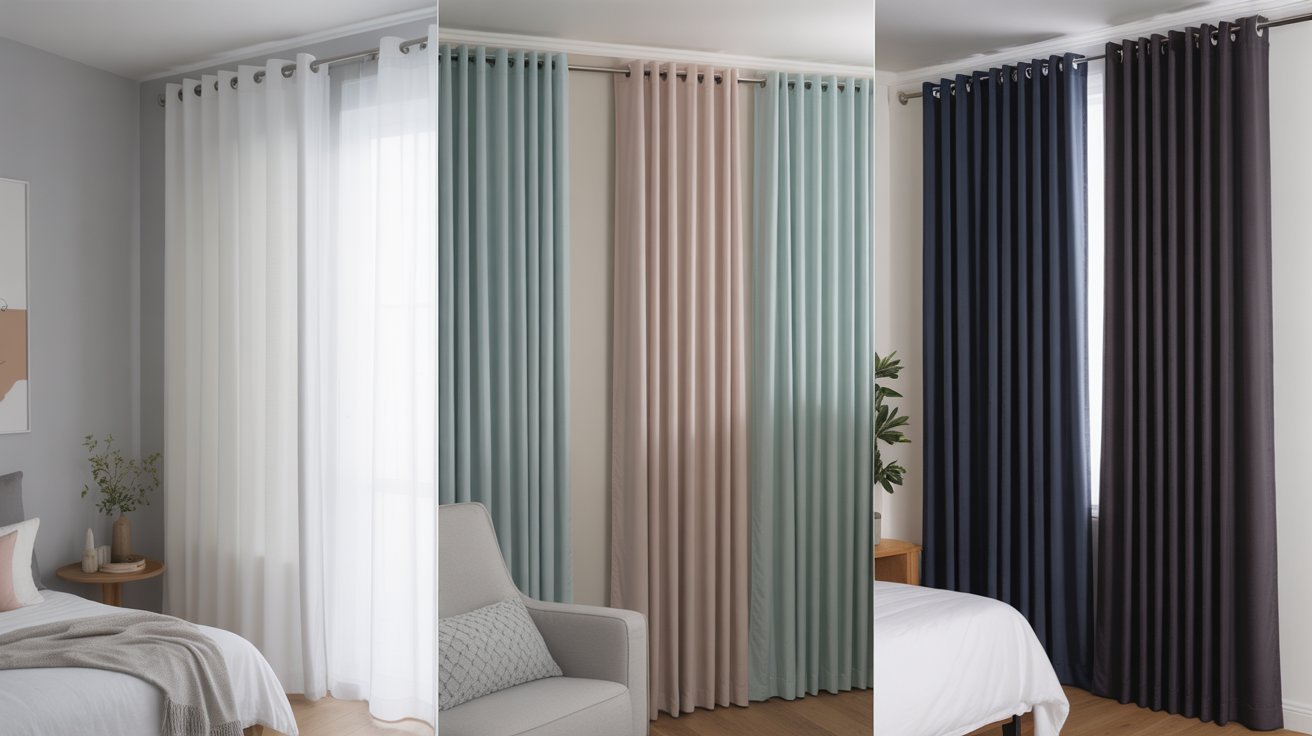
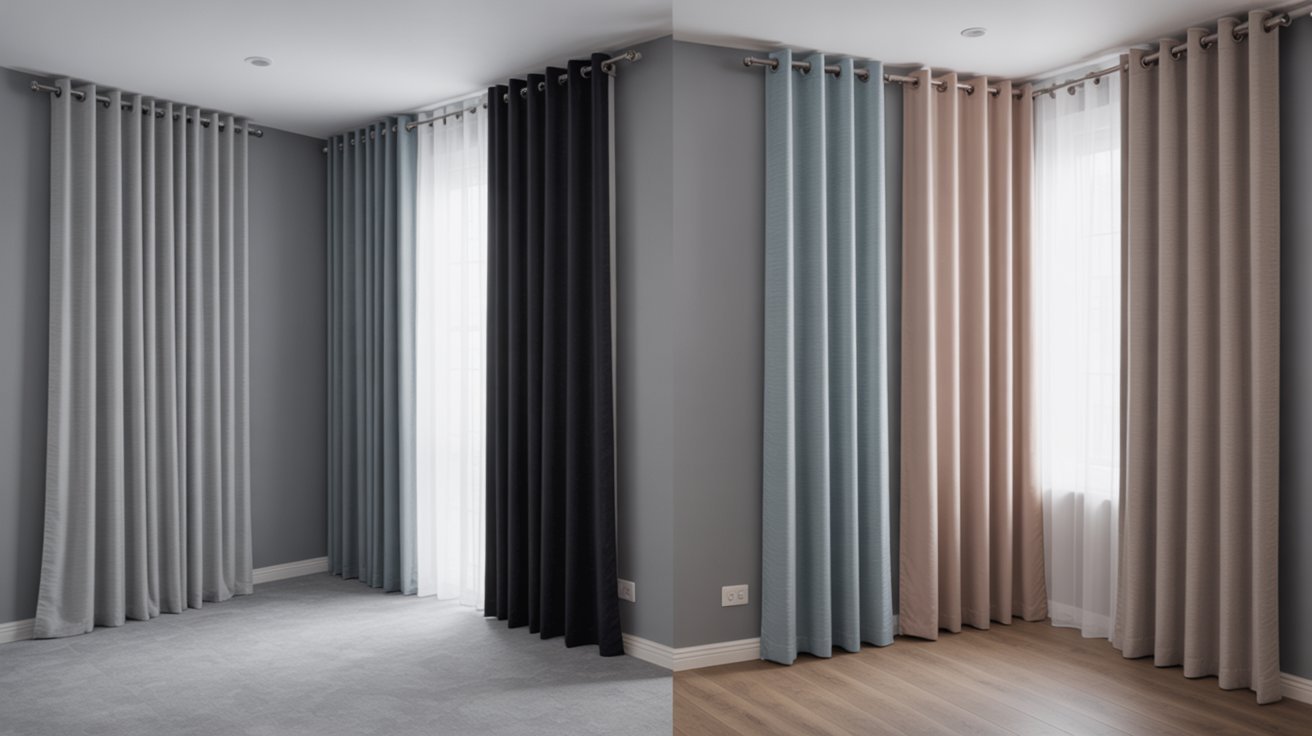
    You now know what color curtains go with beige walls and have seven solid options to choose from. White keeps things bright and classic. Navy and gray add modern contrast. Sage green and pink bring softness. The right choice depends on your lighting, furniture, and personal style.

    Your beige walls aren’t boring anymore. You have a clear plan and the confidence to pick curtains that actually work. Trust your gut once you understand the basics, and don’t overthink it.

    Found this helpful? Drop a comment below and tell me which color you’re choosing. If you’re still deciding between two options, describe your space and I’ll share my thoughts. And if this guide made curtain shopping easier, share it with a friend who’s stuck in the same decorating dilemma.

    Frequently asked questions

    What color curtains go best with beige walls?

    White, cream, gray, navy blue, sage green, and soft pink curtains all pair beautifully with beige walls. White and cream create a light, airy feel. Gray and navy add modern contrast. Sage green and pink bring warmth. Choose based on your room’s lighting and style.

    Should curtains be lighter or darker than beige walls?

    Both work well. Lighter curtains (white, cream, light gray) make rooms feel larger and brighter. Darker curtains (navy, charcoal, forest green) add drama and help anchor the space. Consider your room size and natural light when deciding.

    Do white curtains look good with beige walls?

    Yes, white curtains create a classic, timeless look with beige walls. They brighten the space and make ceilings appear higher. Choose warm white for warmer beige tones, or crisp white for cooler beige shades to maintain color harmony.

    Can I use patterned curtains with beige walls?

    Absolutely. Beige walls are neutral and handle patterns beautifully. Try stripes, florals, or geometric prints that include beige plus one accent color. Patterns add visual interest without overwhelming the space since beige provides a calm backdrop.

    What curtain color makes beige walls look modern?

    Charcoal gray, navy blue, or black curtains instantly modernize beige walls. These darker shades create a strong contrast and contemporary edge. For a softer modern style, try light gray or greige curtains with clean lines and minimal hardware.
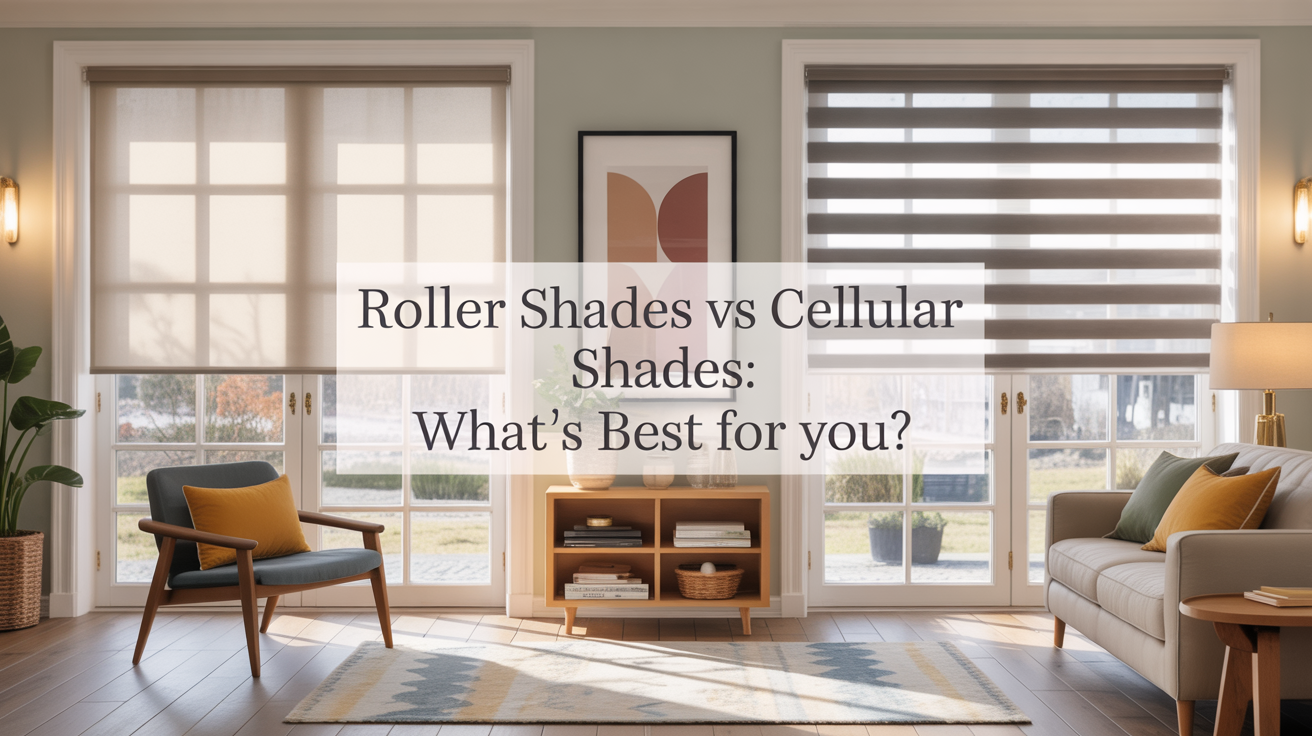
  • Roller Shades vs Cellular Shades: What’s Best for You?

    Roller Shades vs Cellular Shades: What’s Best for You?

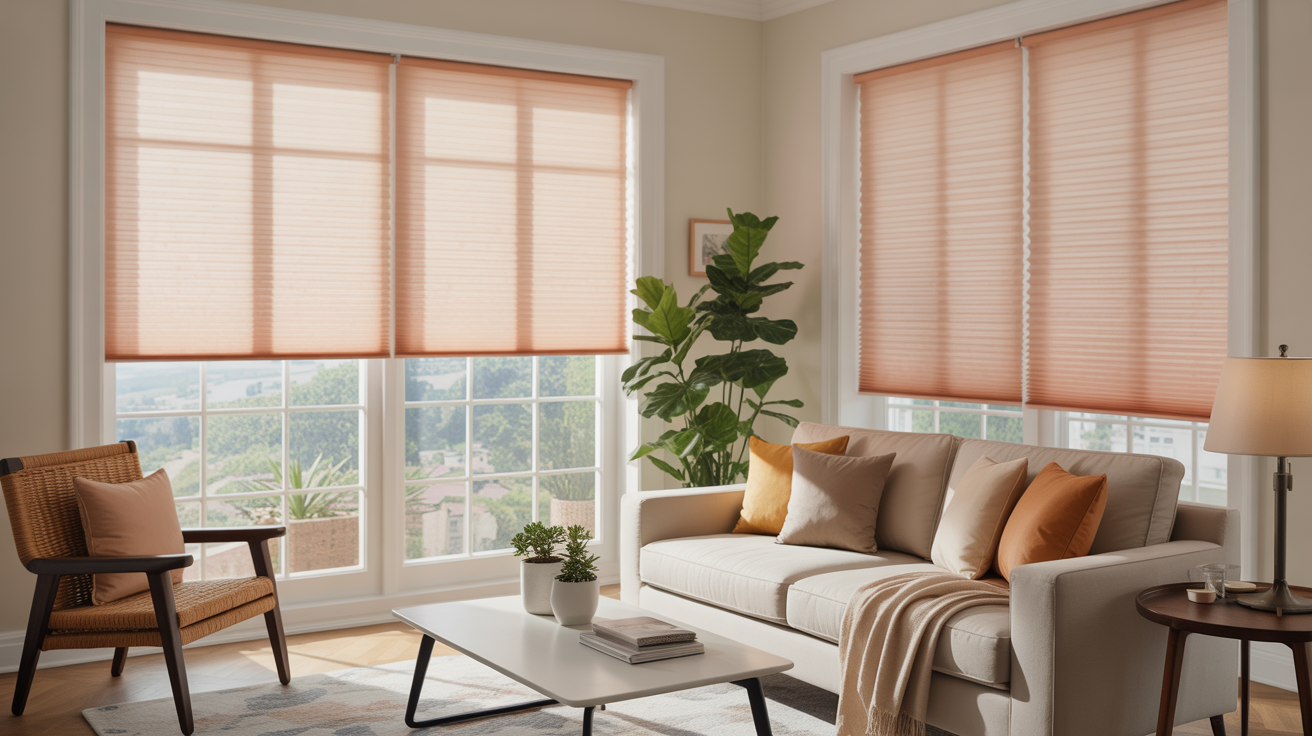
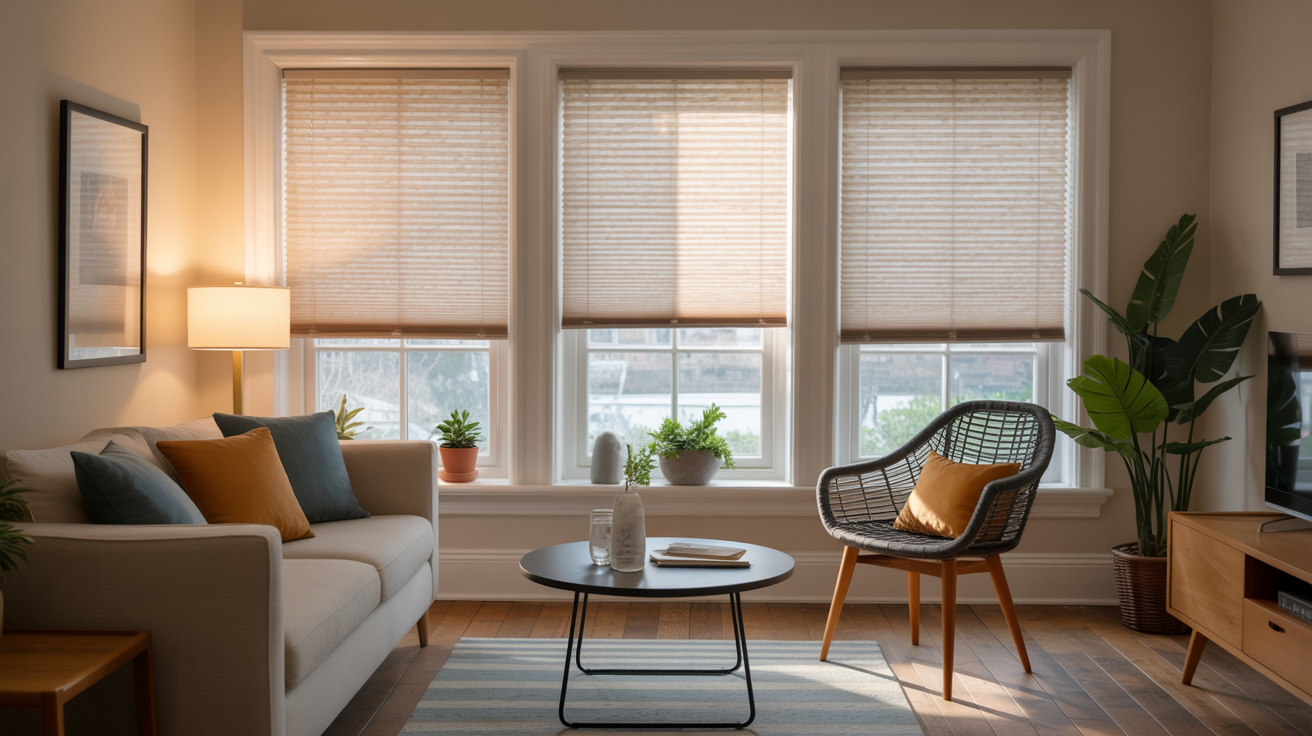
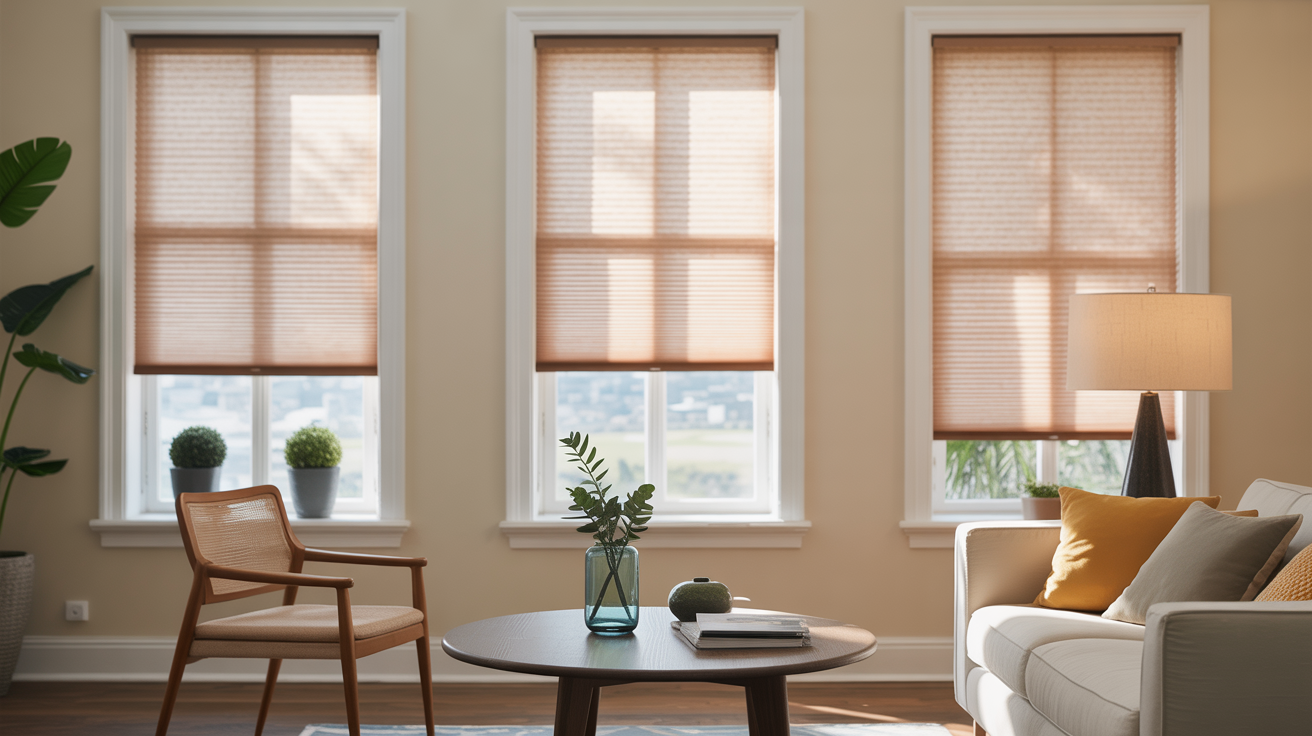
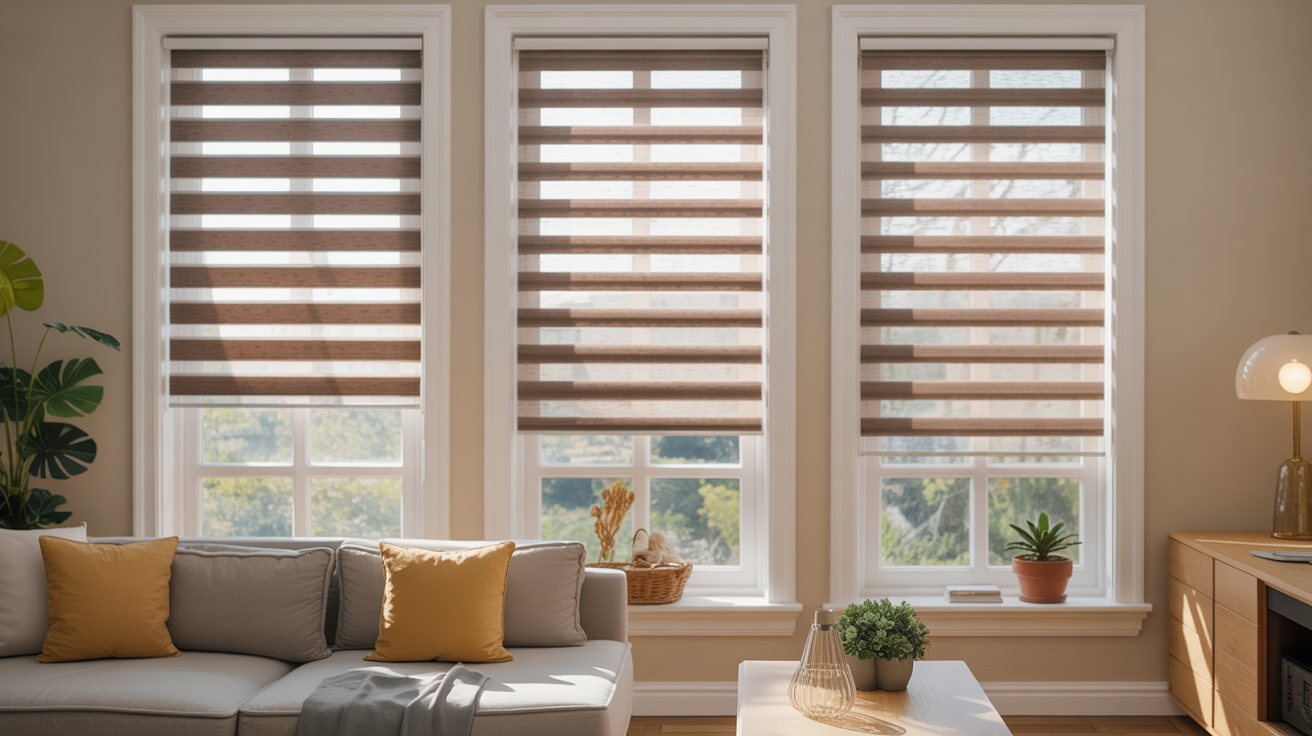
    Choosing window shades shouldn’t feel like solving a puzzle. You’re standing in your room right now, wondering if roller shades or cellular shades will actually work for your space. The light’s too bright, your energy bills are climbing, or maybe you just want more privacy. We get it.

    Here’s what you’ll find in this guide: the real differences between roller and cellular shades, what each one does best, and which one fits your specific needs. No fluff. No salesperson tactics. Just straight answers from someone who’s helped hundreds of homeowners make this exact choice.

    We’ll walk through costs, energy savings, light control, and style options. You’ll know exactly which shade solves your problem before you finish reading. This isn’t about pushing products. It’s about giving you the clear information you came here for so you can move forward with confidence.

    What Are Roller Shades?

    What Are Roller Shades?

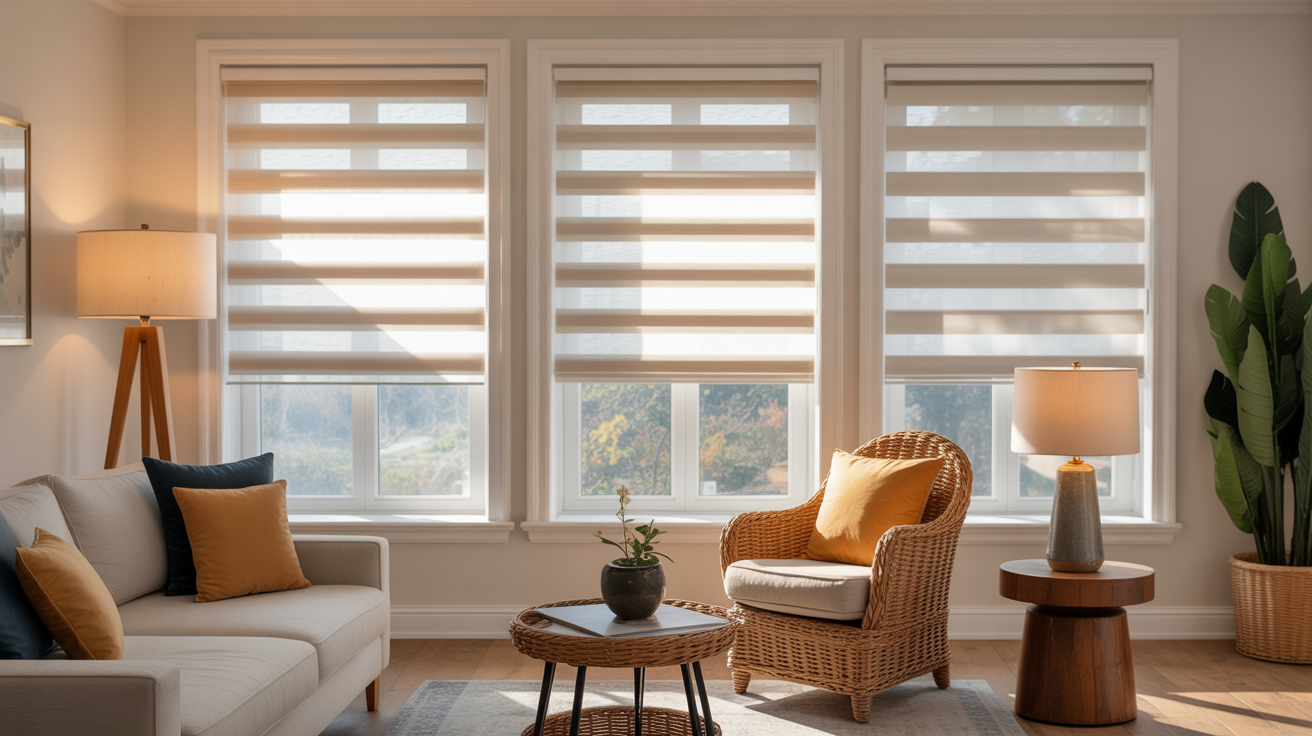
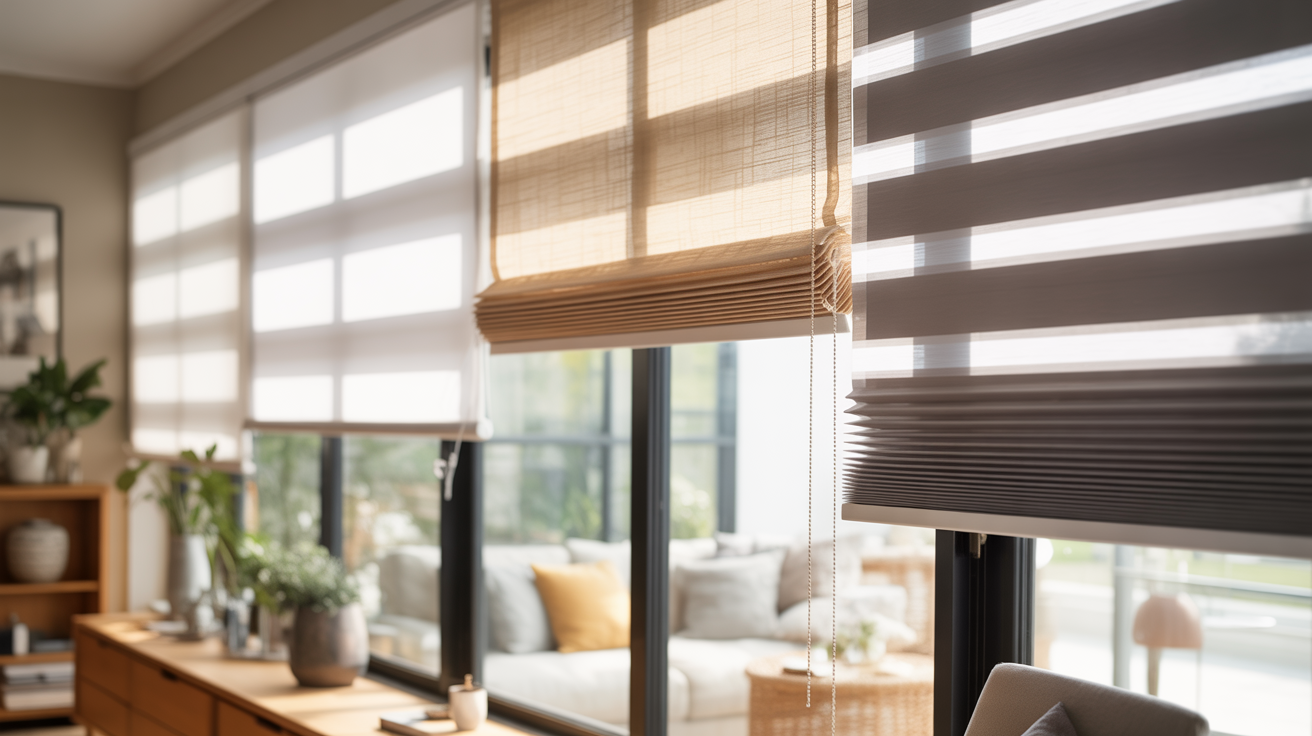
    Think of roller shades as the no-fuss option. They’re just one piece of fabric that rolls up around a tube at the top of your window. Simple. Clean. Done.

    • Sleek and minimal: perfect if you love modern spaces
    • Material choices include: sheer, light-filtering, and blackout fabrics
    • Contemporary style complements minimalist interiors beautifully
    • Versatile use in: living rooms, offices, or modern apartments

    You get a smooth look without any extra bulk. No complicated layers or folds.

    What Are Cellular Shades?

    What Are Cellular Shades?

    Cellular shades (also called honeycomb shades) are built differently. They have pleated cells that look like a honeycomb. That unique structure actually traps air inside.

    • Better insulation traps: air pockets that help regulate your indoor temperature
    • Energy savings mean: less heat escapes in winter, less heat enters in summer.
    • Soft, structured appearance: with single, double, or triple cell layers
    • Smart choice for: bedrooms or if you’re energy-conscious

    The honeycomb design isn’t just for looks. It actually helps cut your energy bills while giving you a textured, polished finish.

    Comparison: Roller Shades vs Cellular Shades

    Comparison: Roller Shades vs Cellular Shades

    Feature

    Roller Shades

    Cellular Shades

    Construction

    Single fabric sheet on a tube, Flat, sleek design, Simple mechanism

    Honeycomb pleated cells, Textured, layered look, Top-down/bottom-up option

    Light Control

    Light-filtering to blackout options, Good glare reduction, and  Small edge gaps are possible

    Excellent light diffusion, Superior privacy control, No visible silhouettes

    Energy Efficiency

    Moderate insulation, T thermal fabrics help slightly

    Excellent insulation, Traps air cells, lowers energy bills 10-25%

    Style

    Modern, minimalist, Hundreds of fabric choices, Clean lines

    Soft, cozy look, Fewer style options, Adds warmth and texture

    Operation

    Simple up/down control, Easy smart home integration

    Flexible positioning, Top-down/bottom-up control, Child-safe cordless options

    Maintenance

    Easy to clean, wipe with a damp cloth, low maintenance

    Requires more effort, Cells trap dust and need vacuuming

    Cost

    $200–$400 per window, Budget-friendly, DIY installation

    $400–$900 per window, Higher upfront cost, Long-term energy savings

    Choose roller shades for simplicity and style. Choose cellular shades for energy efficiency and privacy.

    Room-by-Room Recommendations

    I’ve tested shades in every room of my home. Here’s what works best where. You’ll find real solutions for real spaces.

    Living Room

    Living Room

    Your living room needs light control without darkness. Roller shades let you filter sunlight and cut glare during the day. They’re simple and clean.

    Cellular shades work great for big windows. They keep your room comfortable all year. Plus, they quiet the outside noise.

    Bedroom

    Bedroom

    Sleep matters. Blackout roller shades give you complete darkness when you need rest. No light leaks through.

    Want better insulation, too? Cellular shades in blackout do both jobs. You get darkness and temperature control.

    Kitchen

    Kitchen

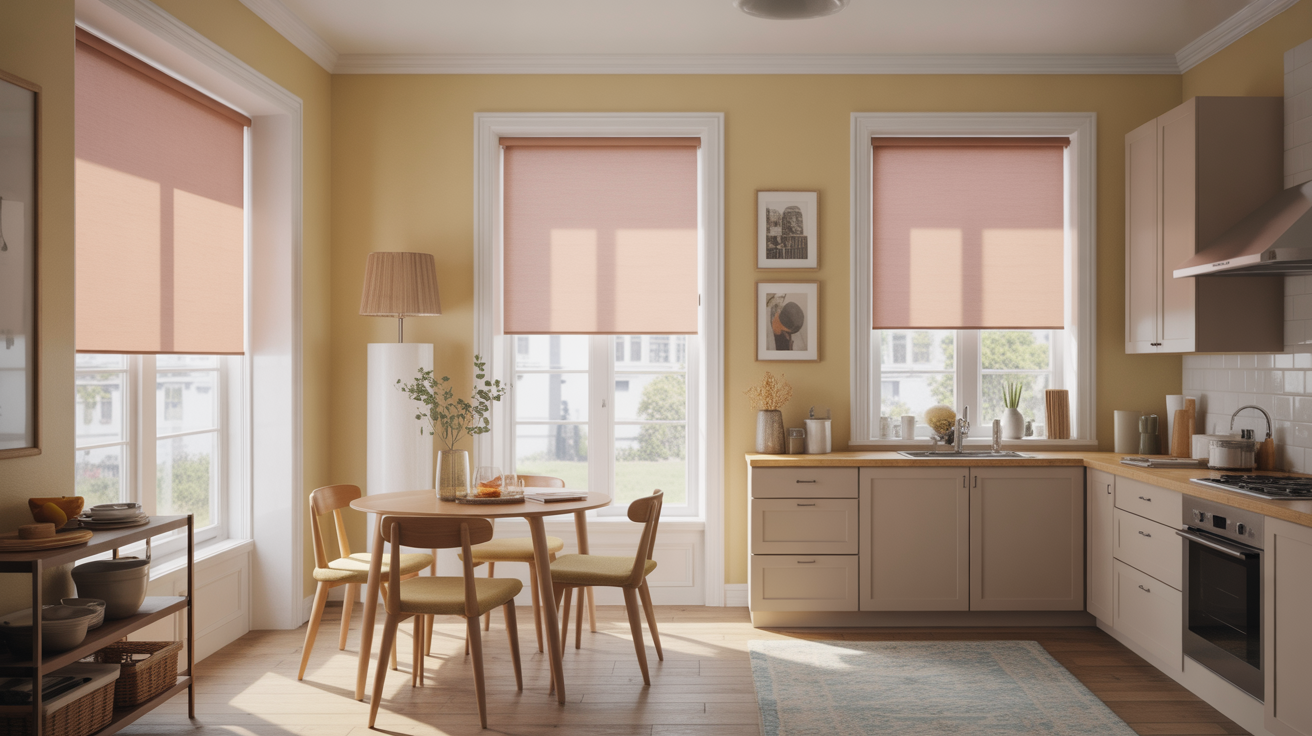
    Kitchens get messy. Roller shades handle it because you can wipe them clean fast. Choose a moisture-resistant material, they last longer.

    Skip cellular shades here. The delicate fabric doesn’t like humidity and grease. Save yourself the trouble.

    Bathroom

    Bathroom

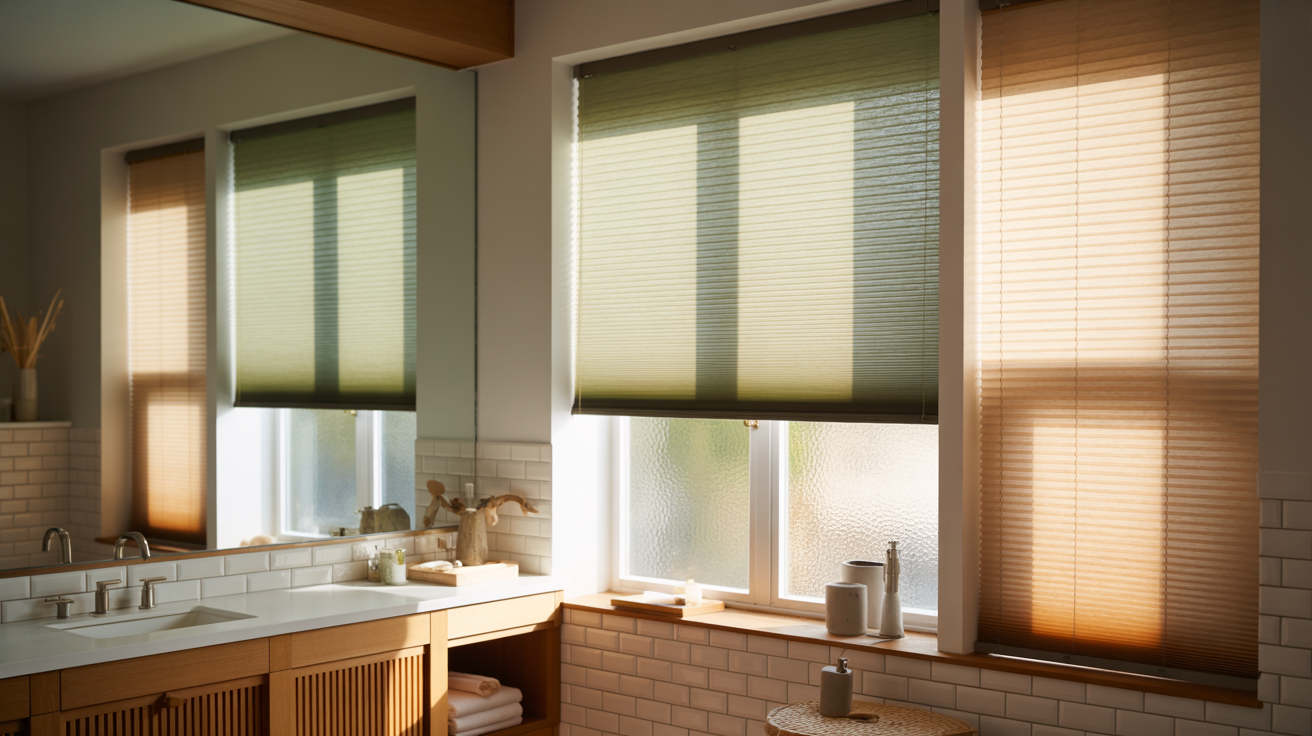
    Roller shades work if you pick vinyl or polyester. Water won’t damage them. Keep it simple.

    Cellular shades can work, but only with the right material. Get the humidity-tolerant type. The top-down/bottom-up feature lets you keep privacy while letting light in from above.

    Home Office

    Home Office

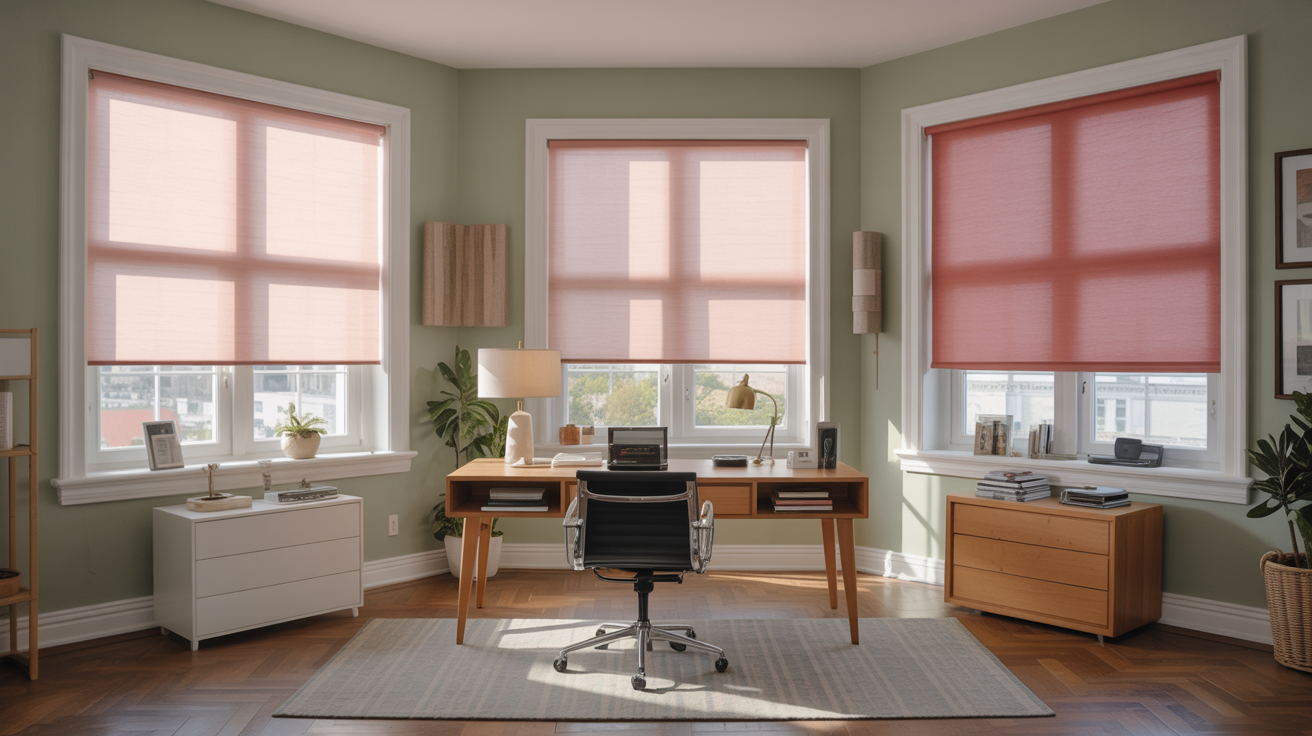
    Screens and glare don’t mix. Light-filtering roller shades solve this problem. You can work without squinting.

    Cellular shades keep your office comfortable when the sun beats down. Temperature swings hurt focus. These shades prevent that.

    Pros and Cons Summary

    I’ve laid out the facts. Now you need the full Overview. Let’s compare what each shade type brings to your home.

    Pros of Roller Shades

    Pros of Roller Shades

    Roller shades keep things simple and clean. You get style without complexity. They fit almost any budget.

    • Sleek design: These shades look modern and minimal. They blend into any room without demanding attention.
    • Easy maintenance: Wipe them down fast when they get dirty. No special cleaning tools needed.
    • Wide variety: Choose from hundreds of fabrics and patterns. Find exactly what matches your space.

    Cons of Roller Shades

    Cons of Roller Shades

    Nothing’s perfect. Roller shades have real limitations you should know about.

    • Less insulation: They don’t trap air like cellular shades do. Your energy bills won’t drop as much.
    • Light gaps: Small spaces at the edges let light sneak through. Complete darkness is hard to achieve.
    • Limited soundproofing: Outside noise still comes in clearly. Don’t expect much acoustic help.

    Pros of Cellular Shades

    Pros of Cellular Shades

    Cellular shades excel at energy efficiency. I’ve seen real savings on heating and cooling bills. They do more than look good.

    • Superior insulation: The honeycomb design traps air inside. This keeps your rooms comfortable year-round.
    • Excellent privacy: The thick fabric blocks views completely. Plus, they reduce noise from outside.
    • Flexible operation: Top-down/bottom-up lets you control light and privacy separately. Get what you need when you need it.

    Cons of Cellular Shades

    Cons of Cellular Shades

    These shades cost more upfront. Maintenance takes extra care. Think about whether the benefits justify the drawbacks.
    • Higher cost: You’ll pay more initially compared to roller shades. The investment adds up fast for multiple windows.
    • Cleaning challenges: Dust collects in the honeycomb cells easily. Cleaning them properly takes time and patience.
    • Fewer styles: Your design options are more limited. You won’t find as many patterns or bold colors.

    How to Choose Between Roller and Cellular Shades?

    I know choosing between these shades can feel confusing. But it doesn’t have to be. Let me walk you through a simple way to decide what works for your home.

    Consider Your Priorities

    Think about what matters most to you. Each shade type shines in different areas.

    • For energy efficiency: Choose cellular shades
    • For budget-friendly simplicity: Choose roller shades
    • For modern minimal style: Roller shades
    • For cozy insulation and privacy: Cellular shades

    Match your biggest need to the right shade. It’s that simple.

    Think Room-Specific

    Not every room needs the same thing. Your bathroom has different needs than your bedroom. Humidity matters. So does light control.

    I suggest matching the shade type to each room’s specific needs. A steamy bathroom? Go with a moisture-resistant roller shade. A bedroom that gets hot in summer? Cellular shades will keep it cooler.

    Long-Term Outlook

    Cellular shades cost more upfront. But they can lower your energy bills. Those savings add up over time.

    Roller shades work great for short-term situations. Renting? Moving soon? They’re your best bet. You get style without the big investment.

    Installation and Maintenance Tips

    Getting your shades installed right makes all the difference. I want you to avoid the common mistakes I see people make. Proper setup means your shades will last longer and work better.

    • Measure carefully: Check if you want an inside or outside mount. Each requires different measurements. Get this wrong and your shades won’t fit.
    • Window depth: Make sure your window frame is deep enough for the shade brackets. Cellular shades need more space than roller shades.
    • Regular cleaning: Vacuum your shades gently or wipe them with a damp cloth. Dust builds up fast if you ignore it.
    • Professional help: Consider hiring someone for motorized shades or extra-wide windows. These installations can get tricky.
    • Check hardware: Tighten brackets and mounting screws every few months. Loose hardware causes sagging and damage over time.

    Conclusion

    So, Roller Shades vs Cellular Shades, what’s the verdict? It really comes down to what matters most in your home. Roller shades give you sleek style and easy light control. Cellular shades deliver serious energy savings and insulation. Both have their place.

    You now know the costs, benefits, and best uses for each type. Your window covering decision just got a whole lot easier. If you’re after modern minimalism or lower utility bills, you’ve got the information you need to choose wisely.

    Still have questions about which shade fits your specific room? Drop a comment below. We read everyone and love helping people find their perfect match. And if this guide helped you out, share it with someone else who’s stuck between these two options.

    Frequently asked questions

    What is the main difference between roller shades and cellular shades?

    Roller shades are flat fabric that rolls up on a tube, offering a sleek, minimalist look. Cellular shades have a honeycomb structure that traps air for insulation. Roller shades prioritize style and light control, while cellular shades focus on energy efficiency and temperature regulation.

    Which is better for insulation, roller shades or cellular shades?

    Cellular shades are significantly better for insulation. Their honeycomb design creates air pockets that block heat transfer, reducing energy costs by up to 20%. Roller shades provide minimal insulation since they’re just a single fabric layer without air-trapping capabilities.

    Are roller shades or cellular shades more expensive?

    Roller shades are typically less expensive, starting around $20-30 per window for basic options. Cellular shades cost more due to their complex construction, usually starting at $40-50. However, cellular shades may save money long-term through lower energy bills.

    Which is easier to clean and maintain?

    Roller shades are easier to maintain. Simply wipe them with a damp cloth or vacuum with a brush attachment. Cellular shades require more careful cleaning due to their honeycomb cells, which can trap dust. Use compressed air or gentle vacuuming to avoid damaging the pleats.

    Do roller shades or cellular shades look more modern?

    Roller shades offer a cleaner, more contemporary look with their flat, streamlined design. They’re popular in minimalist and modern spaces. Cellular shades have a textured, traditional appearance due to their pleated structure, though they suit various design styles effectively.

  • What Are Light Filtering Curtains? A Simple Guide

    What Are Light Filtering Curtains? A Simple Guide

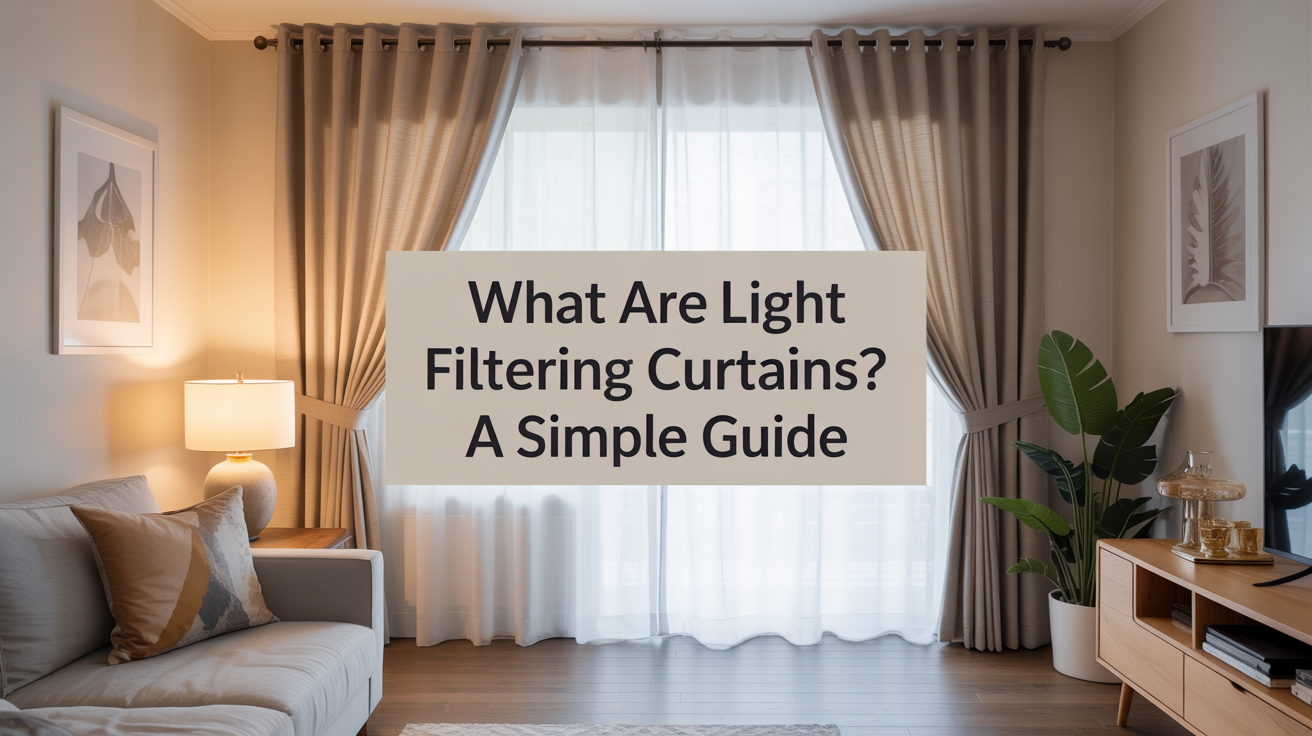
    You’re standing in your living room, squinting, too much sun. But you don’t want it pitch black either. That’s where light-filtering curtains come in.

    This guide breaks down exactly what light filtering curtains are and if they’re right for your space. I’ll show you how they work, what makes them different from blackout curtains, and where they shine (or don’t). No fluff. Just straight answers to help you decide.

    I’ve spent years helping people pick window treatments that actually fit their lives. Not just what looks good in photos. You’ll get honest insights here, the kind that save you from buying the wrong curtains twice. 

    By the end, you’ll know if light-filtering curtains solve your problem or if you need something else entirely. Let’s figure this out together.

    What Are Light Filtering Curtains?

    I’m going to help you understand these curtains. Light-filtering curtains soften sunlight instead of blocking it completely. You get a warm glow without harsh brightness.

    Definition and Function

    Definition and Function

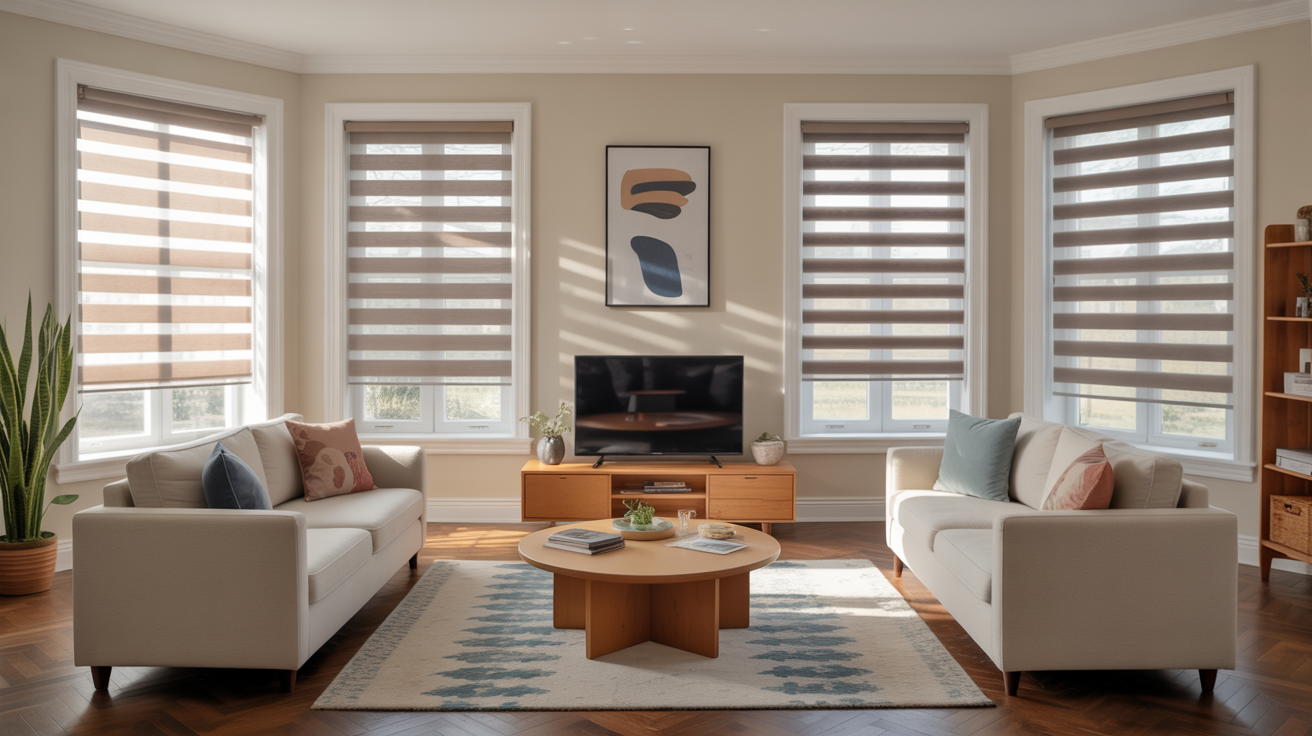
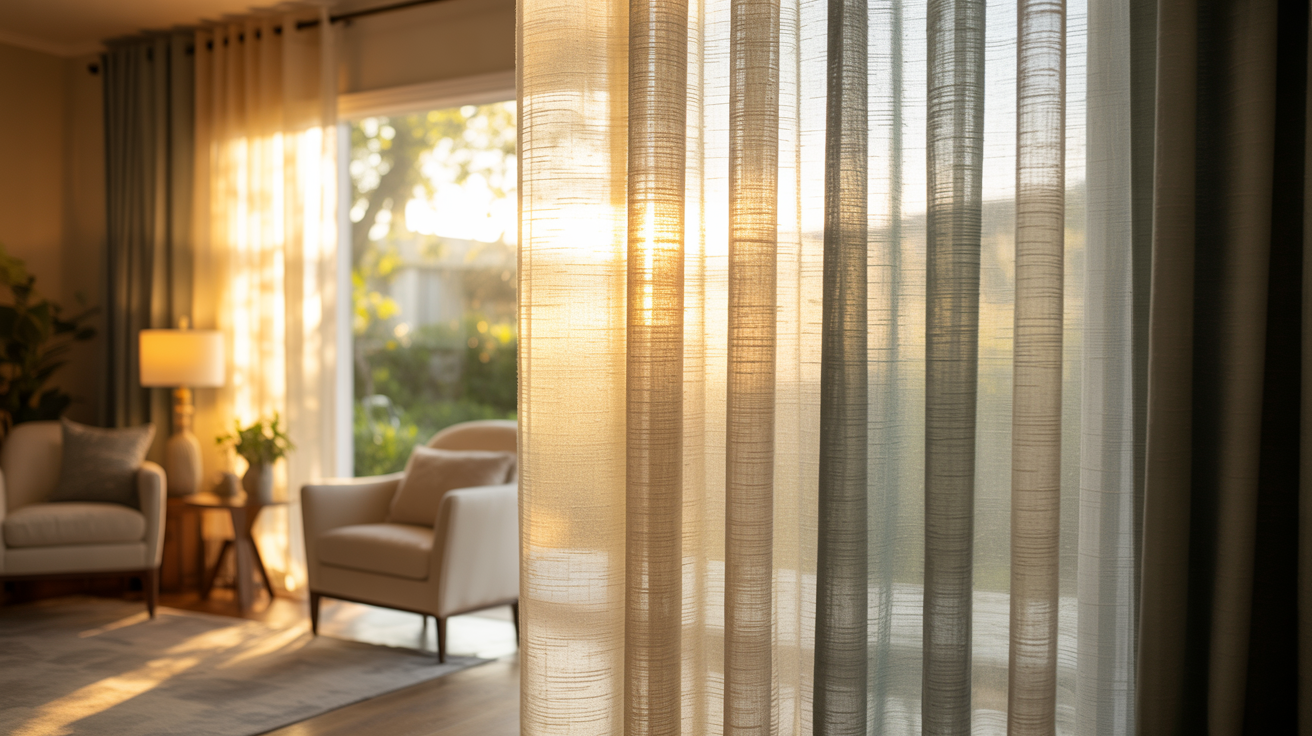
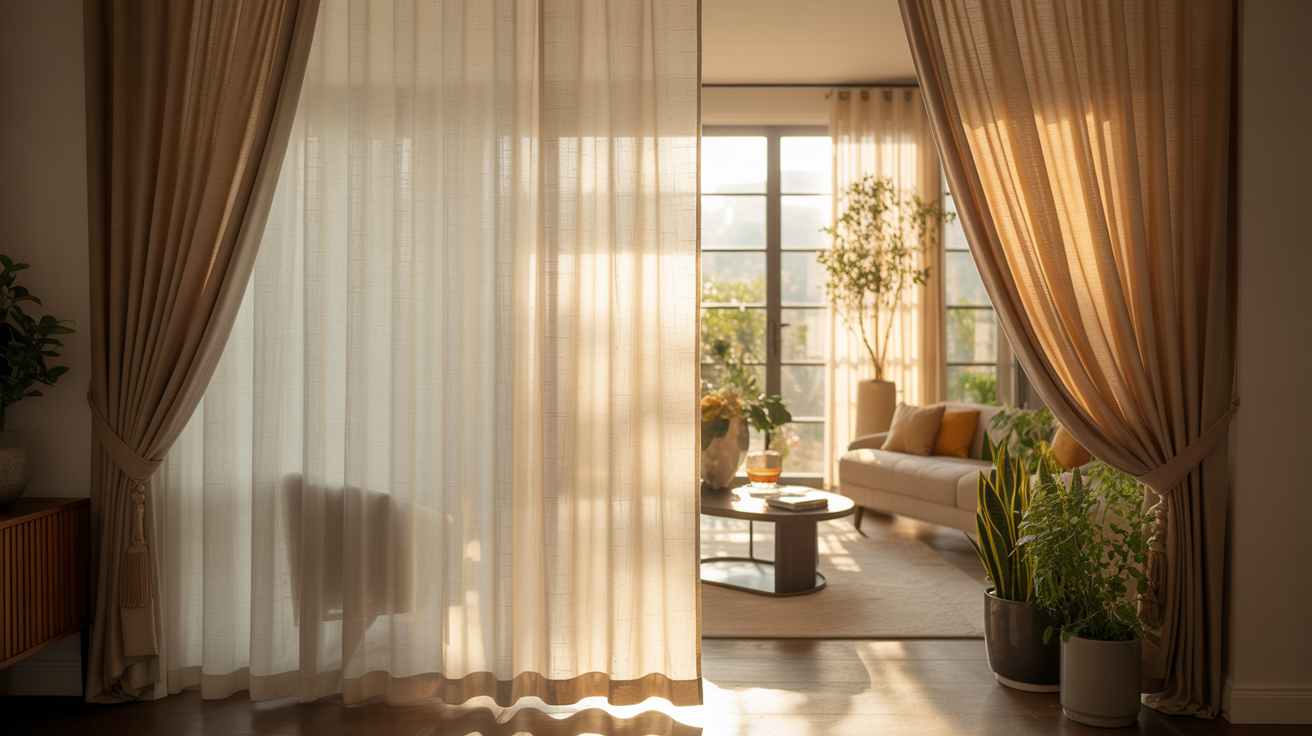
    Light-filtering curtains diffuse natural light throughout your room. They create a soft, natural glow that feels welcoming.

    • Soften harsh sunlight while keeping your space bright
    • Provide partial privacy during the day
    • Reduce glare on screens
    • Balance natural light and privacy needs

    You’ll love them in living rooms, dining areas, and home offices. Privacy stays intact while sunlight filters through. I find them perfect for spaces where you want brightness without the fishbowl effect.

    How Light-Filtering Curtains Work

    How Light-Filtering Curtains Work

    The secret is in the fabric weave and material. Common materials include polyester, linen blends, and cotton. Tightly woven fabric blocks more light. Loosely woven fabric lets more through.

    The “openness factor” determines how much light enters. Small gaps in the weave allow less light. Bigger gaps mean more light. Want more control? Try layering curtains with sheer panels. You can adjust them throughout the day for maximum versatility.

    Benefits of Light Filtering Curtains

    Light-filtering curtains do more than just cover your windows. They create the perfect balance between natural light and privacy. I’ll show you why they might be exactly what your home needs.

    Soft, Natural Lighting

    Soft, Natural Lighting

    You know that harsh glare from direct sunlight? Light filtering curtains eliminate it. They soften the light coming into your room. The result is a warm, cozy atmosphere.
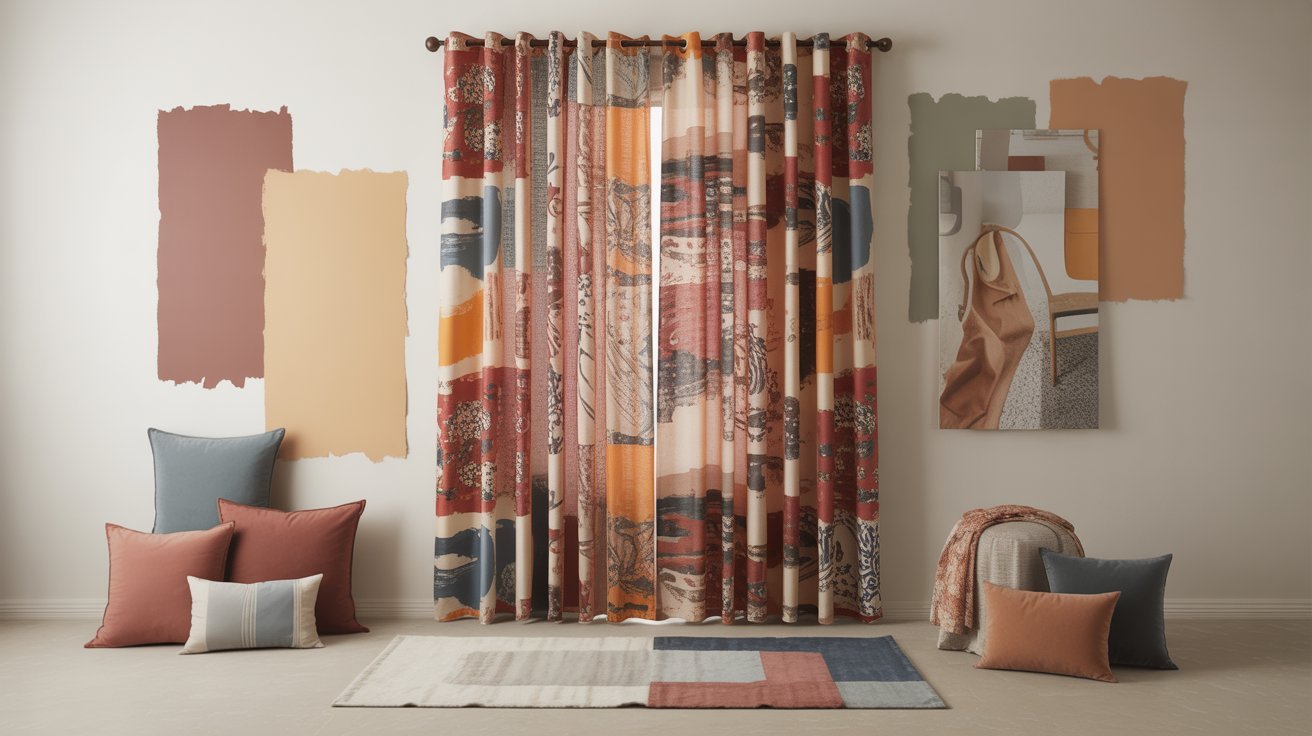
    These curtains let in just the right amount of daylight. Not too much. Not too little. Your room stays bright without feeling washed out. Plus, they make your décor look better by creating that soft, diffused glow you see in magazines.

    Improved Privacy

    Improved Privacy

    Here’s what I love about these curtains: they give you daytime privacy without making your room dark. People outside can’t see clearly into your space. But you still get to enjoy natural light.

    At night, things change a bit. The thicker your fabric, the more privacy you get. If you have bright lights on inside, people might see shadows or shapes from outside. Consider layering them with blinds if you need total privacy after dark.

    Energy Efficiency and Comfort

    Energy Efficiency and Comfort

    Think about this: when you have soft, diffused light all day, you don’t need to turn on as many lamps. Your electric bill thanks you. It’s a simple way to save energy.

    Some light filtering curtains offer thermal benefits too. It depends on your fabric and if they have a lining. 

    Here’s what they might do:

    • Keep rooms cooler in summer by diffusing intense sunlight
    • Reduce heat loss in winter (especially lined versions)
    • Lower your heating and cooling costs over time

    Not every curtain does all of this. But many help regulate temperature better than bare windows.

    Versatility in Style and Design

    Versatility in Style and Design

    You’ll find light filtering curtains in countless fabrics, colors, and patterns. Linen, cotton, polyester, blends, the options go on. Want something modern? Go for it. Prefer traditional? Easy to find.

    They work with almost any setup you have. Standard curtain rods. Decorative drapes. Even layered with blinds or shades. Mix and match until you get the look you want. Your style, your rules.

    Light Filtering vs Other Curtain Types

    Not all curtains are created equal. Each type serves a different purpose. I’ll break down how light-filtering curtains compare to your other options so you can make the right choice.

    Light Filtering vs Sheer Curtains

    Light Filtering vs Sheer Curtains

    Sheer curtains are the thinnest option you’ll find. They let in maximum light. Almost like having nothing on your windows at all. You get brightness, but you sacrifice privacy.

    • Sheer curtains are bright and transparent. Light-filtering curtains diffuse light and add privacy.
    • Sheers work for decoration, light filtering for daily use

    Light filtering curtains sit somewhere in between. Where should you use each one? Use sheer curtains over blinds or heavier drapes for decoration. Choose light filtering when you want privacy without losing natural light.

    Light Filtering vs Room Darkening Curtains

    Light Filtering vs Room Darkening Curtains

    Room darkening curtains use heavier fabrics that block most outside light. Not total darkness, but close. They’re a step up in coverage from light filtering options.

    • Bedrooms need room darkening for better sleep
    • Living areas work better with light filtering
    • Room darkening saves more energy

    Light-filtering curtains create gentle illumination throughout the day. Room-darkening fabrics create dimness instead. Both have their place depending on what you need from each room.

    Light Filtering vs Blackout Curtains

    Light Filtering vs Blackout Curtains

    Blackout curtains are the heavy hitters. They’re lined or foam-backed to block up to 99% of light. Total darkness is their specialty. You’ll find them in nurseries, home theaters, or bedrooms for people who work night shifts.

    • Blackout curtains block 99% of light.
    • They provide maximum insulation and noise reduction
    • Light filtering offers soft lighting instead

    You want gentle daylight, not a cave. Blackout curtains serve specific needs where darkness matters. Light filtering curtains shine when you want a balance between light and privacy.

    Choosing the Right Curtain for Your Space

    Choosing the Right Curtain for Your Space

    I know picking curtains can feel overwhelming. There are so many options. But I’ll help you narrow it down by focusing on what actually matters for your room.

    Factors to Consider

    Your room’s purpose matters most. Bedrooms need room-darkening or blackout curtains. You want good sleep, right? Living rooms work better with light filtering options. They let natural light in while still giving you some privacy.

    Think about your windows too. Here’s what you should consider:

    • Room purpose: Bedrooms need darkness. Living rooms need balance.
    • Window direction: East-facing windows get strong morning light. You’ll need better light control there. Shaded windows? Go lighter.
    • Privacy needs: High privacy areas need room darkening or blackout fabrics. Moderate privacy? Light filtering works fine.
    • Design preference: Neutral tones fit minimalist spaces. Patterned fabrics add visual warmth.

    Layering Options

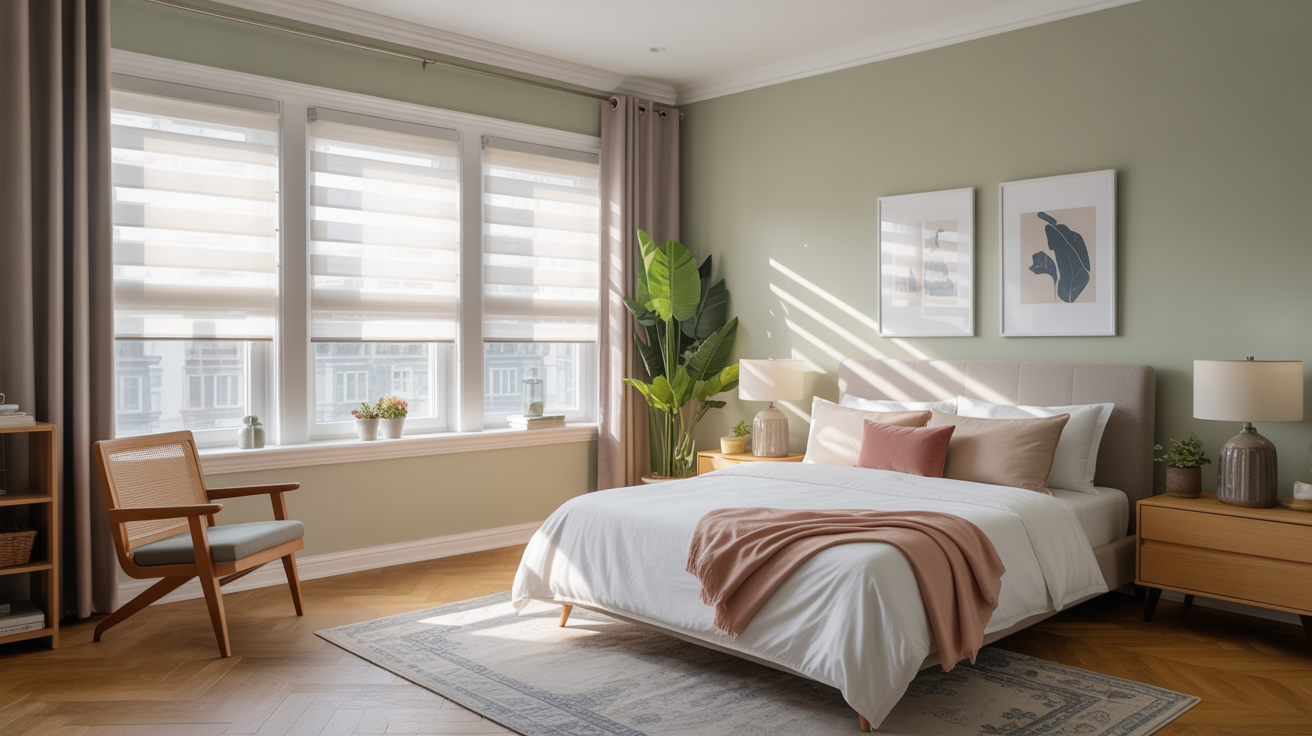
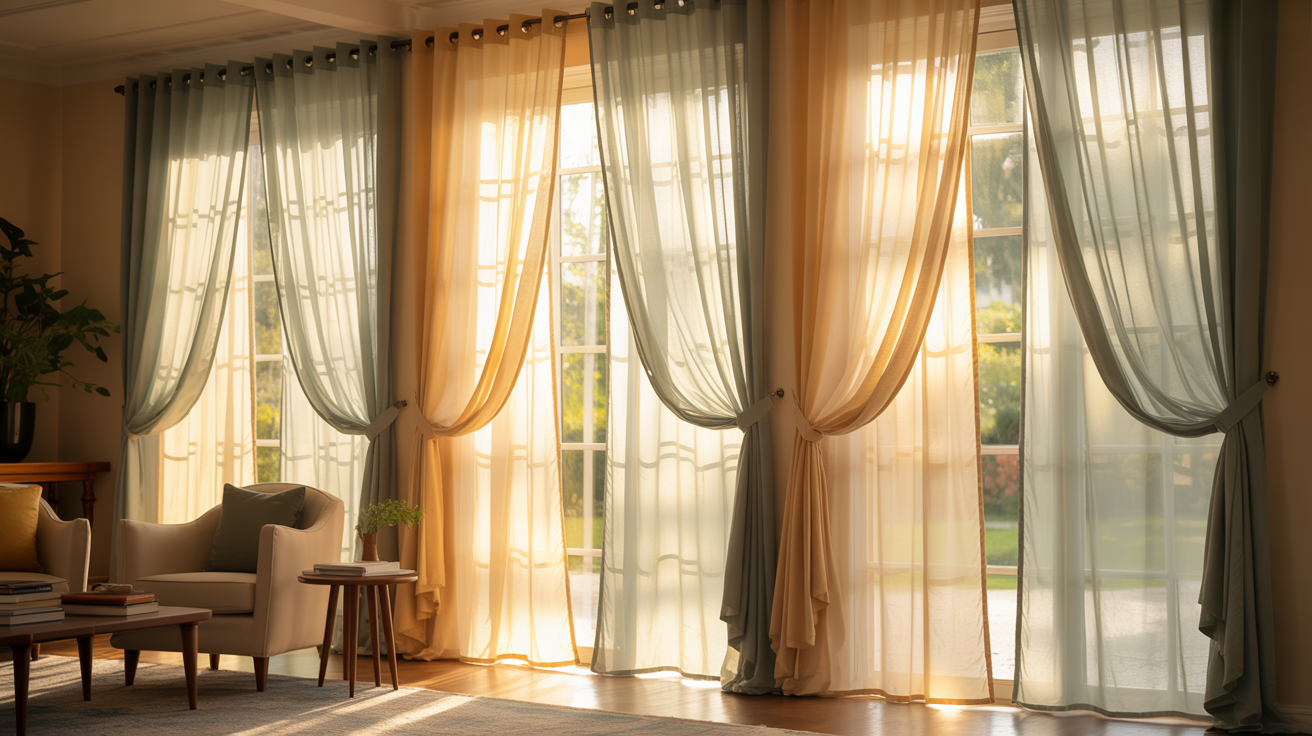
    Layering gives you flexibility. I recommend combining sheer curtains with light-filtering drapes. This setup lets you adjust throughout the day. Morning light? Keep the sheers closed. Evening privacy? Pull the heavier drapes.

    You can also add blackout liners to existing curtains. This saves money. Motorized systems make life easier, especially for hard-to-reach windows. Dual-rod setups work too. They let you control each layer separately without the tech.

    Conclusion

    So, what are light-filtering curtains? They’re the middle ground between wide-open windows and total darkness. They soften harsh sunlight, give you privacy during the day, and keep your space feeling comfortable without blocking everything out.

    Now you know how they stack up against blackout curtains, which rooms benefit most, and what to look for when shopping. You’ve got the information you need to make a smart choice for your home.

    Still have questions? Drop a comment below. I read every one and I’m happy to help you figure out the best window solution for your specific situation. And if this guide helped, share it with someone else who’s tired of squinting in their own living room.

    Frequently asked questions

    What are light-filtering curtains?

    Light filtering curtains are window treatments made from semi-sheer or loosely woven fabric that soften sunlight without blocking it completely. They reduce glare and UV rays while maintaining natural brightness in your room. Think of them as sunglasses for your windows; they dim harsh light but don’t create total darkness.

    Do light-filtering curtains provide privacy?

    Yes, during the daytime. Light-filtering curtains obscure the view into your home when it’s brighter outside than inside. However, at night with indoor lights on, people may see silhouettes or shadows from outside. For complete nighttime privacy, pair them with blinds or choose blackout curtains instead.

    What’s the difference between light filtering and blackout curtains?

    Light filtering curtains soften sunlight and allow visibility, while blackout curtains block 95-100% of light and provide complete darkness. Blackout curtains are thicker, heavier, and better for bedrooms or shift workers. Light-filtering curtains work best in living rooms, kitchens, and spaces where you want natural light.

    Which rooms work best with light-filtering curtains?

    Light filtering curtains excel in living rooms, dining rooms, kitchens, and home offices, anywhere you want soft, natural light throughout the day. They’re perfect for spaces where you socialize, work, or need to stay alert. Bedrooms work too if you don’t need pitch-black conditions for sleeping.

    Can you see through light-filtering curtains at night?

    From the outside looking in? Possibly. When your indoor lights are on at night, light-filtering curtains may reveal shapes, movement, or silhouettes to people outside. The thicker the fabric, the less visible you’ll be. For guaranteed nighttime privacy, add roller shades or switch to blackout curtains.

  • How to Pick Curtain Color That Fits Every Room

    How to Pick Curtain Color That Fits Every Room

    Choosing the right curtain color can change how your entire room looks and feels. While curtains serve the practical purpose of blocking light and giving you privacy, they also play a huge role in making your space feel complete. 

    The right color can make a small room feel bigger, a cold room feel warmer, or a plain room feel more interesting.

    This guide will walk you through the core rules for selecting curtain colors, show you which colors pair best with different wall colors, and share expert advice to help you make the perfect choice. By the end, you’ll know exactly how to pick a curtain color that works for your space and style.

    Needed Principles for Picking Curtain Colors

    Before you start shopping for curtains, understanding a few basic color principles will make your decision much easier. These rules help create balance and harmony in any room.

    The 60 30 10 Color Rule

    The 60 30 10 Color Rule

    Interior designers use this simple formula to create balanced rooms. In this rule, 60% of the room should be your main color, which is usually your wall color. 

    The secondary color makes up 30% of the space, and this is often where your curtains come in. The final 10% is for accent colors through pillows, art, and small decorative items.

    This breakdown helps prevent any single color from taking over the room. When you follow this guide, your curtains become an important middle ground between your walls and your smaller accents. This creates a room that feels complete and well planned.

    Light vs. Dark: Impact on Room Perception

    Light vs. Dark: Impact on Room Perception

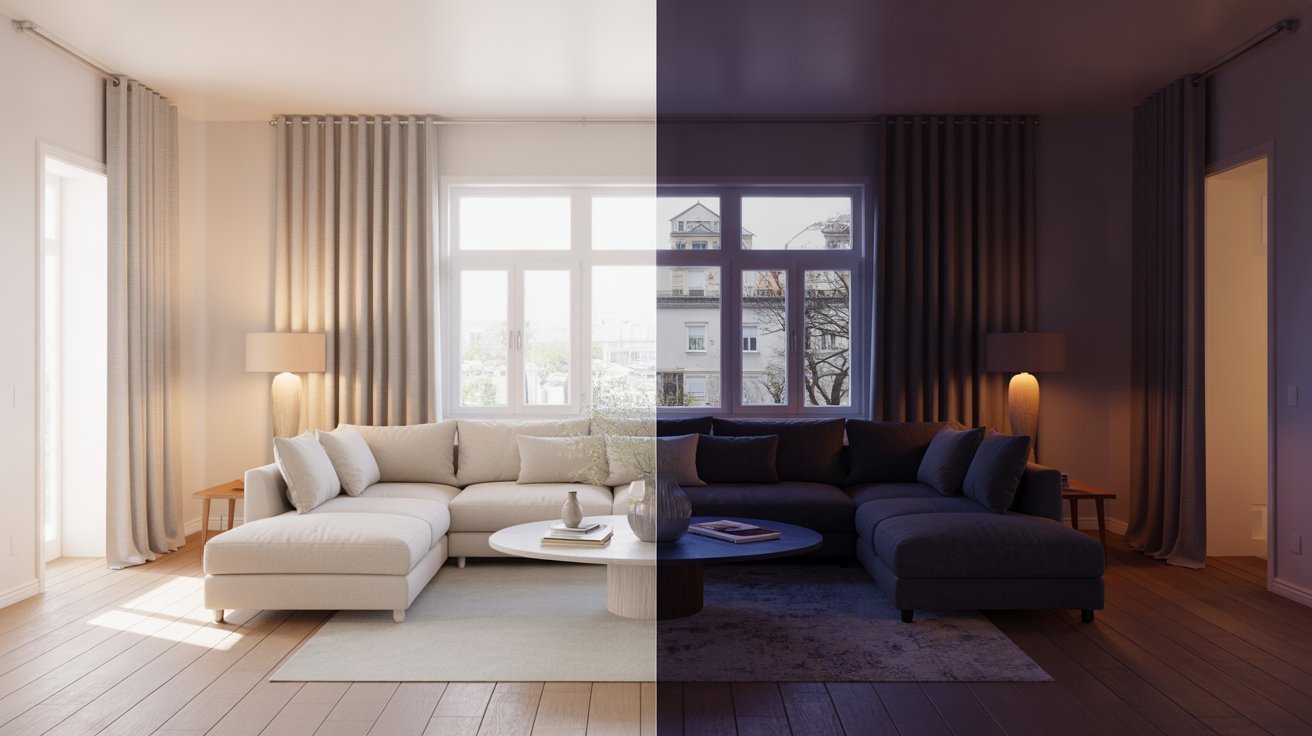
    The brightness of your curtains changes how big or small a room feels. Light colored curtains reflect more sunlight and make walls seem farther apart, which is perfect for small rooms or dark spaces that need brightening. 

    Soft whites, creams, and pastels can open up a cramped room and make it feel airy.

    Dark curtains do the opposite by absorbing light and making spaces feel more intimate. They work best in large rooms that might feel empty or cold. 

    Rich colors like navy, charcoal, and deep green add warmth and coziness to oversized bedrooms or living rooms.

    Texture Creates Dimension

    Texture Creates Dimension

    Even when you choose curtains in the same color family as your walls, texture keeps the room from looking flat. 

    A room with matte-painted walls and smooth silk curtains creates visual interest through different surfaces. Velvet curtains against flat walls add depth without introducing new colors.

    Mixing textures matters just as much as mixing colors. A linen curtain and a cotton wall covering both might be white, but they’ll each catch light differently. This creates layers in your design that make the space feel richer and more finished.

    Curtain Color Guide for Every Wall Color

    Now that you understand the basic rules, let’s look at specific curtain colors that work with common wall colors. These combinations have been tested and proven to create beautiful rooms.

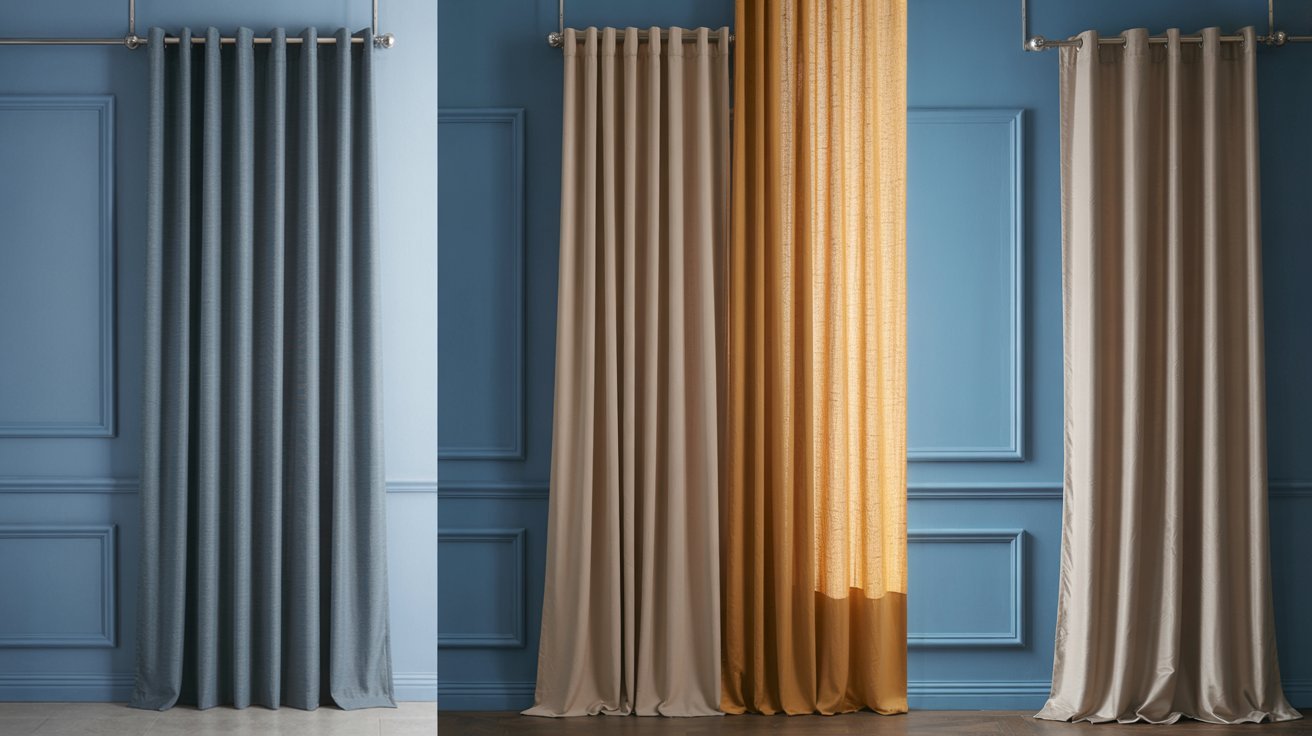
    White Walls

    White Walls

    White walls are the most flexible starting point for curtain selection. For a clean, minimal look, choose white or light grey curtains that blend seamlessly with the walls. This creates a bright, open feeling that never goes out of style.

    If you want to add a touch of color without going bold, soft pastels work beautifully. Light blues, gentle pinks, and mint greens add personality while keeping the room feeling fresh. 

    For those who want drama, navy, charcoal, or even black curtains create a strong contrast that makes white walls pop.

    Beige and Cream Walls

    Beige and Cream Walls

    Beige and cream walls have warm undertones that pair well with earthy colors. Rust, dusty rose, and olive green curtains bring out the warmth in these neutral walls. These combinations feel grounded and comfortable, perfect for living rooms and bedrooms.

    For a more refined look, deep blues and purples create beautiful contrast against beige without clashing. 

    On the brighter side, white, cream, or soft yellow curtains keep the room feeling light and open. These neutral-on-neutral combinations never look boring when you play with different shades.

    Grey Walls

    Grey Walls

    Grey walls offer a modern foundation that works with many curtain colors. For a sleek, contemporary feel, try silver, black, or different shades of grey curtains. 

    Mixing cool and warm greys adds depth without introducing new colors.

    To soften grey walls, powder blue, blush pink, or light brown curtains add warmth. These colors prevent grey rooms from feeling cold or unwelcoming. 

    The key is choosing curtains with slightly warm undertones to balance grey’s natural coolness.

    Blue Walls

    Blue Walls

    Blue walls create calm, peaceful spaces that work well with several curtain options. Staying within the blue family using different shades creates a monochromatic look that feels cohesive and relaxing. Light blue walls with navy curtains or vice versa both work well.

    For contrast, warm colors like beige, mustard, or soft orange curtains balance blue’s coolness. These combinations feel balanced and lived in. 

    If you want something special, metallic silver or gold curtains add glamour without overwhelming the blue walls.

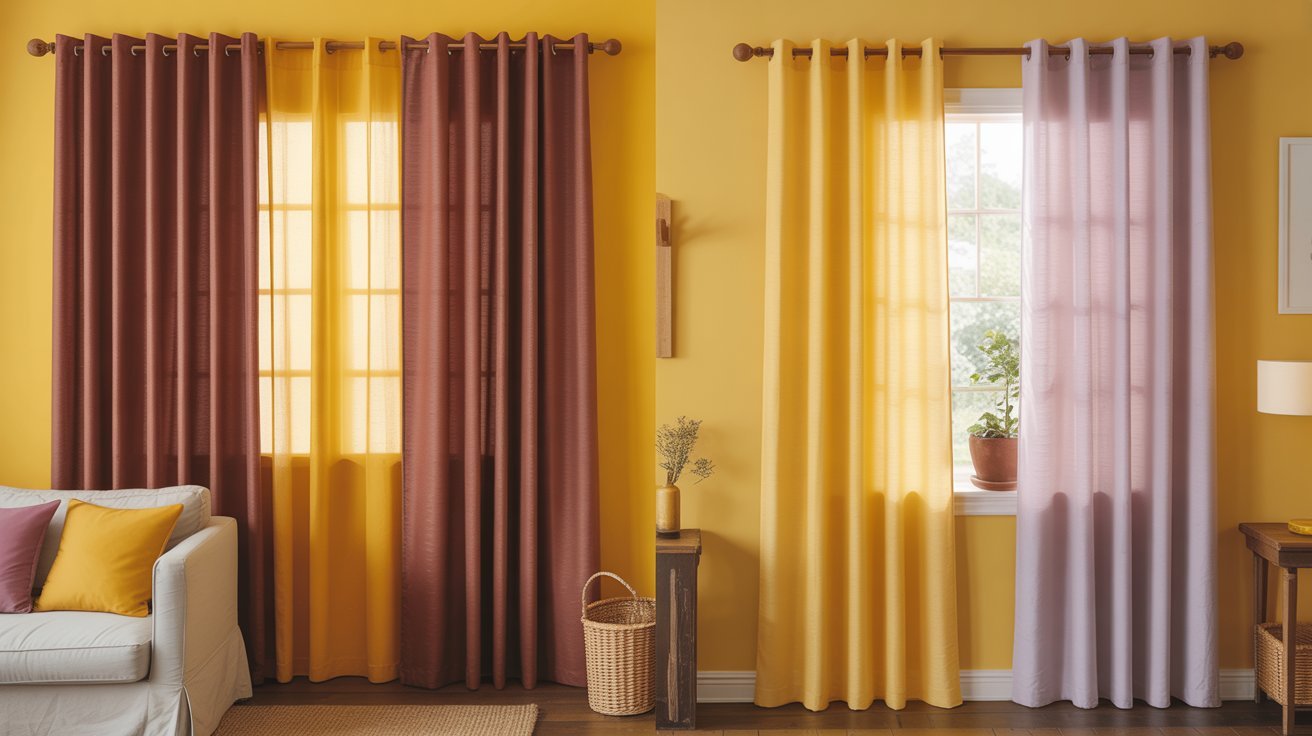
    Yellow Walls

    Yellow Walls

    Yellow walls bring sunshine and energy to a room, but need careful curtain pairing. Rich, deep colors like burgundy, chocolate brown, or aubergine curtains ground bright yellow and prevent it from feeling too intense. These combinations feel warm and welcoming.

    For a lighter approach, pale yellow or soft lavender curtains keep the room feeling bright and cheerful. 

    These softer combinations work well in kitchens and breakfast rooms where you want an uplifting mood.

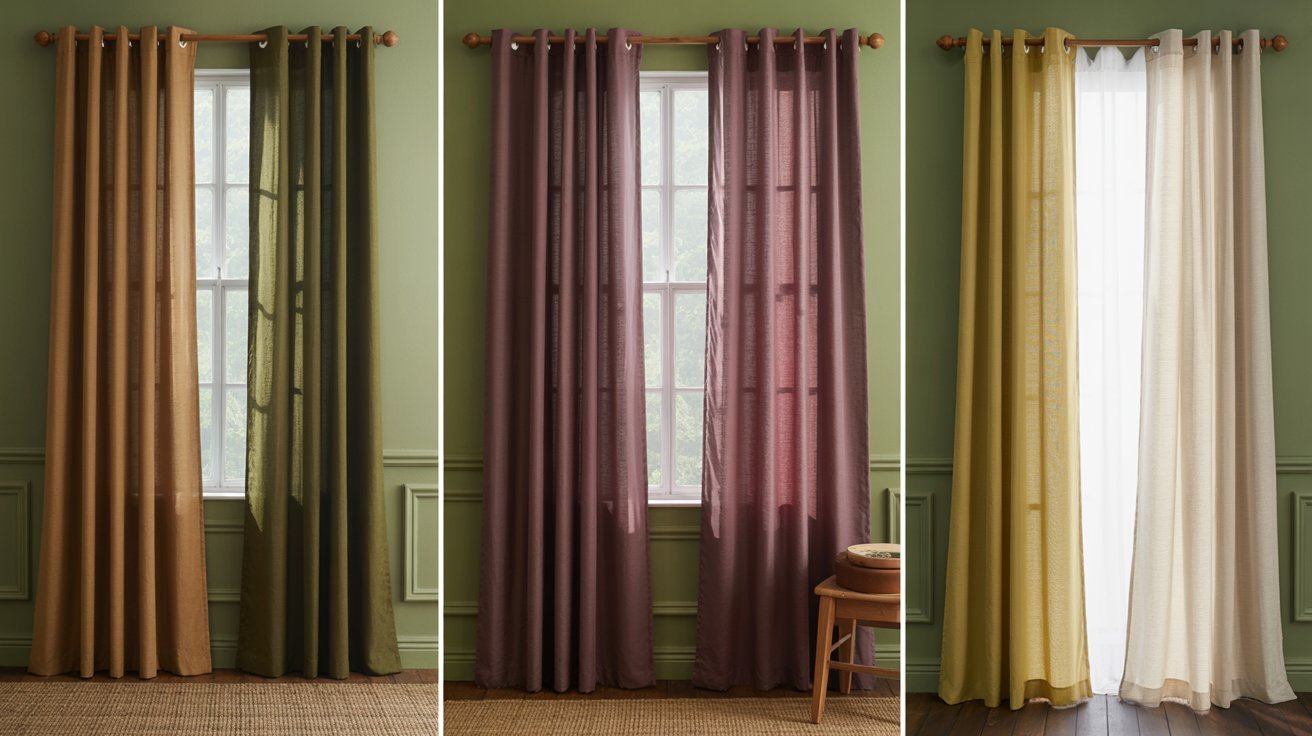
    Green Walls

    Green Walls

    Green walls connect to nature and work beautifully with earth tones. Tan, brown, or deeper forest green curtains create a natural, organic feeling in spaces. 

    These combinations feel grounded and peaceful, perfect for bedrooms and home offices.

    For a richer look, burgundy or plum curtains add depth to green walls. For keeping things light and fresh, ivory or soft yellow curtains brighten green spaces. The key is matching the intensity of your curtain color to your wall shade.

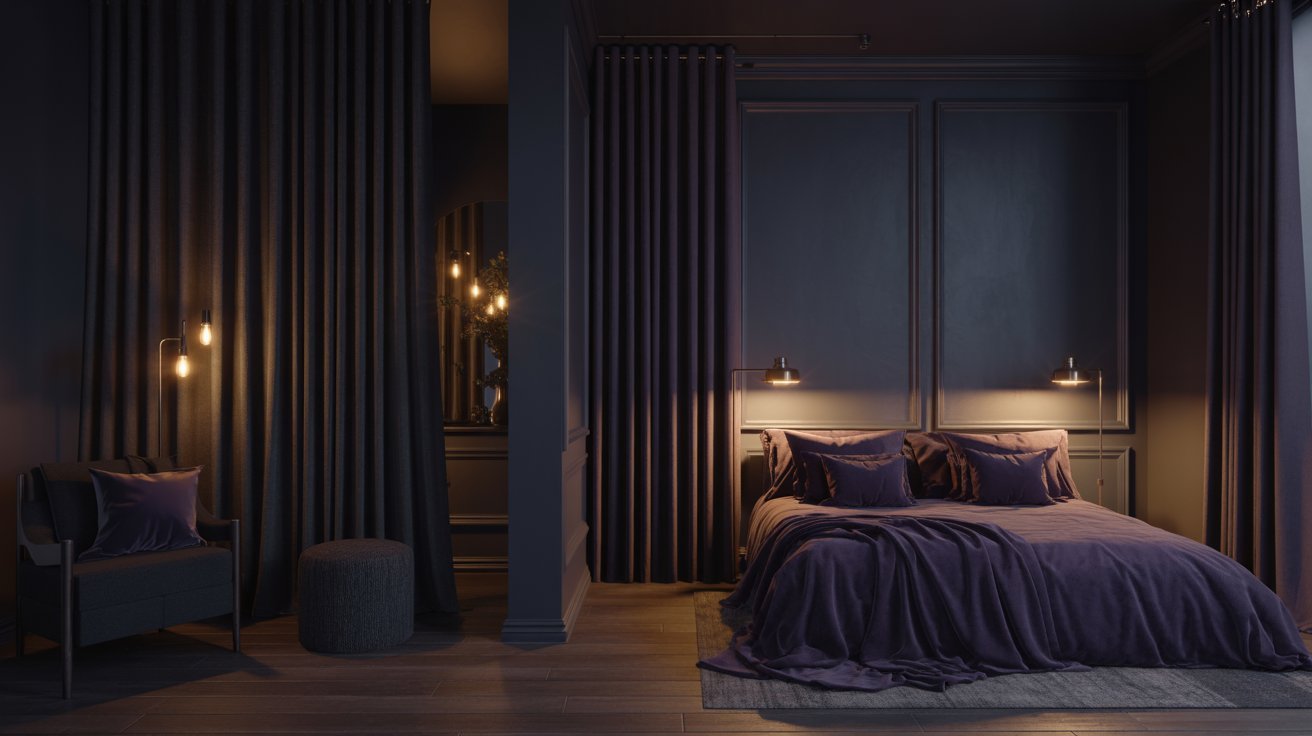
    Dark Walls with Dark Curtains

    Dark Walls with Dark Curtains

    Using dark curtains with dark walls can create a cozy, dramatic space, but it requires careful planning. 

    The trick is creating subtle contrast through texture and slight color variation. Matte dark walls with shimmery or glossy dark curtains prevent the room from feeling like a cave.

    You can also use slightly different shades of the same dark color. Charcoal walls with black curtains or navy walls with deep purple curtains create depth while maintaining the moody feeling. Good lighting becomes extra important in these spaces to keep them from feeling closed in.

    When to Choose Curtain Colors in Your Design Timeline

    Timing matters when learning how to pick a curtain color. The order in which you select room elements affects how well everything works together.

    Why Curtains Should Come Last

    Why Curtains Should Come Last

    Most designers recommend choosing curtains after you’ve selected your paint color, area rugs, and major furniture pieces. 

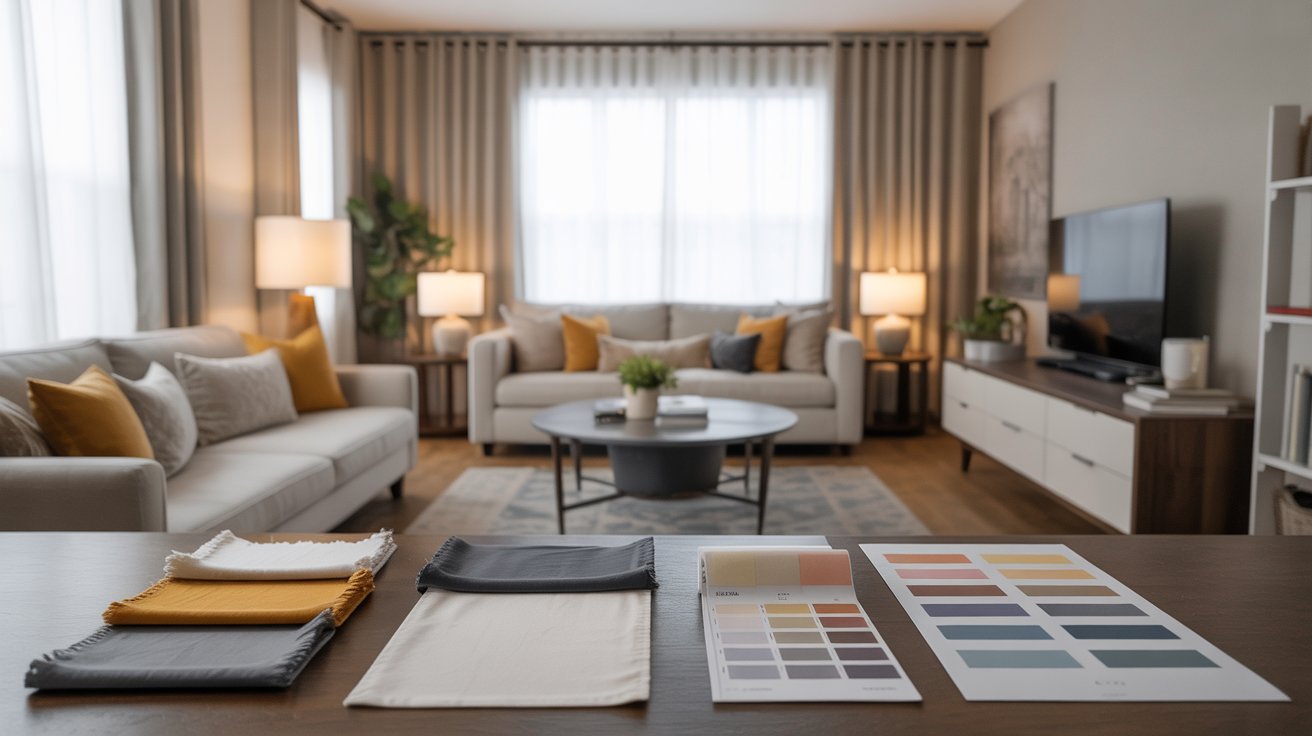
    This approach ensures your curtains tie everything together rather than fighting with other elements. When you shop for curtains with paint swatches and fabric samples from your furniture, you can see exactly which colors work.

    Starting with larger, more permanent items makes sense because these are harder to change. Paint is a bigger project than buying new curtains, and furniture represents a bigger investment. Curtains become the finishing touch that pulls your entire color scheme together.

    The Exception: Statement Pattern First

    The Exception: Statement Pattern First

    Sometimes you’ll fall in love with a patterned curtain that’s too perfect to pass up. In these cases, the curtain fabric can become your inspiration for the entire room. 

    Pull colors from the pattern to use on walls, choose furniture that complements the curtain’s style, and let this bold choice guide your other decisions.

    This reverse approach works when the curtain fabric truly speaks to you and contains multiple colors you can work with. 

    Make sure the pattern includes enough colors to build a complete room scheme around it. This method requires more planning but can result in a unique, personal space.

    Pro Tips for Selecting the Perfect Curtain Color

    Making the final decision on how to pick a curtain color becomes easier when you follow these professional tips. 

    These small steps prevent expensive mistakes and ensure you’re happy with your choice.

    • Always order fabric swatches to test in your actual lighting. Seeing the actual fabric in your room shows you the true color and texture. Natural light changes throughout the day, so check your swatches in morning, afternoon, and evening light.
    • Consider how room type influences boldness in your color choice. Living rooms can handle more adventurous colors since they’re social spaces where energy is welcome. Bedrooms usually benefit from calmer curtain colors that promote relaxation.
    • Look at your trim color for subtle coordination that makes a big difference. Matching your curtains to white trim creates a clean frame, while coordinating with wood trim adds warmth throughout the space.
    • Account for changing natural light throughout the day before making your final decision. What looks perfect at noon might look completely different at sunset. Check how your curtain color appears in different lighting conditions.
    • Don’t forget your furniture and rug colors in the overall scheme. Your curtains need to work with these elements, not compete with them. If your sofa is a bold color, you might want simpler curtains. If your furniture is neutral, your curtains can be where you add personality.

    Small details like these make the difference between a room that looks thrown together and one that looks professionally designed. 

    Taking time to consider each factor ensures your final choice enhances both the mood and function of your space.

    Conclusion

    Learning how to pick a curtain color comes down to balancing proven design rules with your personal taste. Remember the 60 30 10 rule for color distribution, understand how light and dark colors affect room size, and consider texture as part of your color choice. 

    Most importantly, always test fabric samples in your actual space before making a final purchase. Think about what mood you want each room to have. Do you want energizing spaces or calming retreats? Let that guide your color choices. Take your time with this decision since curtains are visible every day and changing them requires effort. 

    The right curtain color should make you smile every time you walk into the room. Enjoy the creative process and trust your instincts once you’ve learned the basic principles.

    Frequently Asked Questions

    Can I use patterned curtains with patterned wallpaper?

    Yes, but use different pattern scales and make sure they share at least one common color. A large floral wallpaper can work with small geometric curtains. Keep one pattern subtle to avoid visual chaos.

    Should curtains be lighter or darker than furniture?

    It depends on what you want to emphasize. Lighter curtains recede into the background and highlight your furniture. Darker curtains become a focal point and can balance light colored furniture nicely.

    How do I choose curtain colors for rooms with multiple wall colors?

    Look for the undertones that your different wall colors share. Choose curtains in a neutral that contains those undertones, or pick up one color from your walls and use it for the curtains.

    What curtain colors work best for small rooms?

    Light colors make small rooms feel more spacious. White, cream, pale grey, and soft pastels reflect light and push walls outward visually. Vertical stripes can also make ceilings seem higher.

    Do metallic curtains work with any wall color?

    Metallic curtains are very flexible since they reflect surrounding colors. Silver works best with cool tones, while gold suits warm colors. They add shine to any space but work especially well with neutral walls.

  • Find the Right Floating Shelf Height for Your Home

    Find the Right Floating Shelf Height for Your Home

    Getting your shelves at the right height can make or break a room’s look and usefulness. Too high, and you can’t reach your items. Too low, and they get in the way or look awkward.

    The proper floating shelf height depends on which room you’re working with and what you plan to store or display. Each space in your home has different needs.

    In this guide, you’ll learn the exact measurements for every room, from kitchens to bathrooms. We’ll cover standard rules and special cases so you can hang your shelves with confidence. Let’s start with the most common rooms in your home.

    Ideal Floating Shelf Height by Room

    The best placement changes based on where you’re installing your shelves and how you’ll use them. Here are specific guidelines for each room.

    Kitchen Floating Shelf Height

    Kitchen Floating Shelf Height

    Place shelves 18 to 24 inches above your countertop if you’re mounting them in a work area. This height lets you grab plates, cups, and cooking supplies without stretching or straining. The space also gives you room to use small appliances on the counter below.

    For general kitchen wall placement away from counters, aim for 4 to 4.5 feet from the floor. This floating shelf height works well for storing items you don’t use every day but still want within easy reach. Make sure you can see what’s on the shelf without standing on your toes.

    Living Room Floating Shelf Height

    Living Room Floating Shelf Height

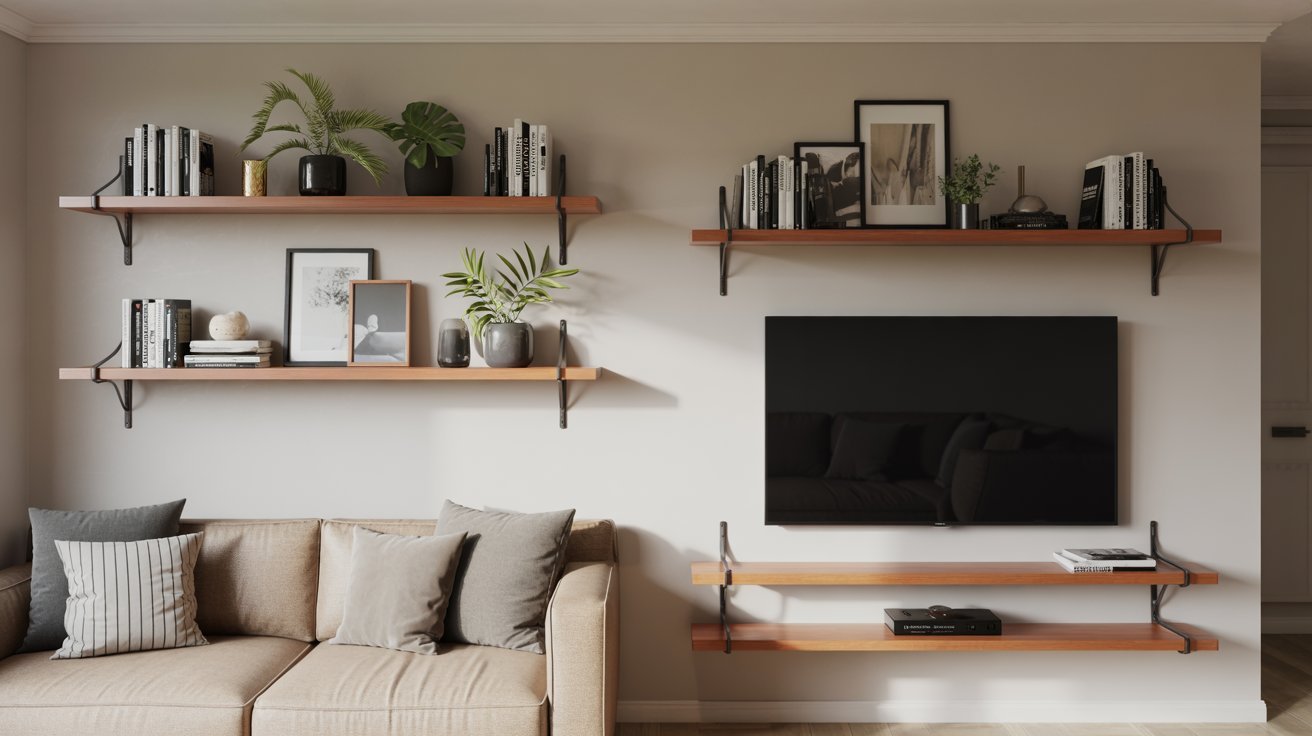
    If you’re hanging a shelf above your couch, leave about 10 inches between the back of the sofa and the bottom of the shelf. 

    This creates enough space for people to sit comfortably without bumping their heads. It also gives you room to add decor that won’t feel cramped.

    Above your TV, the right height depends on your screen size and where you like to look while watching. 

    Generally, place shelves at least 6 to 8 inches above the TV to avoid blocking the screen. For other living room walls without furniture below, the standard 4 to 4.5 feet from the floor works perfectly for displaying books, plants, or photos.

    Bedroom Floating Shelf Height (Above Bed)

    Bedroom Floating Shelf Height (Above Bed)

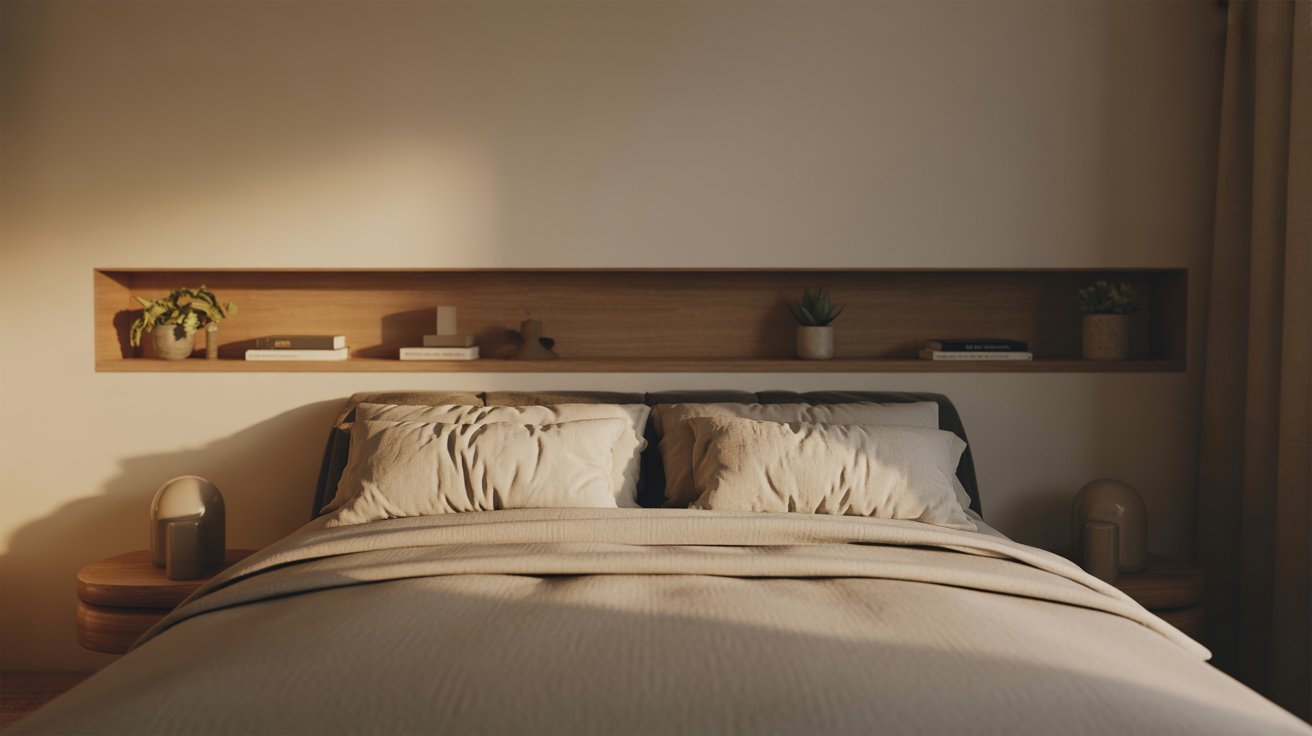
    Mount bedroom shelves 8 to 12 inches above your headboard for the best look and function. This gives you space to add a lamp, phone, or small decor items without them feeling too far away.

    Think about what you’ll put on the shelf before you drill. If you want just decor, you can go higher. 

    If you need to reach items like your phone charger or a book, stay on the lower end. Also, make sure there’s enough clearance when you sit up in bed so you don’t hit your head.

    Bathroom Floating Shelf Height

    Bathroom Floating Shelf Height

    Place shelves 2 feet (24 inches) above your toilet tank for the most common bathroom setup. This height keeps items easy to grab while looking balanced in the space. You can store extra toilet paper, towels, or small decor pieces here.

    Near your mirror or above the vanity, consider 4 to 6 inches above the sink if you need quick access to everyday items like toothbrushes or soap. 

    Make sure the shelf doesn’t block your mirror view. If you have a towel bar, leave at least 50 inches from the floor to that bar and place shelves accordingly to avoid a cluttered look.

    General Floating Shelf Height Guidelines

    The most common rule for floating shelf height is the eye level standard, which sits between 4 and 5 feet from the floor. This measurement works for most people because it puts items at a natural viewing and reaching height.

    Why does this work so well? Most adults can see and access this height without effort. 

    Key points to remember:

    • The 4 to 5 foot range works in most rooms with standard 8 to 9 foot ceilings
    • For rooms with higher ceilings (10 feet or more), you can go up to 5.5 feet
    • For lower ceilings (7 feet or less), stick closer to 4 feet
    • In hallways, place shelves 5 to 6 feet high since people walk under them

    Always check your ceiling height before finalizing your measurements. Taller rooms need higher shelves to look proportional, while shorter rooms need lower placement to avoid making the space feel cramped.

    Vertical Spacing Between Multiple Floating Shelves

    When you hang multiple shelves on the same wall, spacing matters just as much as the height of each shelf. The right distance keeps things looking good and working well.

    Standard Spacing Recommendations

    Standard Spacing Recommendations

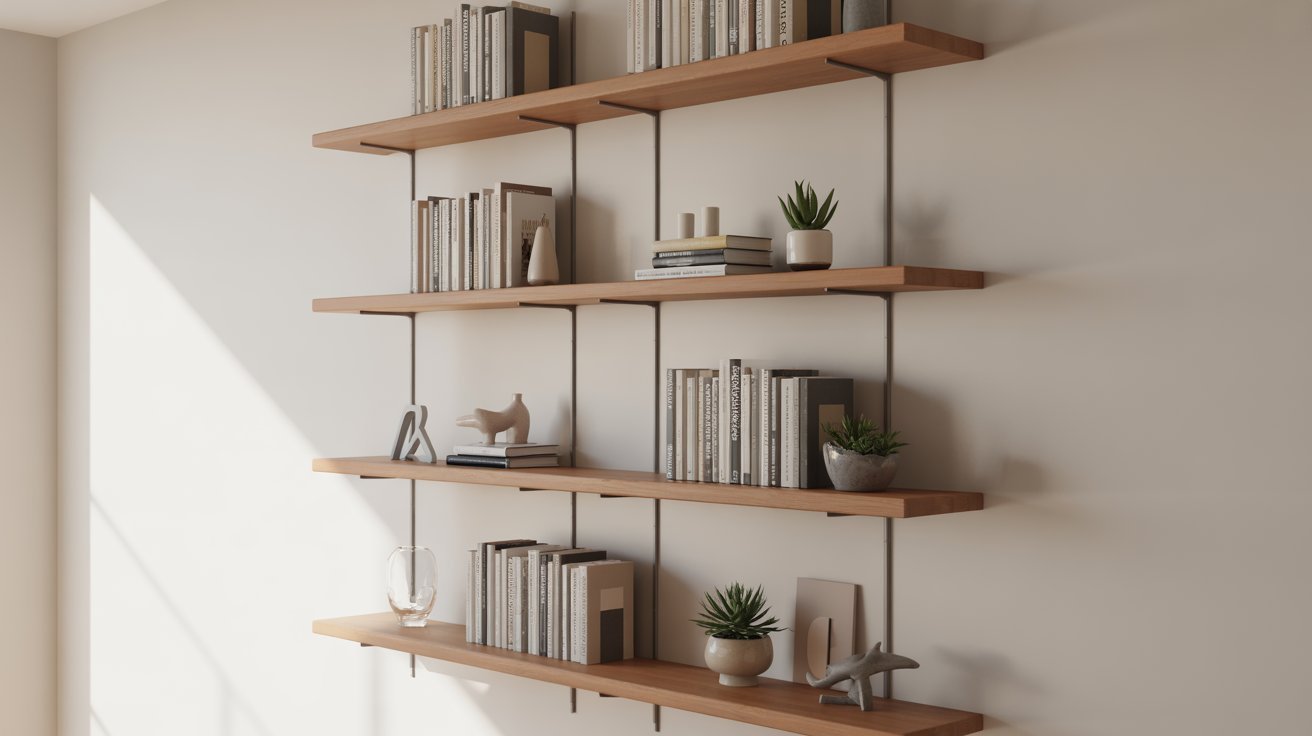
    Keep at least 12 inches between each shelf as a minimum. This gives you enough room for most books, small plants, and common household items. Going less than 12 inches makes the wall look crowded and limits what you can display.

    A range of 8 to 16 inches works for most situations, depending on what you’re storing. Measure your tallest items first, then add 2 to 3 inches for easy access. This extra space prevents you from having to squeeze items onto shelves or struggle to pull them down.

    Room Specific Spacing

    Room Specific Spacing

    Kitchen shelves need more space because you store larger items like mixing bowls, pitchers, and appliance parts. Aim for 15 to 21 inches between kitchen shelves to fit these bigger pieces comfortably.

    Living room display shelves can be closer together at 12 to 16 inches since you’re usually showing off smaller decor items. 

    If your shelves are purely for looks rather than heavy storage, you can go with tighter spacing. For functional storage where you grab items often, use wider spacing so things don’t feel packed in.

    Additional Height Guidelines for Specific Situations

    Some spots in your home need special floating shelf height rules. Here’s what to know for less common but still important placements.

    Consider these specific situations:

    • Above a desk: Place shelves 22 to 24 inches above the desk surface for supplies you use while working
    • In entryways: Mount at 5 feet from the floor for keys, mail, and small items you need when leaving
    • Corner shelves: Follow the same room rules, but account for sightlines from multiple angles
    • With furniture below: Always measure from the furniture top, not the floor, and add buffer space

    Each of these situations requires thinking about how you move through the space and what you’ll store. The goal is to make items easy to reach without creating obstacles in your daily routine.

    Tips for Hanging Floating Shelves at the Right Height

    Getting your measurements right the first time saves you from extra holes in your wall. Follow these tips for perfect placement every time.

    Start by measuring your furniture dimensions if you’re hanging shelves above or near other pieces. Use those numbers as your starting point rather than guessing. 

    Important steps include:

    • Download a level app on your phone or use a physical level tool for straight mounting
    • Think about what items you’ll display and measure those first
    • Leave clearance space where people walk by or sit nearby (at least 2 to 3 inches)
    • Find your wall studs with a stud finder (they’re usually 16 inches apart)
    • Mark your desired height with painter’s tape and live with it for a day to test
    • Measure the height of decor items to ensure they fit with enough breathing room
    • Double-check all measurements before drilling any holes

    Testing with tape helps you see if the height feels right in real life, not just on paper. You can adjust the tape up or down until it looks perfect for your space and needs.

    Conclusion

    Choosing the right floating shelf height doesn’t have to be complicated. Each room has its own sweet spot, but these are flexible starting points, not strict rules.

    Feel free to adjust based on your height, what you’re storing, and your room layout. A person who’s 5 feet tall will want different measurements than someone who’s 6 feet tall.

    Remember the old saying: measure twice, drill once. Taking extra time to plan prevents mistakes and wasted effort. Use the guidelines in this post as your foundation, then customize them to fit your life and style.

    Frequently Asked Questions

    How Do You Determine the Best Height for a Floating Shelf?

    Start with the eye level rule of 4 to 5 feet from the floor. Then adjust based on the room type, ceiling height, and what you plan to store or display on the shelf.

    Can Floating Shelves Be Hung at Different Heights in the Same Room?

    Yes, varying shelf heights can create visual interest and serve different purposes. Just make sure the overall look feels balanced and each shelf has a clear reason for its placement.

    What Tools Do You Need to Hang Floating Shelves at the Correct Height?

    You’ll need a measuring tape, a level tool or app, a stud finder, a pencil for marking, a drill, and painter’s tape for testing placement before making permanent holes.

    Should Floating Shelf Height Change Based on Ceiling Height?

    Yes, rooms with higher ceilings (10+ feet) can handle shelves at 5.5 feet, while lower ceilings (7 feet or less) need shelves closer to 4 feet for good proportions.

    How Much Weight Can a Floating Shelf Hold at Different Heights?

    Weight capacity depends on mounting method and stud placement, not height. Shelves anchored into studs hold 25 to 50 pounds per stud, regardless of how high you mount them.

  • Blackstone Outdoor Kitchen Ideas for Every Backyard

    Blackstone Outdoor Kitchen Ideas for Every Backyard

    Are you ready to take your outdoor cooking to the next level? A Blackstone griddle can become the heart of an amazing outdoor kitchen. These flat-top cookers have changed how people think about backyard meals. More homeowners are setting up outdoor cooking spaces that go way beyond a simple grill.

    Blackstone griddles offer a large, flat cooking surface that lets you make everything from pancakes to stir fries. The even heat and spacious cooking area make meal prep easier and more fun. 

    This guide will showcase practical and creative Blackstone outdoor kitchen ideas that work for various spaces and budgets. You’ll find layouts, storage tips, and design concepts that match your cooking style.

    Let’s look at ways to build the outdoor kitchen you’ve been dreaming about.

    Best Blackstone Outdoor Kitchen Ideas

    When planning your outdoor cooking space, think about how you’ll use it most often. Each setup can focus on different types of meals and cooking styles. Here are nine practical ideas to inspire your design.

    1. Create a Dedicated Grilling Station for Burgers and Steaks

    1. Create a Dedicated Grilling Station for Burgers and Steaks

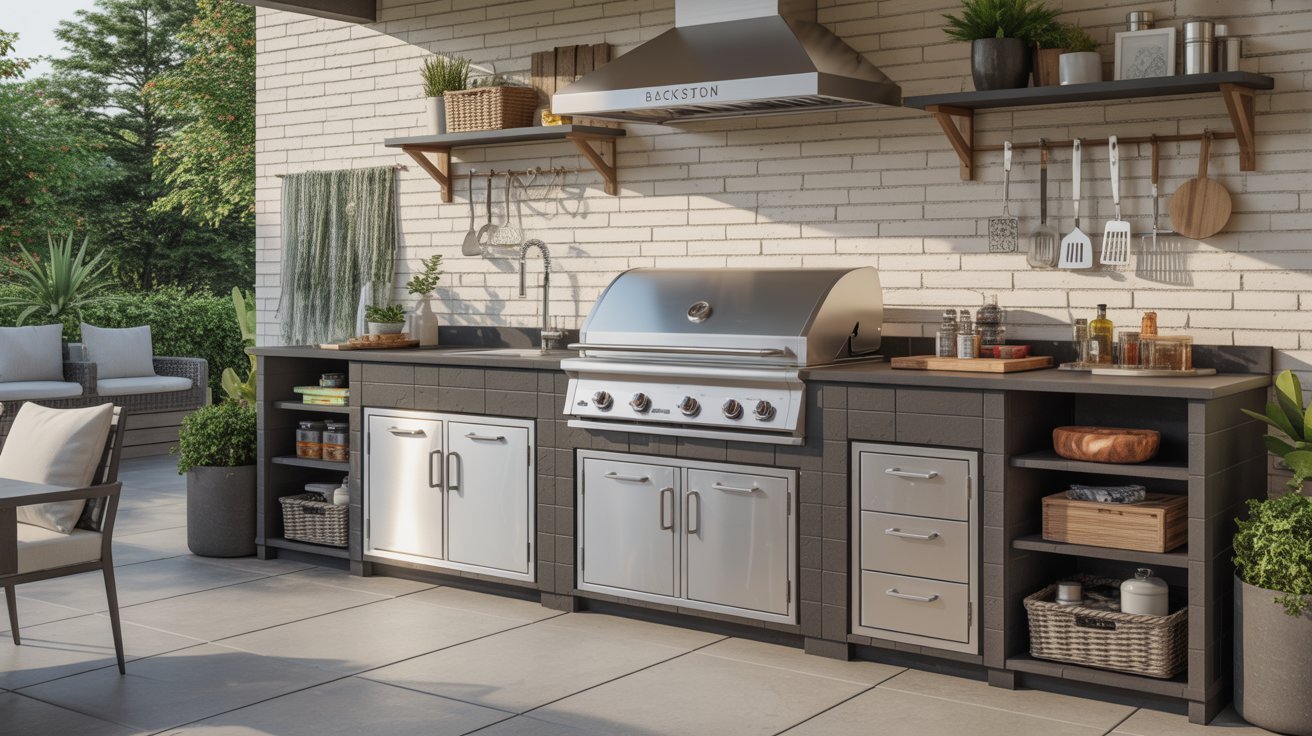
    Make your Blackstone the main star of your cooking area. Place it in the center of your counter space with room on both sides. This gives you spots to set down plates, seasonings, and raw ingredients. Having prep space next to your griddle makes cooking faster and cleaner.

    A centered griddle station looks great and works well for entertaining. Guests can gather around and watch you cook. 

    Add some overhead lighting so you can see what you’re doing when the sun goes down. Keep your most-used tools hanging on hooks nearby so everything stays within reach.

    2. Build an Outdoor Pizza Kitchen Setup

    2. Build an Outdoor Pizza Kitchen Setup

    Pair your Blackstone with a pizza oven for the ultimate cooking combo. The griddle handles appetizers and side dishes while the oven bakes perfect pizzas. Set up a counter area between the two where you can roll out dough and arrange toppings. This layout lets you work on multiple dishes at once.

    Give yourself plenty of counter space for pizza prep work. You’ll need room for flour, sauce, cheese, and all your favorite toppings. 

    Store pizza tools like peels and cutters in drawers underneath your work surface. This blackstone outdoor kitchen idea works great for family pizza nights and parties.

    3. Design a Breakfast and Brunch Cooking Zone

    3. Design a Breakfast and Brunch Cooking Zone

    Turn your outdoor space into a morning cooking spot. The flat griddle surface is perfect for pancakes, eggs, bacon, and hash browns. 

    Set up a small coffee station nearby with a table or cart. Store breakfast items like syrups, spatulas, and serving plates in cabinets below your counter.

    A dedicated breakfast setup makes weekend mornings special. You can cook for a crowd without heating your indoor kitchen. Add some comfortable seating nearby so people can enjoy their food fresh off the griddle. Keep paper towels and napkins in easy-to-reach spots for quick cleanup.

    4. Incorporate a Stir Fry and Asian Cuisine Station

    4. Incorporate a Stir Fry and Asian Cuisine Station

    The high heat of a Blackstone makes it ideal for wok-style cooking. You can get that restaurant-quality sear on vegetables and proteins. 

    Set up your prep counter close to the griddle so ingredients are ready to go. Asian cooking moves fast, so having everything nearby saves time.

    Create storage for your sauces, oils, and seasonings within arm’s reach. Small shelves or racks work well for keeping bottles organized. 

    Add a small prep sink, if possible, for rinsing vegetables and herbs. This setup lets you make authentic stir-fries, fried rice, and noodle dishes with ease.

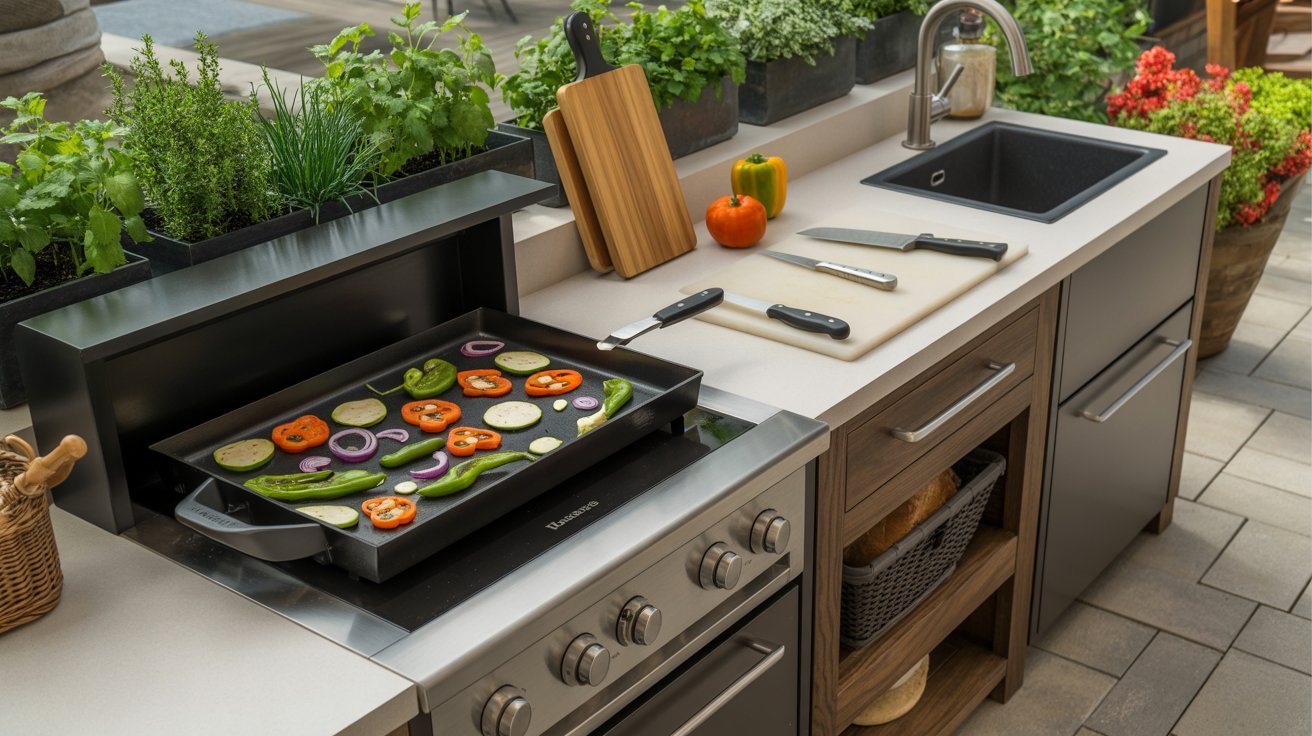
    5. Add a Fresh Vegetable Sauté Area

    5. Add a Fresh Vegetable Sauté Area

    Use part of your griddle for cooking fresh veggies as sides. The flat surface lets you spread out peppers, onions, mushrooms, and squash. 

    Place a small herb garden or planters near your cooking station. Fresh herbs add flavor to any dish and look nice, too.

    Think about adding a prep sink close to your griddle for washing produce. This saves trips back into the house. Keep a cutting board and sharp knives in a nearby drawer. 

    These blackstone outdoor kitchen ideas help you make healthier meals with seasonal vegetables from your garden or local market.

    6. Install Smart Storage Solutions

    6. Install Smart Storage Solutions

    Good storage keeps your outdoor kitchen neat and functional. Build cabinets underneath your counters to hide propane tanks. 

    This makes the space look cleaner and protects tanks from direct sunlight. Add doors that match your outdoor décor style.

    Install hooks on the sides of cabinets for hanging spatulas, tongs, and other tools. Drawer systems keep smaller items organized and protected from the weather. 

    Use weather-resistant materials for storing oils, seasonings, and cooking supplies. Proper storage means you spend more time cooking and less time searching for what you need.

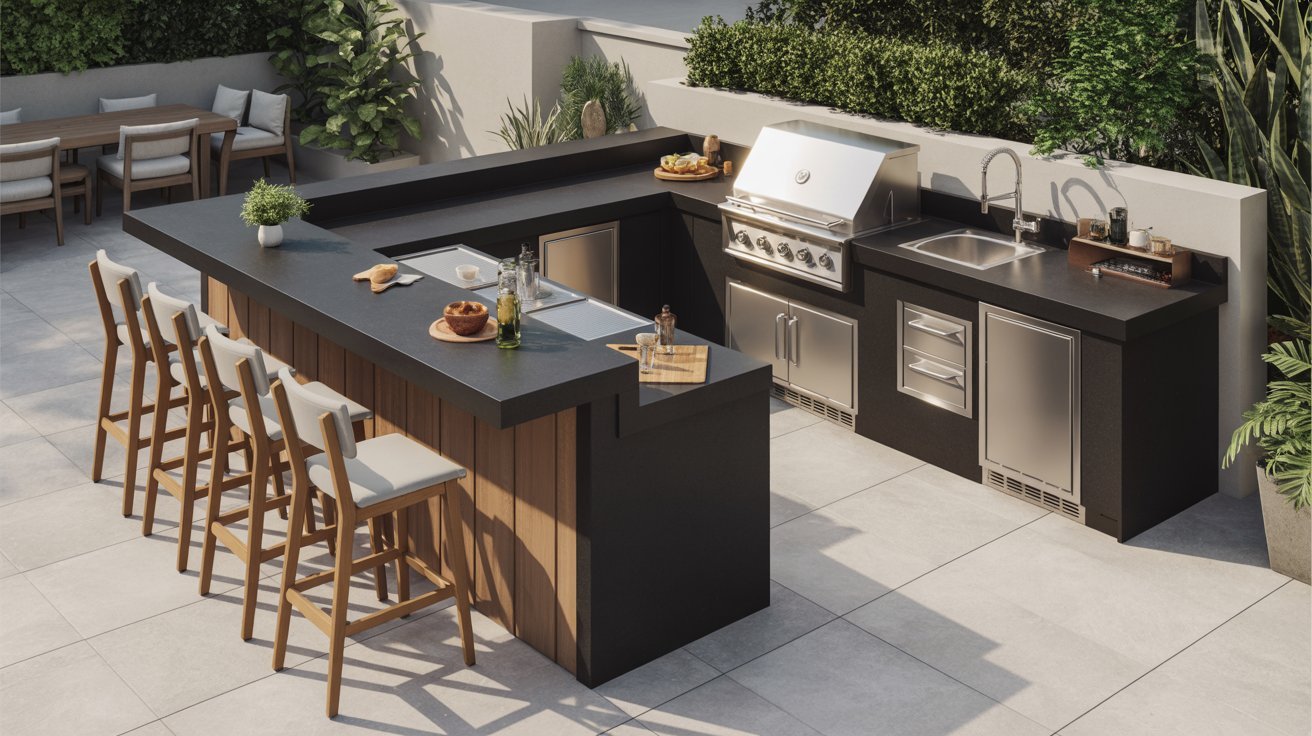
    7. Create a Multi-Level Counter Design

    7. Create a Multi-Level Counter Design

    Different counter heights make your kitchen more useful. Put a higher counter behind your griddle for serving food. 

    This creates a natural barrier between the hot cooking surface and guests. Lower prep surfaces let you work comfortably without straining your back.

    Add bar-style seating on one side if you have the space. This gives people a place to sit and chat while you cook. 

    The different levels also help with organizing your workflow. Use the lower section for prep work and the higher area for plating and serving finished dishes.

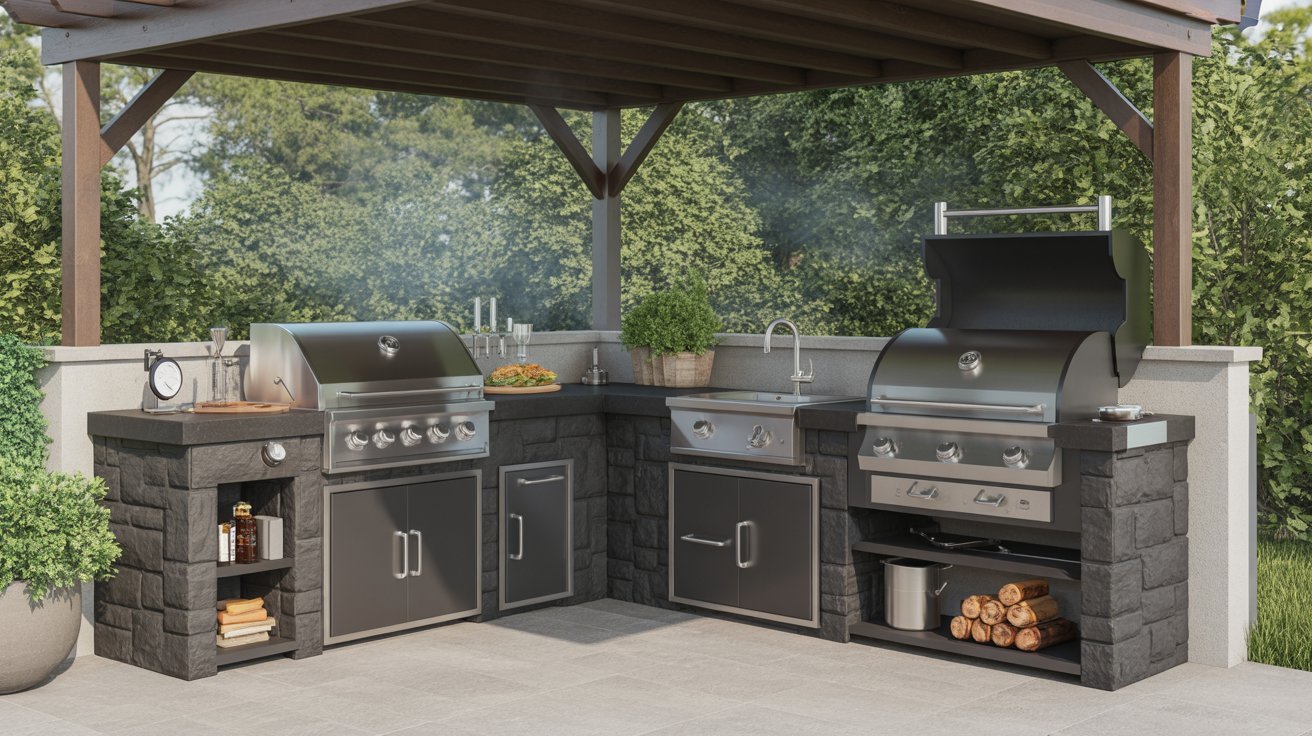
    8. Integrate Your Smoker with Your Blackstone Setup

    8. Integrate Your Smoker with Your Blackstone Setup

    Combine your griddle and smoker into one outdoor cooking zone. Place them close enough to move between easily, but with enough space to work safely. 

    This setup lets you smoke meats while making sides on the griddle. The workflow becomes smoother when everything is in the same area.

    Think about adding a roof or cover over both cooking stations. This protects your equipment from rain and lets you cook in more types of weather. 

    Keep a thermometer and smoking tools stored between the two units. These blackstone outdoor kitchen ideas work perfectly for people who love both quick griddle meals and slow-smoked meats.

    9. Build a Compact Side Yard Kitchen

    9. Build a Compact Side Yard Kitchen

    You don’t need a huge backyard to create a great outdoor kitchen. Narrow spaces that are 10 feet wide or less can still work well. 

    Use vertical storage like tall cabinets and wall-mounted shelves. This keeps your tools organized without taking up floor space.

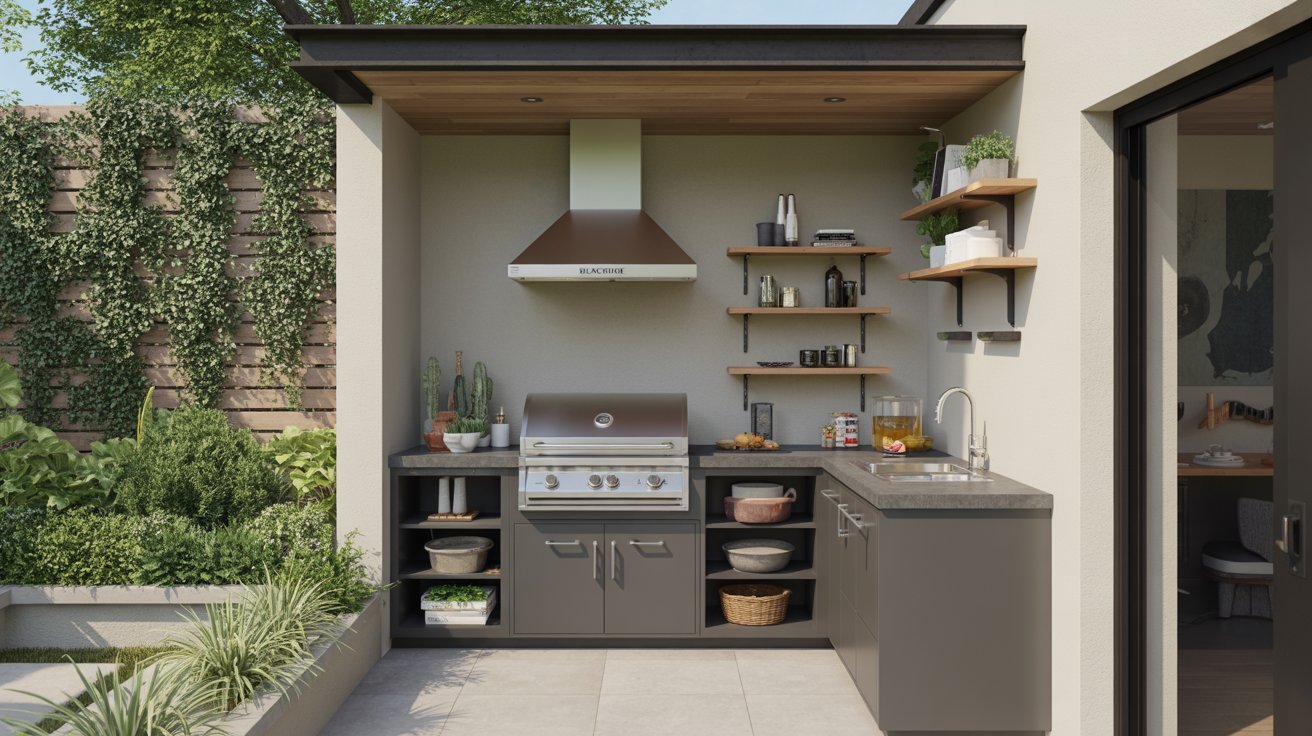
    Try an L-shaped or galley-style layout for narrow areas. Put your Blackstone along one wall with prep space next to it. 

    The compact design forces you to be efficient with your setup. Focus on the essentials and skip items you won’t use often. Small outdoor kitchens can be just as functional as larger ones when planned right.

    Important Tips for Your Blackstone Outdoor Kitchen Setup

    Building a successful outdoor kitchen takes more than just picking a spot for your grill. You need to think about materials, safety, and how everything works together.

    Choose materials that can handle outdoor weather. Your countertops should be granite, concrete, tile, or stainless steel. 

    These materials resist water damage and temperature changes. Make sure your cabinetry is built for outdoor use with proper sealing and weather-resistant finishes.

    Here are key points to remember:

    • Leave proper clearance around your griddle for safety and ventilation. Check the manufacturer’s guidelines for exact spacing requirements.
    • Install good lighting for evening cooking sessions. LED strips under cabinets and overhead fixtures help you see what you’re doing after dark.
    • Plan for utility access, like propane lines and electrical outlets. Run these during the build phase so they’re hidden and safe.
    • Add weather protection through covers, pergolas, or roof overhangs. This extends the life of your equipment and lets you cook in light rain.
    • Think about workflow efficiency when positioning ingredients, tools, and serving areas. The best layouts put everything within a few steps.
    • Decide between budget-friendly DIY options and professional installation. Simple setups can be DIY projects, while complex builds might need expert help.

    Your outdoor kitchen should make cooking easier and more enjoyable. Take time to plan each element carefully. These considerations help you avoid common mistakes and create a space you’ll use for years.

    Conclusion

    Your outdoor cooking space can be as simple or complex as you want. The Blackstone outdoor kitchen ideas in this guide give you options for different budgets, spaces, and cooking styles. Start with the basics like proper placement and storage, then add features over time.

    An outdoor kitchen changes how you entertain and prepare meals. You’ll find yourself cooking outside more often and enjoying the fresh air. Friends and family will want to gather around while you make delicious food.

    Pick one idea from this list and start planning today. You don’t need to build everything at once. Begin with your griddle and basic counter space, then expand as your budget allows. The investment in an outdoor kitchen pays off in better meals and memorable times with people you care about.

    Frequently Asked Questions

    What Type of Countertop Material Works Best for Outdoor Kitchens?

    Granite, concrete, and tile are top choices for outdoor counters. These materials handle weather changes and resist stains. Stainless steel also works well and gives a modern look. Pick materials that match your climate and maintenance preferences.

    Do I Need a Permit to Build an Outdoor Kitchen?

    Check with your local building department before starting construction. Most areas require permits for permanent structures with utilities. Rules vary by location, so verify requirements early in your planning process to avoid problems later.

    How Do I Protect My Blackstone Griddle from Weather?

    Use a quality cover when your griddle isn’t in use. Store it under a roof or pergola if possible. In harsh winter weather, some people move their griddles into a garage or shed. Proper protection extends the life of your equipment.

    What Is the Average Cost to Build a Blackstone Outdoor Kitchen?

    Basic setups start around $1,000 to $3,000 for DIY projects. Professional installations with custom features can cost $5,000 to $15,000 or more. Your final price depends on size, materials, utilities, and added features like sinks or refrigerators.

    Can I Use My Blackstone Griddle Year-Round?

    Yes, you can cook on your Blackstone in cold weather. The griddle may take longer to heat up in winter. Keep extra propane on hand since tanks run out faster in cold temperatures. Some covers and wind blocks help maintain cooking temperature.

  • Concrete Patio Ideas on a Budget That Look Great

    Concrete Patio Ideas on a Budget That Look Great

    Want to create a beautiful outdoor space but worried about the cost? You’re not alone. Many homeowners think a nice patio means spending thousands of dollars, but that’s not true.

    Concrete is one of the best materials for budget-friendly patios. It lasts for decades, works in any climate, and costs less than stone or brick. Plus, you can customize it in many ways without breaking the bank.

    In this guide, you’ll find 9 concrete patio ideas on a budget that look great and save you money. We’ll also share tips to cut costs even more while building a patio you’ll love for years. Whether you have $500 or $5,000 to spend, there’s an option that works for you.

    Let’s look at how you can create the outdoor space you’ve dreamed about without overspending.

    Budget-Friendly Concrete Patio Ideas for Your Outdoor Space

    Creating a great patio doesn’t mean you need to spend a fortune. These concrete patio ideas on a budget give you plenty of options to choose from, starting with the most affordable choices first.

    1. Broom Finished Concrete Patio

    1. Broom Finished Concrete Patio

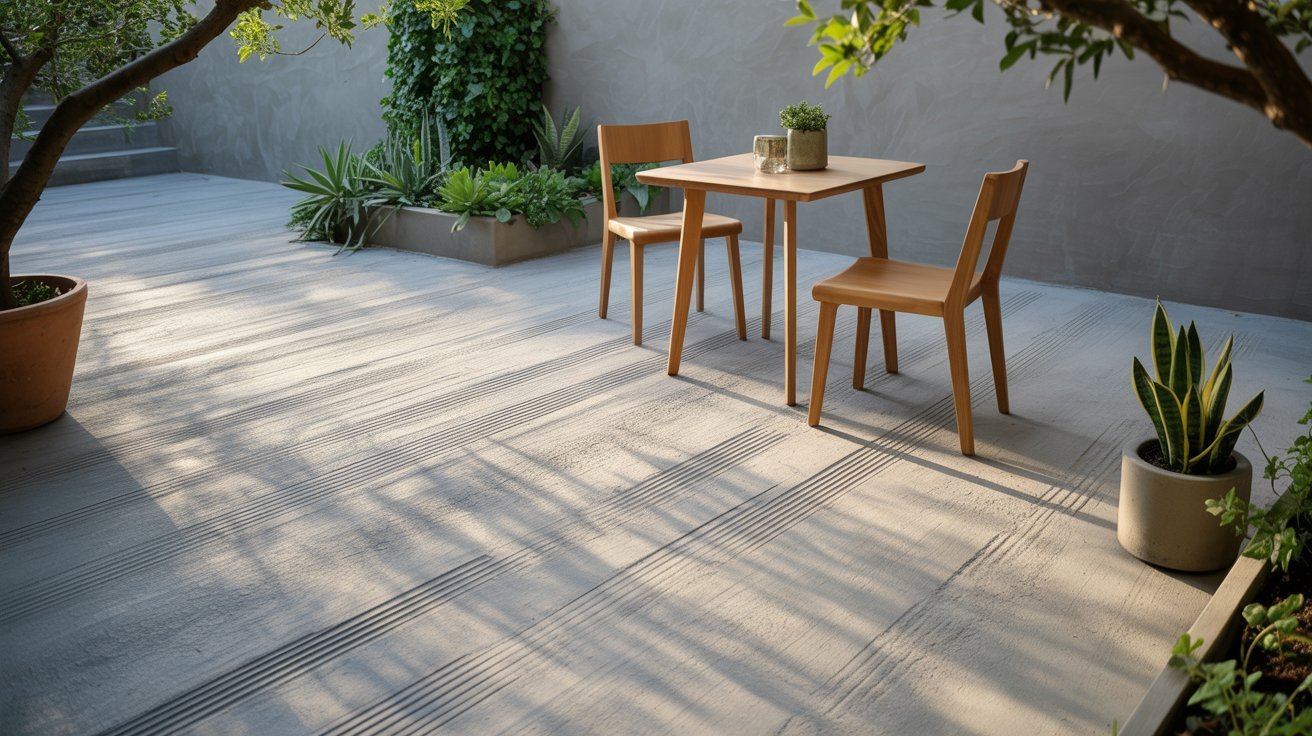
    A broom-finished patio is the most affordable concrete option you can get. Workers pour the concrete, then drag a stiff broom across the surface while it’s still wet. This creates texture that prevents slipping and looks clean and simple.

    This basic finish costs the least because it needs no special tools or extra materials. You can make it more interesting by adding color to the concrete mix or creating bands of smooth concrete between textured sections.

    The simple look fits any home style and works great if you plan to add outdoor furniture and plants later.

    2. Exposed Aggregate Finish

    2. Exposed Aggregate Finish

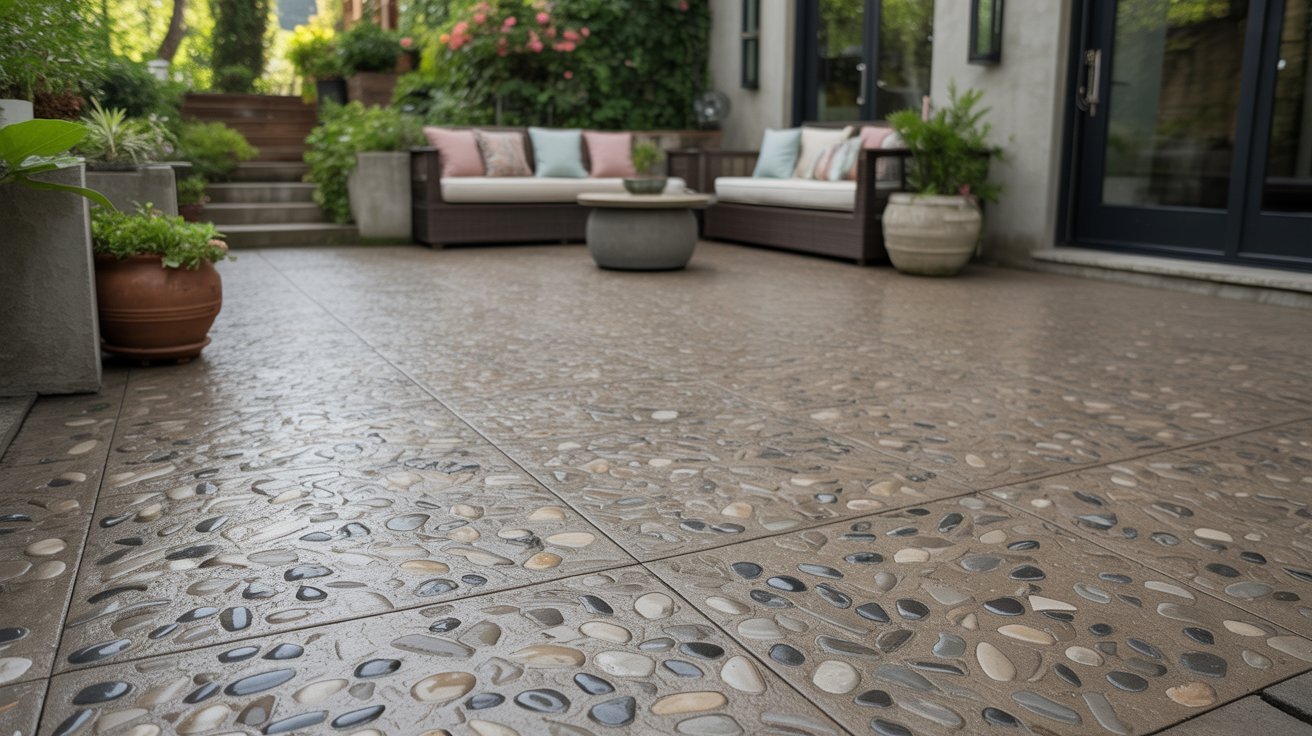
    Exposed aggregate gives your patio a unique textured surface at a reasonable price. After pouring the concrete, workers wash away the top layer of cement to show the small stones mixed inside. You can choose different types of stones like river rock, crushed granite, or colorful pebbles.

    This finish costs more than basic broom-finished concrete but less than stamped patterns. The textured surface hides stains well and needs very little care over the years. 

    It also provides good traction when wet, making it safe for families with kids or elderly relatives.

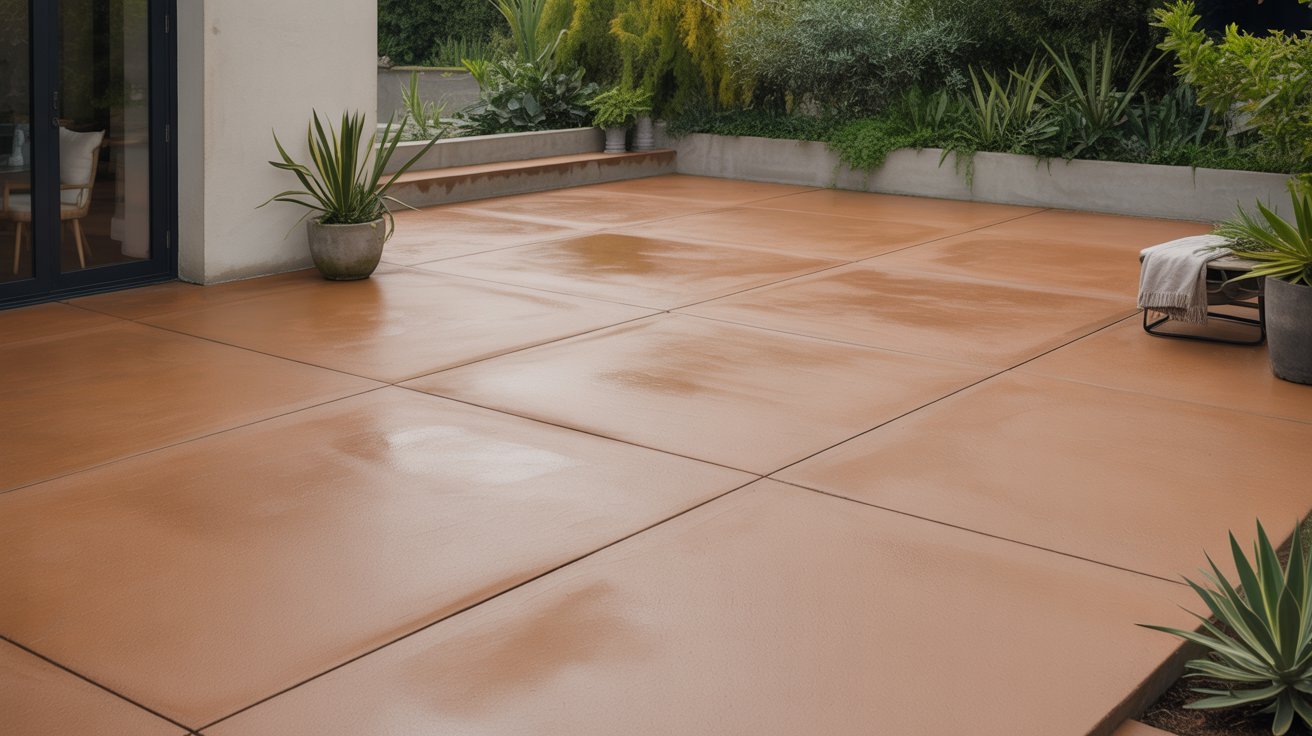
    3. Stained Concrete Patio

    3. Stained Concrete Patio

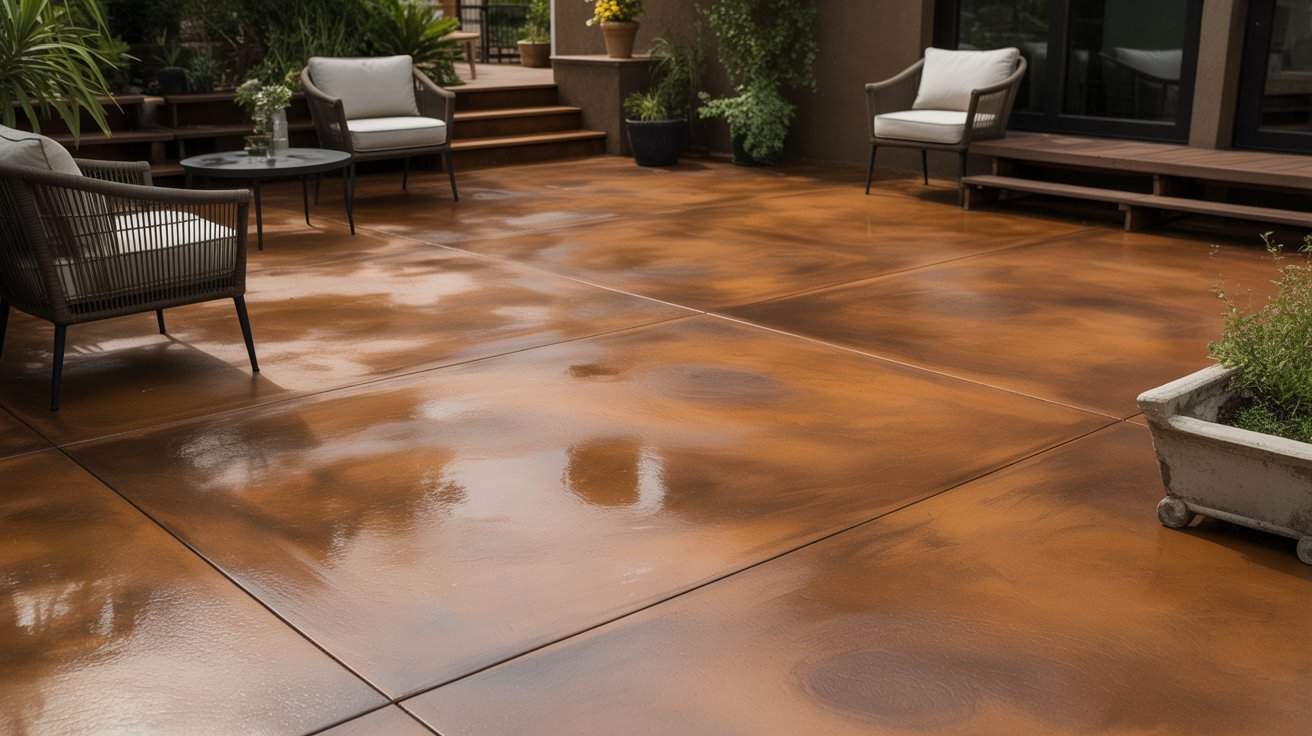
    Concrete staining adds rich, natural colors to your patio for much less money than stamped concrete. 

    The stain soaks into the concrete and creates earthy tones like brown, tan, gray, or red. Using just one color keeps costs down the most.

    The color won’t chip off because it becomes part of the concrete itself. Stained concrete resists fading from sunlight and lasts for many years. This option works great for homeowners who want something beyond plain gray concrete but need to stick to a tight budget.

    4. Integrally Colored Concrete

    4. Integrally Colored Concrete

    Integral color means the color goes all the way through the concrete slab, not just on top. The color is mixed right into the wet concrete before pouring.

     This means if the surface gets scratched or chipped, the color underneath matches.

    This method costs less than applying stain or other finishes after the concrete dries. You can pick from dozens of colors, from soft beiges to bold reds. 

    The color stays consistent and won’t wear off over time, making it a smart choice for concrete patio ideas on a budget.

    5. Downsized Patio Design

    5. Downsized Patio Design

    Building a smaller patio is one of the easiest ways to save money. Less square footage means you pay less for materials and labor. A well-designed small patio can still fit a table with chairs or a cozy seating area.

    Think about how you’ll actually use the space. Do you need room for large parties, or just a quiet spot for morning coffee? 

    Place your patio near the house or in a spot that gets afternoon shade. A compact, well-placed patio works better than a huge one in the wrong location.

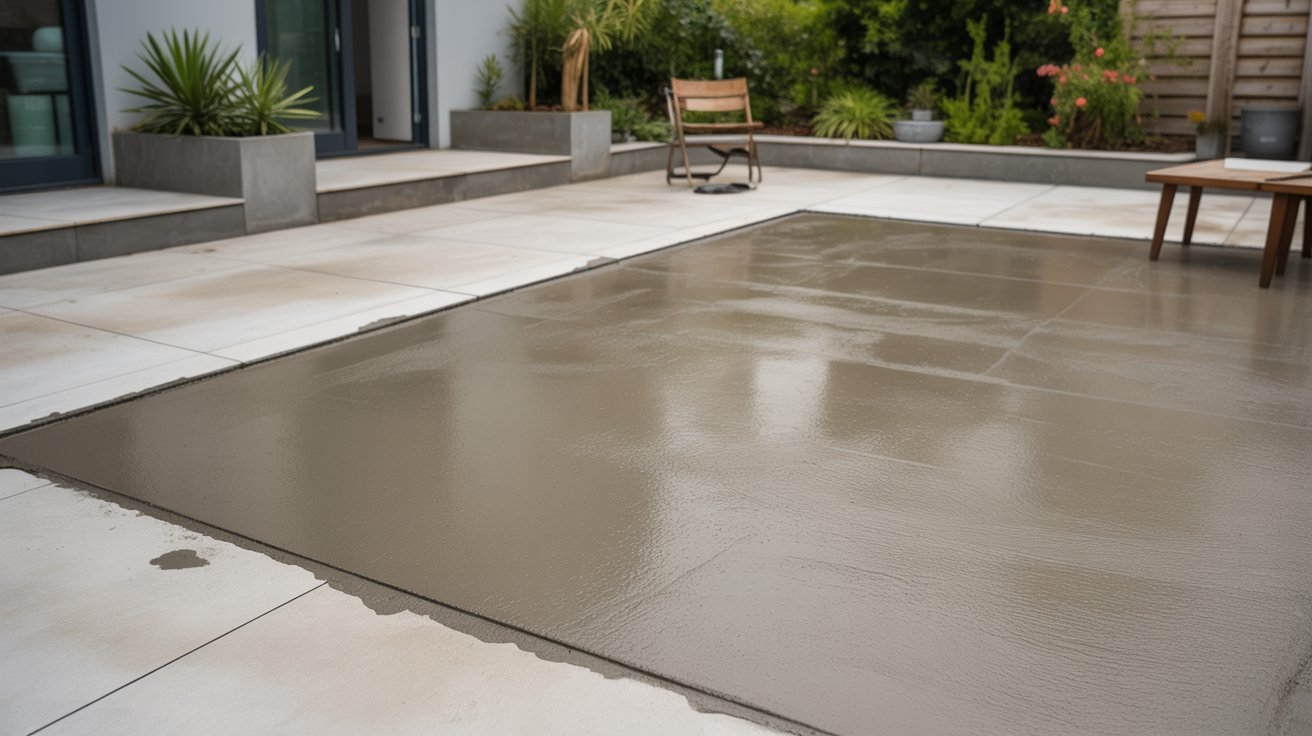
    6. Resurfaced or Overlayed Concrete

    6. Resurfaced or Overlayed Concrete

    If you already have an old concrete patio with cracks or stains, resurfacing costs much less than tearing it out and starting over. 

    Contractors apply a thin layer of new concrete over the existing slab. This new layer can be colored, textured, or stamped.

    Resurfacing works on patios that are still structurally sound but look worn out. The overlay bonds to the old concrete and gives you a fresh, new surface. You get the look of a brand new patio for a fraction of the price.

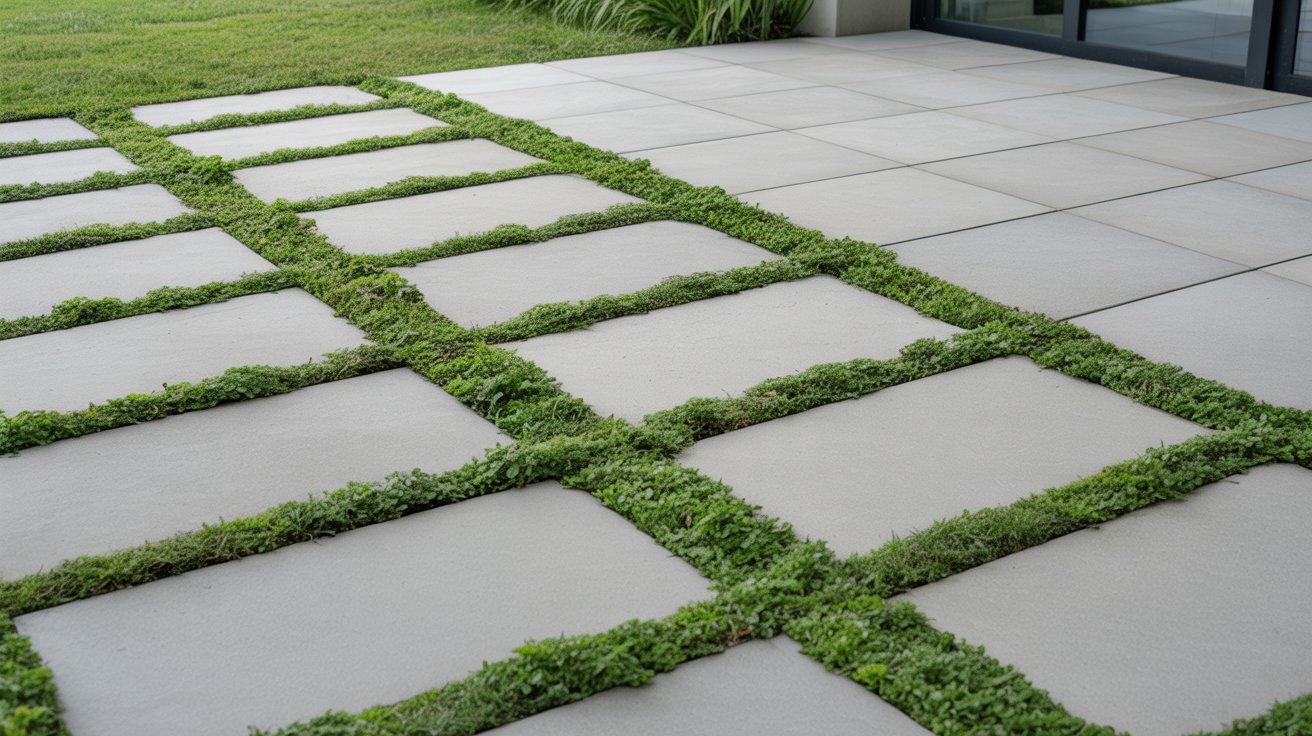
    7. Concrete Pavers with Grass Grid Pattern

    7. Concrete Pavers with Grass Grid Pattern

    Breaking up solid concrete with strips of grass creates visual interest and cuts down on materials. 

    You pour concrete in a grid pattern, leaving spaces for grass or ground cover to grow between the pavers. This design uses less concrete overall, which saves money.

    The grass softens the look and helps with drainage. This style works especially well for modern or casual outdoor spaces. 

    You can adjust the size and spacing of the concrete sections to fit your budget and design preferences.

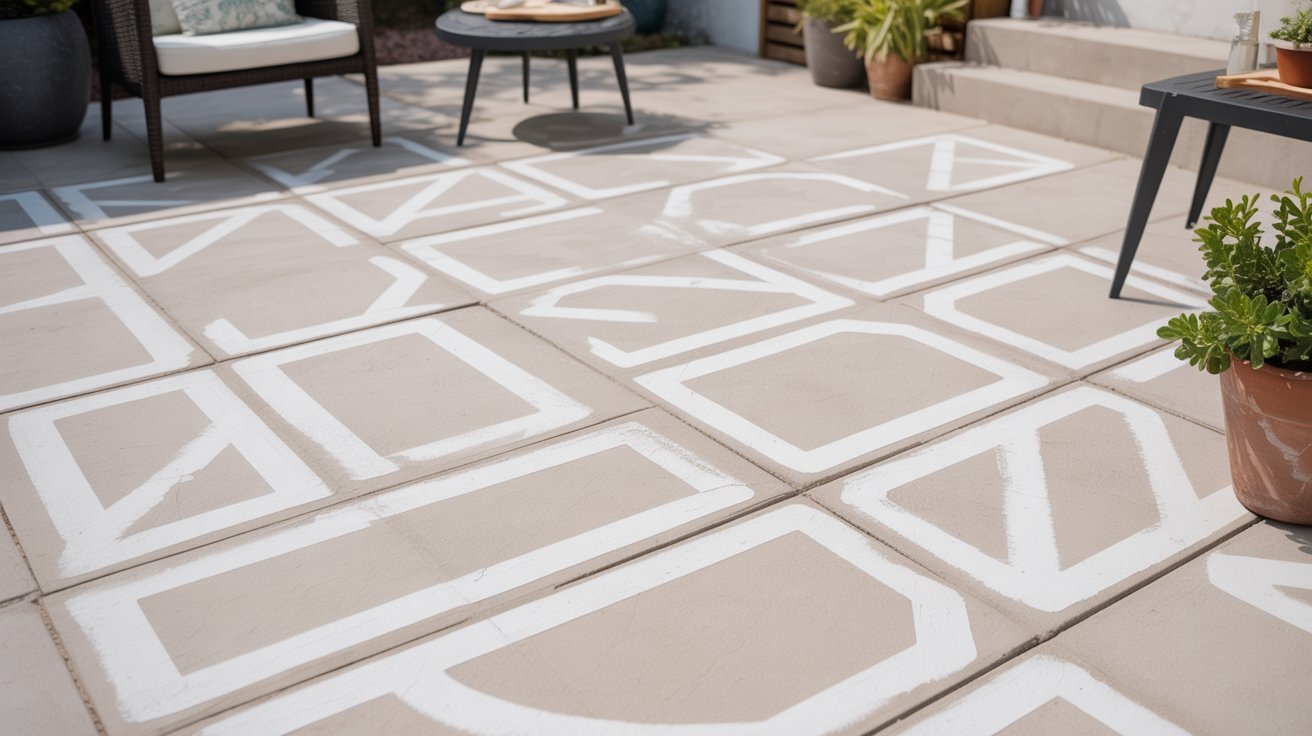
    8. DIY Stenciled Concrete Patio

    8. DIY Stenciled Concrete Patio

    If you’re handy and have a weekend free, stenciling plain concrete creates dramatic results for very little money. 

    You can buy stencils online or at hardware stores, then use concrete paint to create patterns. Popular designs include tile patterns, geometric shapes, or medallions.

    This project needs just paint, stencils, tape, and brushes. The materials cost under $100 for most patios. 

    Take your time with prep work and painting to get clean, professional-looking lines. This is one of the best concrete patio ideas on a budget for DIY lovers.

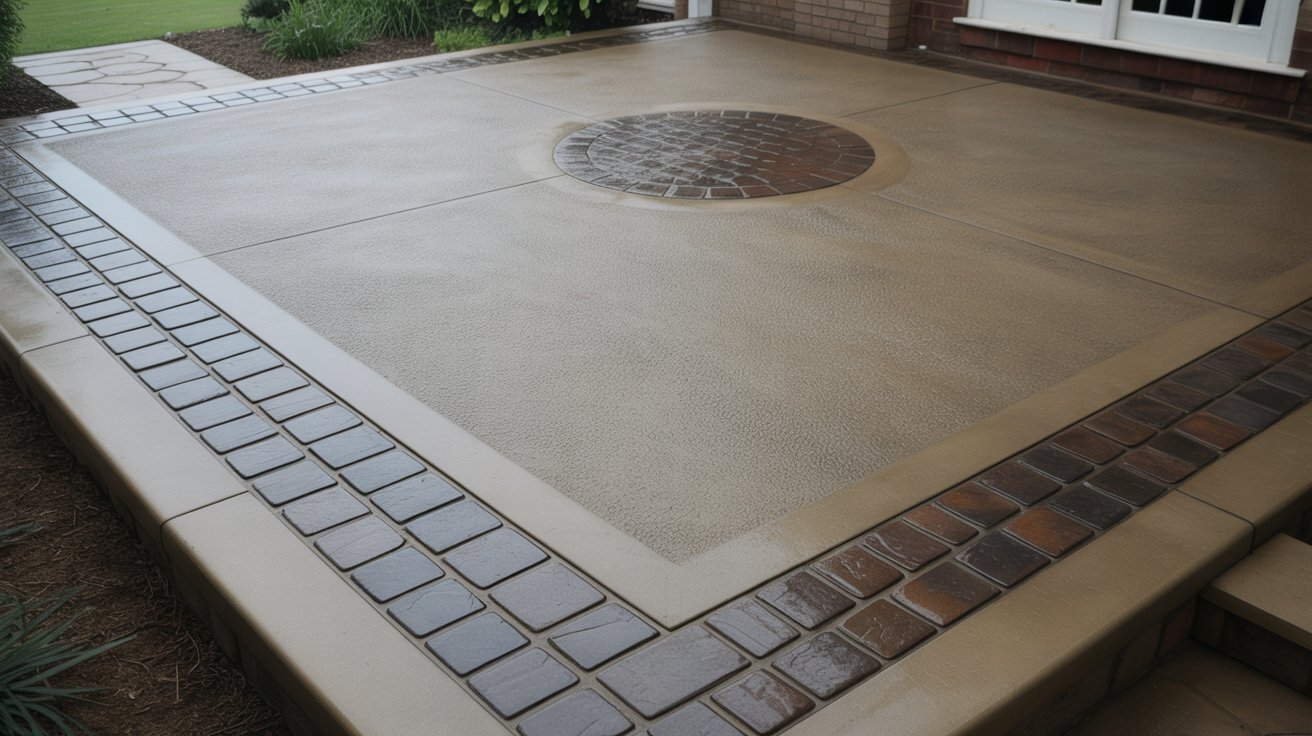
    9. Simple Stamped Border or Accent

    9. Simple Stamped Border or Accent

    Full patio stamping costs a lot, but you can get a high-end look by stamping just the borders or a small accent area. Keep the main patio area in a basic finish like broom texture, then add stamped details around the edges or in one focal spot.

    This gives you the decorative element you want without the high cost of stamping every square foot. 

    Popular choices include a stamped border that looks like cobblestone or a circular stamped area in the center of the patio. The contrast between plain and decorative sections actually makes both areas stand out more.

    Smart Money Saving Tips for Your Concrete Patio Project

    Beyond choosing affordable finishes, several strategies can cut your project costs even more. Small decisions add up to big savings when you plan carefully.

    • Schedule your patio installation in fall or winter when contractors have fewer projects and may offer discounts.
    • Keep your concrete slab at 4 inches thick, which is the standard minimum for a patio.
    • Stick to one or two colors instead of complex color schemes that increase labor time.
    • Consider doing simple projects yourself if you have basic construction skills and tools.
    • Get quotes from at least three contractors and check their references before deciding.
    • Choose one decorative treatment instead of combining multiple finishes.
    • Measure your furniture before building to make sure you create the right size patio.

    Remember that the cheapest option isn’t always the best value. Focus on finding the right balance between cost and quality. A slightly more expensive finish that lasts longer often saves money over time compared to the absolute cheapest option that needs repairs quickly.

    Conclusion

    You don’t need a huge budget to create a beautiful concrete patio. From basic broom finishes to creative stenciling, these concrete patio ideas on a budget prove that great outdoor spaces come in all price ranges.

    The key is picking options that match both your budget and your style. Think about how you’ll use the space and what matters most to you. Maybe you want a low-maintenance surface, or perhaps color is important to create the right mood.

    Good planning makes all the difference. Take time to compare options, get multiple quotes, and consider timing your project for the best deals. With smart choices, you’ll build a patio that looks great and lasts for decades.

    Ready to start? Pick your favorite idea from this list and begin planning your patio project today. 

    Frequently Asked Questions

    Can You Install a Concrete Patio Yourself?

    Simple, small patios can be DIY projects if you have basic construction skills and the right tools. However, most homeowners hire professionals for proper site preparation, grading, and finishing. Mistakes with concrete are expensive to fix.

    How Long Does a Concrete Patio Last?

    A well-built concrete patio lasts 25 to 50 years or longer with proper maintenance. Factors like climate, soil conditions, and regular sealing affect lifespan. Resealing every 2 to 3 years protects the surface from damage.

    What’s the Best Time of Year to Install a Concrete Patio?

    Late spring through early fall offers ideal weather for concrete curing. However, installing during the fall or winter often gets you contractor discounts due to lower demand. Just avoid freezing temperatures during installation and curing.

    Do Concrete Patios Add Value to Your Home?

    Yes, concrete patios typically return 30 to 60 percent of their cost in home value. They improve curb appeal and create a usable outdoor living space that buyers want. Well-maintained patios are selling points for most homes.

    How Do You Maintain a Concrete Patio?

    Sweep regularly and wash with mild soap and water as needed. Reseal the surface every 2 to 3 years to protect against stains and weather damage. Fix small cracks promptly to prevent them from growing larger over time.

  • Small Entryway Closet Makeover Ideas That Truly Work

    Small Entryway Closet Makeover Ideas That Truly Work

    Your entryway closet is probably a mess. Coats pile up on the floor, shoes scatter everywhere, and you can never find what you need when rushing out the door. Sound familiar?

    A small entryway closet makeover can fix these problems. You don’t need a huge budget or weeks of work. With smart planning and simple changes, you can turn that cluttered space into an organized system that actually works.

    In this guide, you’ll find practical ideas to reorganize your closet. We’ll show you how to add more storage, utilize vertical space more effectively, and keep everything organized and neat. You’ll also get tips on materials, costs, and how to do the work yourself. Let’s make your entryway work for you.

    Why Your Entryway Closet Deserves Attention

    Your entryway is the first thing guests see when they visit. It’s also the space your family uses every single day. When this area stays messy, it sets a stressful tone for your whole home.

    Small homes need smart storage solutions. Every square foot counts. Your entryway closet might only be a few feet wide, but with the right setup, it can hold coats, shoes, cleaning supplies, and outdoor gear without feeling cramped.

    Fixing up this space costs way less than bigger home projects. You can complete a small entryway closet makeover for under $500, and some ideas cost even less. The daily benefit of having everything organized and easy to find makes this one of the best improvements you can make.

    Creative Small Entryway Closet Makeover Ideas

    Ready to get started? Here are seven proven ways to improve your closet space. Pick the ones that fit your needs and budget.

    1. Replace Wire Shelving with Custom Wood Shelves

    1. Replace Wire Shelving with Custom Wood Shelves

    Builder-grade wire shelves look cheap and don’t hold weight well. They bend, sag, and let small items fall through the gaps. Ripping them out is the first step to a better closet.

    Install 2×3 wood boards as supports along your walls. Use drywall anchors where you can’t hit studs. Then add stained wood shelves on top. Dark walnut stain looks great and hides dirt. You’ll get stronger shelves that can hold more weight, and you can cut them to fit your exact space.

    2. Install an Elfa or Modular Shelving System

    2. Install an Elfa or Modular Shelving System

    Professional closet systems give you the most flexibility. These kits come with metal tracks that mount to your wall. Then you attach vertical bars and shelves wherever you need them.

    The best part? You can move everything around later. As your storage needs change, just unhook the shelves and bars, then reposition them. 

    These systems work great for families who need to adjust their setup over time. They cost more upfront but save money in the long run because you won’t need to buy new furniture.

    3. Add Hanging Fabric Storage Organizers

    3. Add Hanging Fabric Storage Organizers

    Fabric organizers are cheap and easy to install. They hang from your closet rod and have multiple cubbies for different items. You can find them for under $15 at most stores.

    Use these for vacuum attachments, mop pads, cleaning cloths, and other small accessories. Mix them with baskets and bins to create a system that fits what you own. 

    This works especially well when you’re on a tight budget but still want your small entryway closet makeover to look good.

    4. Maximize Vertical Space with Double Hanging Rods

    4. Maximize Vertical Space with Double Hanging Rods

    Most closets waste the space under your hanging clothes. Add a second rod below your main one to double your hanging capacity. 

    The top rod holds your longer coats and jackets. The bottom rod gives you room for shorter items.

    This setup works best when your ceiling is 7 feet tall or higher. You’ll still have floor space underneath for shoes or baskets. Even in a tiny closet, going vertical makes a huge difference in how much you can store.

    5. Incorporate Wall-Mounted Organizers for Tools

    5. Incorporate Wall-Mounted Organizers for Tools

    Cleaning tools take up too much floor space when you lean them against the wall. Mount broom and mop holders to your closet’s side walls instead. You can also install a dock for cordless vacuums.

    Everything stays off the ground and is easy to grab. No more tools falling over or getting tangled together. This simple change frees up the entire floor for other storage needs.

     Your small entryway closet makeover will feel twice as big with clear floor space.

    6. Use Baskets and Bins for Small Items

    6. Use Baskets and Bins for Small Items

    Small things like gloves, scarves, and hats always disappear in closets. Put baskets on your top shelf to hold seasonal accessories. Use fabric boxes for caps and beanies. Try vertical shoe storage baskets on the floor.

    Label everything with tags so everyone in your family knows where things go. Clear or woven baskets look nice and let you see what’s inside. 

    This method keeps your shelves tidy and makes it simple to find exactly what you need.

    7. Create a Designated Shoe Storage Area

    7. Create a Designated Shoe Storage Area

    Shoes pile up fast in an entryway. Set up a specific zone just for footwear. Put a shoe rack under your hanging clothes where there’s usually wasted space. 

    Use baskets for flip flops and slippers that don’t need a rack.

    When floor space runs out, go vertical with over-the-door organizers or wall-mounted cubbies. Keep outdoor shoes separate from indoor ones to prevent tracking dirt through your house.

     A clear shoe system stops the chaos before it starts.

    Essential Tips for Your Closet Makeover

    Before you start your project, these tips will help you avoid common mistakes and get better results.

    • Plan Before You Paint: Apply fresh white or neutral paint before installing any systems. Painting around shelves and organizers is nearly impossible. A clean coat of paint makes even basic storage look professional.
    • Measure Twice, Cut Once: Write down your exact dimensions before buying materials. Measure the height, width, and depth of your closet. Check for outlets, light switches, or vents that might get in the way.
    • Think About Daily Use: Put items you grab every day at eye level. Store seasonal or rarely used things on high shelves. This makes your routine faster and easier.
    • Don’t Over Secure Shelves: Leave a little flexibility in your setup. You might want to adjust heights later as your needs change. Permanent installations make future updates harder.
    • Invest in Quality Hangers: Slim felt hangers save 30 to 40 percent more space than bulky plastic ones. This simple switch lets you fit more coats in the same area.
    • Consider Your Ceiling Height: Tall ceilings give you room to stack storage high. Even if your door frame is short, the space above can hold lightweight items like off-season gear.
    • Create Zones: Separate your closet into areas. One for coats, one for cleaning supplies, one for shoes, and one for accessories. This stops everything from mixing.
    • Shop During Sales: Wait for Container Store’s annual 30 percent off event. Buy hangers in bulk at Costco. Smart shopping cuts your costs way down.
    • Use Every Inch: Add hooks to the inside of your door. Mount shelves on side walls. Put a narrow shelf above the door frame. Small spaces need creative thinking.
    • Keep It Simple: A functional design beats a complicated one. Don’t add features you won’t actually use. Stick with storage that matches how you really live.

    Following these guidelines will help your small entryway closet makeover go smoothly. Start with the basics, then add extras if you need them.

    Conclusion

    A small entryway closet makeover doesn’t require a contractor or thousands of dollars. With basic tools and smart planning, you can completely change how this space functions. Even one or two of these ideas will make a noticeable difference.

    Start by measuring your closet and deciding which problems bother you most. Maybe you need more shoe storage, or maybe your coats need a better system. Pick the solution that fixes your biggest headache first.

    Remember that staying organized is ongoing work. Set aside time each season to sort through items and donate what you don’t use. Every few months, check if your system still works or needs small adjustments. Making the most of your space takes effort, but the daily convenience is worth it. Start planning your closet update today and enjoy a cleaner, calmer entryway tomorrow.

    Frequently Asked Questions

    How Much Does a Small Entryway Closet Makeover Cost?

    Budget projects start around $50 for basic supplies like paint, hooks, and fabric organizers. Full makeovers with wood shelving or modular systems run $200 to $500. DIY installations cost much less than hiring professionals to do the work.

    Can I Complete This Project in One Weekend?

    Yes, most people finish in one or two days. Plan your design on Friday evening, paint on Saturday morning, and install your new system Saturday afternoon and Sunday. Give the paint enough time to dry before adding shelves or organizers.

    What Tools Do I Need for Installation?

    Grab a power drill, level, stud finder, and measuring tape. You’ll also want drywall anchors for spots where you can’t hit studs. A pencil and painter’s tape help mark where everything goes. Most households already own these basic tools.

    How Do I Maintain Organization After the Makeover?

    Clean out your closet every three months. Get rid of items you haven’t used in a year. When you buy something new, remove something old to keep the space balanced. Rotate seasonal items like winter coats and summer gear regularly.

    Will removing Built wire Shelving Damage My Walls?

    You’ll have small holes where the brackets are attached. Fill these with spackle and sand them smooth. Touch up with matching paint after the spackle dries. The damage is minimal and easy to fix with careful removal and basic supplies.

  • Hello world!

    Welcome to WordPress. This is your first post. Edit or delete it, then start writing!