You’re standing in your living room, squinting, too much sun. But you don’t want it pitch black either. That’s where light-filtering curtains come in.
This guide breaks down exactly what light filtering curtains are and if they’re right for your space. I’ll show you how they work, what makes them different from blackout curtains, and where they shine (or don’t). No fluff. Just straight answers to help you decide.
I’ve spent years helping people pick window treatments that actually fit their lives. Not just what looks good in photos. You’ll get honest insights here, the kind that save you from buying the wrong curtains twice.
By the end, you’ll know if light-filtering curtains solve your problem or if you need something else entirely. Let’s figure this out together.
What Are Light Filtering Curtains?
I’m going to help you understand these curtains. Light-filtering curtains soften sunlight instead of blocking it completely. You get a warm glow without harsh brightness.
Definition and Function
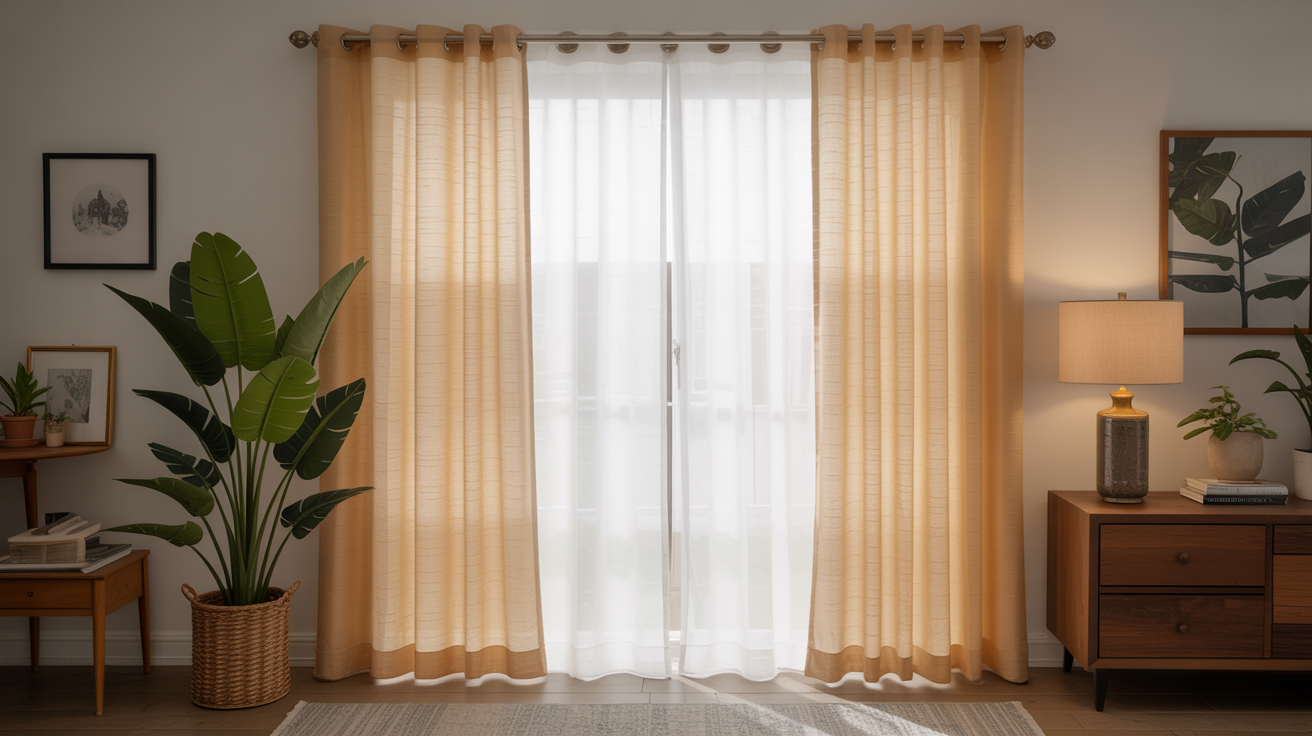
Light-filtering curtains diffuse natural light throughout your room. They create a soft, natural glow that feels welcoming.
- Soften harsh sunlight while keeping your space bright
- Provide partial privacy during the day
- Reduce glare on screens
- Balance natural light and privacy needs
You’ll love them in living rooms, dining areas, and home offices. Privacy stays intact while sunlight filters through. I find them perfect for spaces where you want brightness without the fishbowl effect.
How Light-Filtering Curtains Work
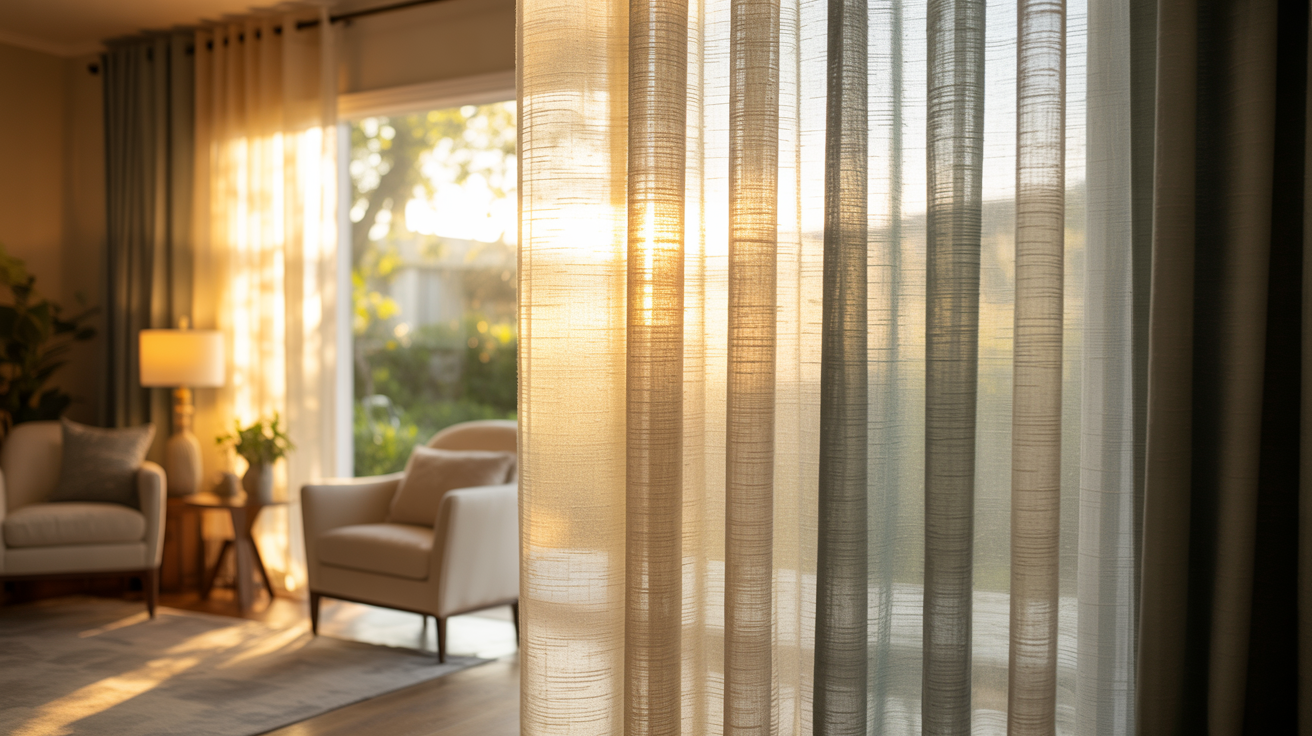
The secret is in the fabric weave and material. Common materials include polyester, linen blends, and cotton. Tightly woven fabric blocks more light. Loosely woven fabric lets more through.
The “openness factor” determines how much light enters. Small gaps in the weave allow less light. Bigger gaps mean more light. Want more control? Try layering curtains with sheer panels. You can adjust them throughout the day for maximum versatility.
Benefits of Light Filtering Curtains
Light-filtering curtains do more than just cover your windows. They create the perfect balance between natural light and privacy. I’ll show you why they might be exactly what your home needs.
Soft, Natural Lighting
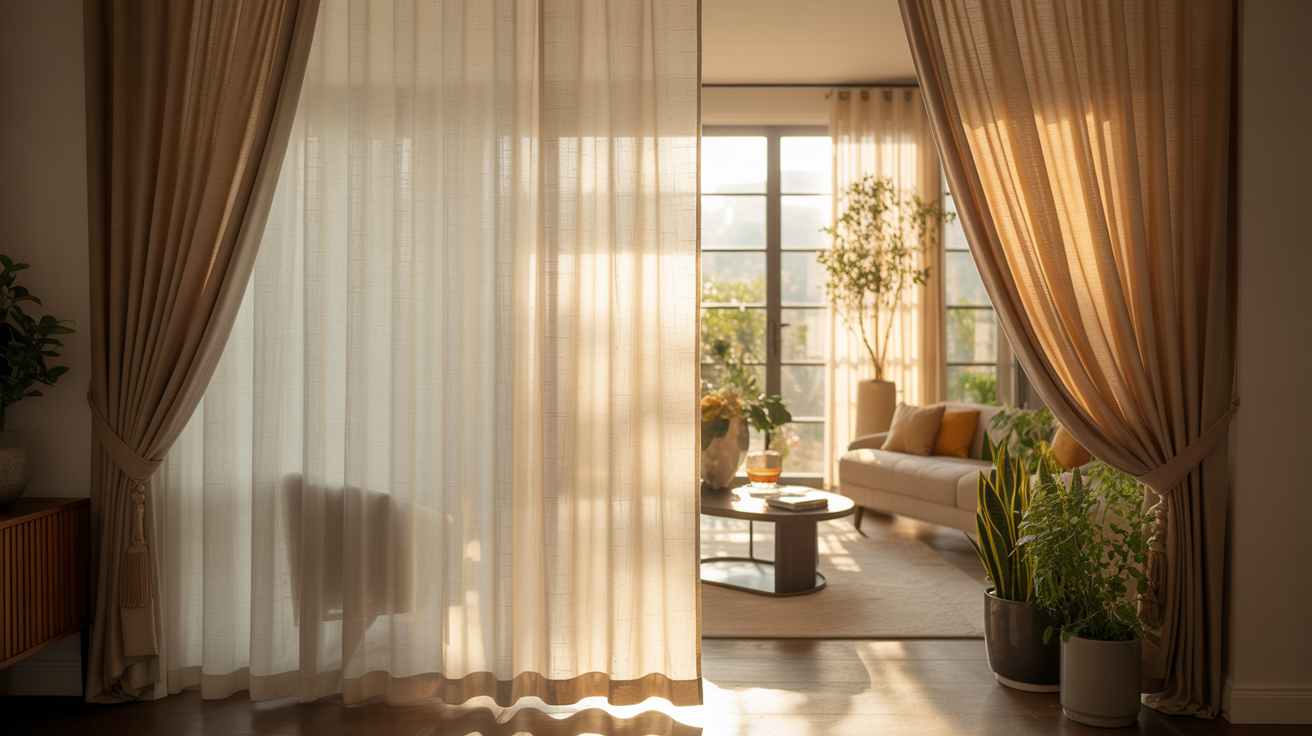
You know that harsh glare from direct sunlight? Light filtering curtains eliminate it. They soften the light coming into your room. The result is a warm, cozy atmosphere.
These curtains let in just the right amount of daylight. Not too much. Not too little. Your room stays bright without feeling washed out. Plus, they make your décor look better by creating that soft, diffused glow you see in magazines.
Improved Privacy
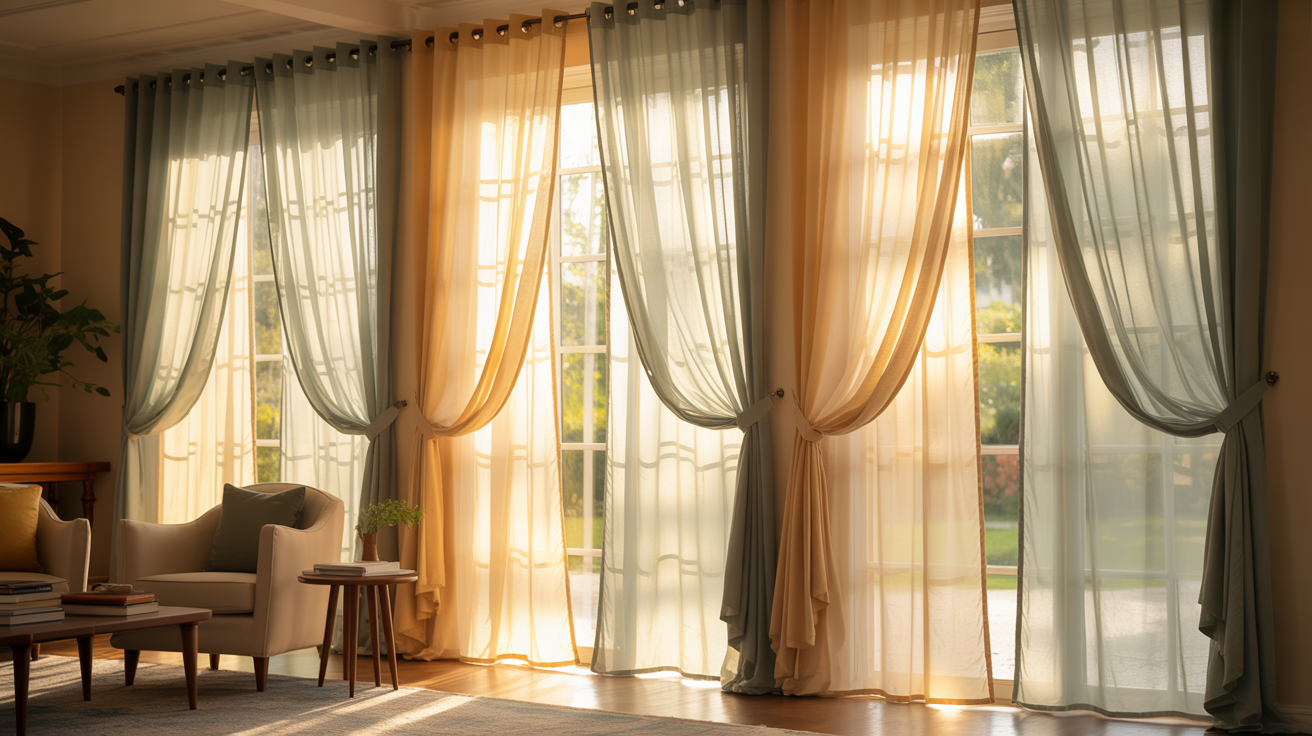
Here’s what I love about these curtains: they give you daytime privacy without making your room dark. People outside can’t see clearly into your space. But you still get to enjoy natural light.
At night, things change a bit. The thicker your fabric, the more privacy you get. If you have bright lights on inside, people might see shadows or shapes from outside. Consider layering them with blinds if you need total privacy after dark.
Energy Efficiency and Comfort
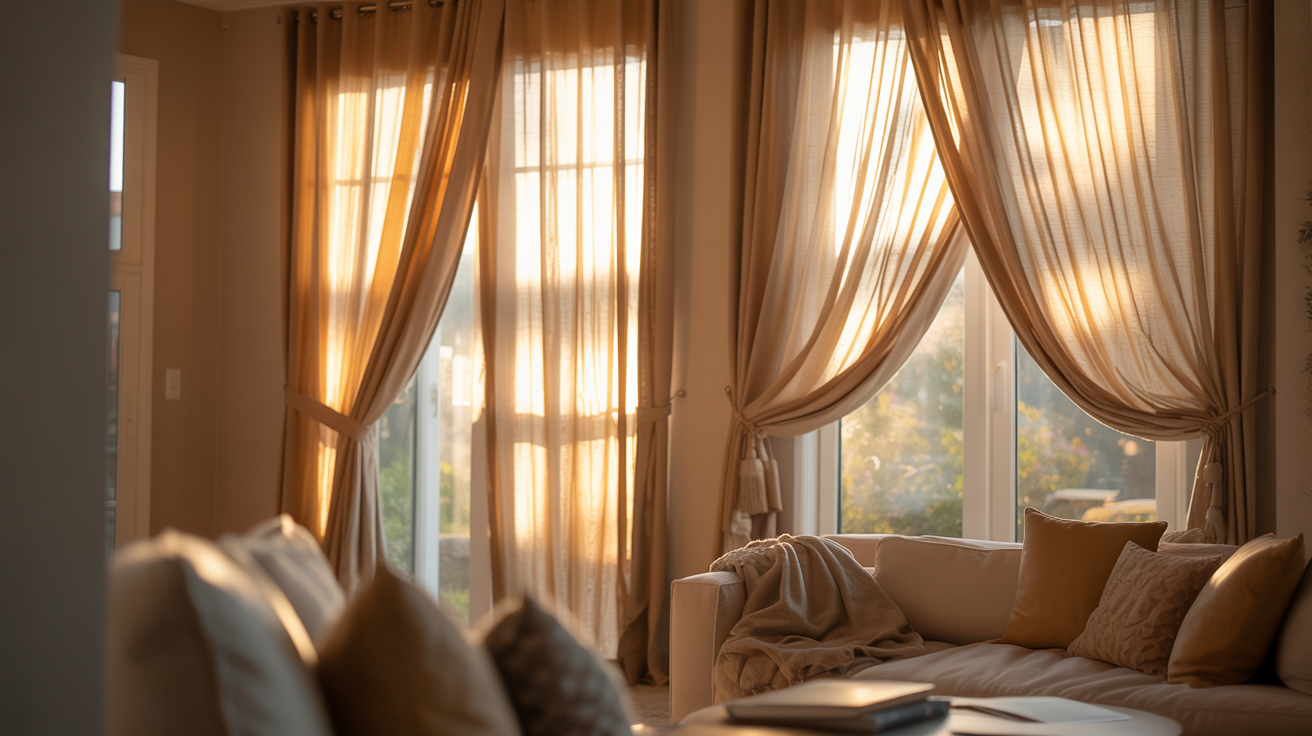
Think about this: when you have soft, diffused light all day, you don’t need to turn on as many lamps. Your electric bill thanks you. It’s a simple way to save energy.
Some light filtering curtains offer thermal benefits too. It depends on your fabric and if they have a lining.
Here’s what they might do:
- Keep rooms cooler in summer by diffusing intense sunlight
- Reduce heat loss in winter (especially lined versions)
- Lower your heating and cooling costs over time
Not every curtain does all of this. But many help regulate temperature better than bare windows.
Versatility in Style and Design
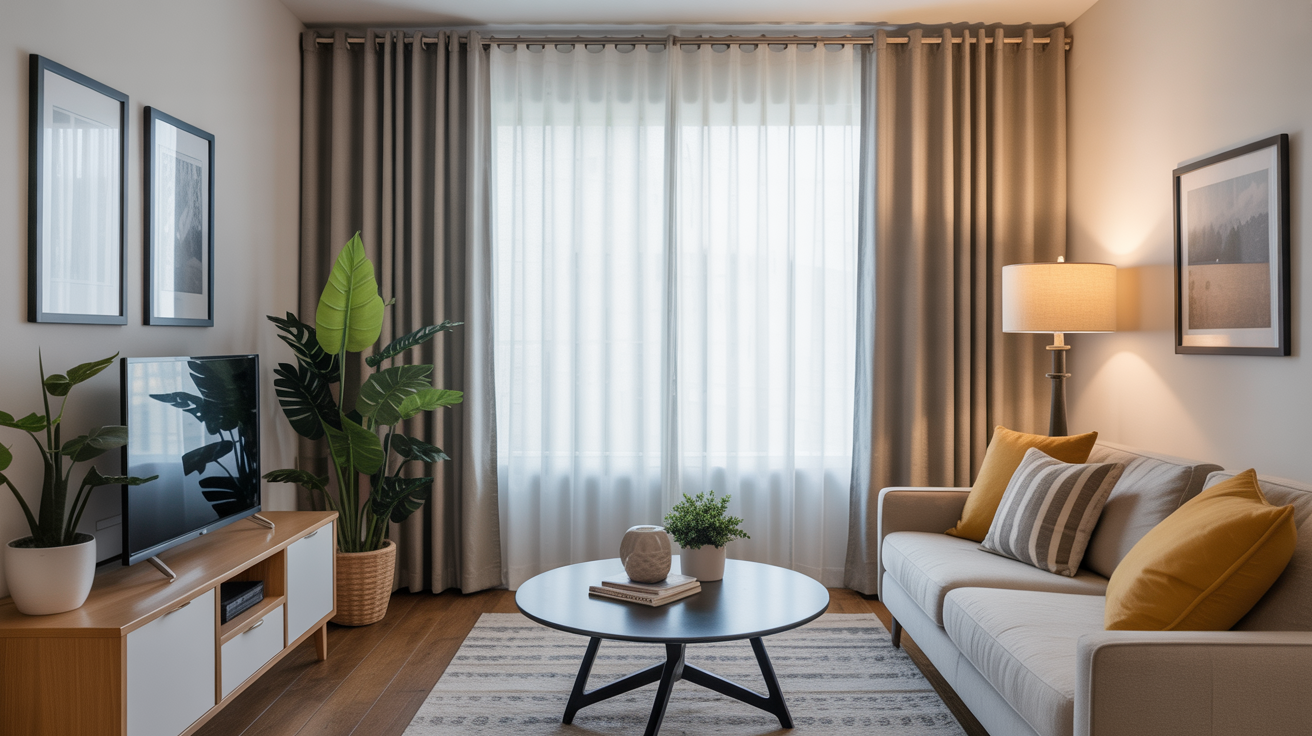
You’ll find light filtering curtains in countless fabrics, colors, and patterns. Linen, cotton, polyester, blends, the options go on. Want something modern? Go for it. Prefer traditional? Easy to find.
They work with almost any setup you have. Standard curtain rods. Decorative drapes. Even layered with blinds or shades. Mix and match until you get the look you want. Your style, your rules.
Light Filtering vs Other Curtain Types
Not all curtains are created equal. Each type serves a different purpose. I’ll break down how light-filtering curtains compare to your other options so you can make the right choice.
Light Filtering vs Sheer Curtains
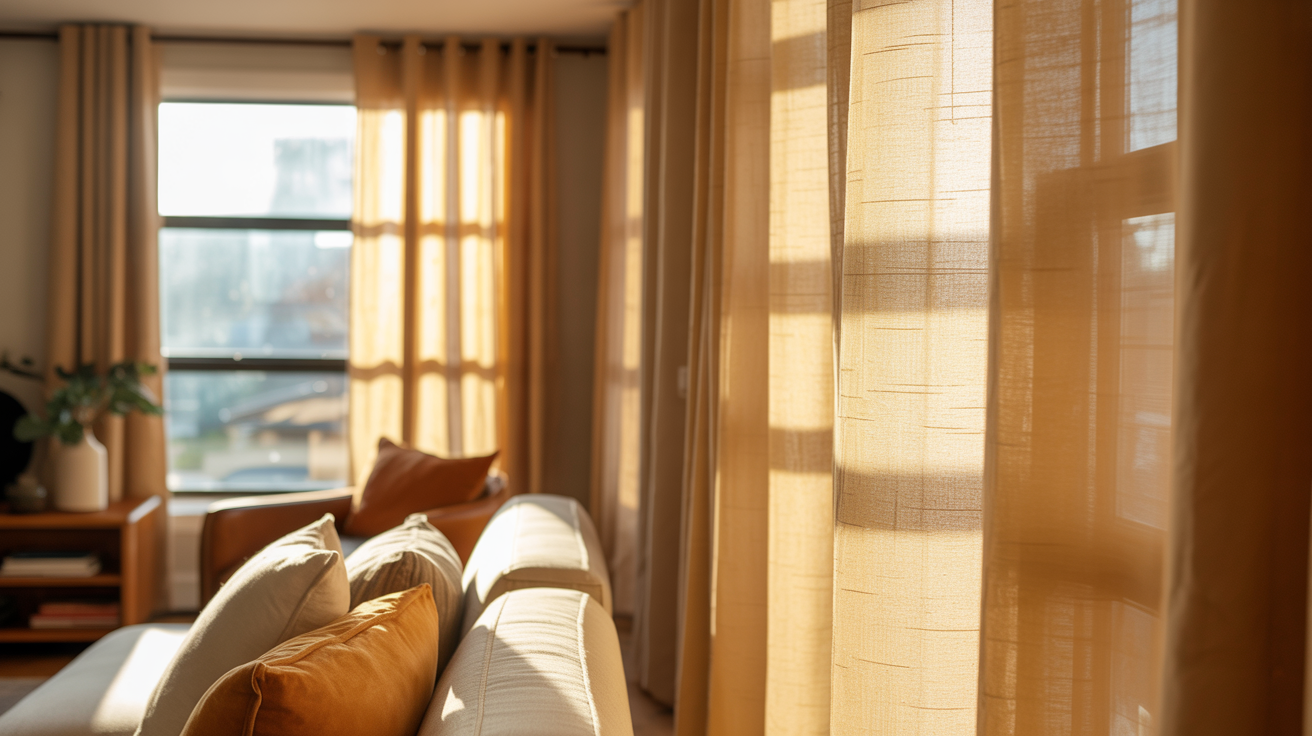
Sheer curtains are the thinnest option you’ll find. They let in maximum light. Almost like having nothing on your windows at all. You get brightness, but you sacrifice privacy.
- Sheer curtains are bright and transparent. Light-filtering curtains diffuse light and add privacy.
- Sheers work for decoration, light filtering for daily use
Light filtering curtains sit somewhere in between. Where should you use each one? Use sheer curtains over blinds or heavier drapes for decoration. Choose light filtering when you want privacy without losing natural light.
Light Filtering vs Room Darkening Curtains
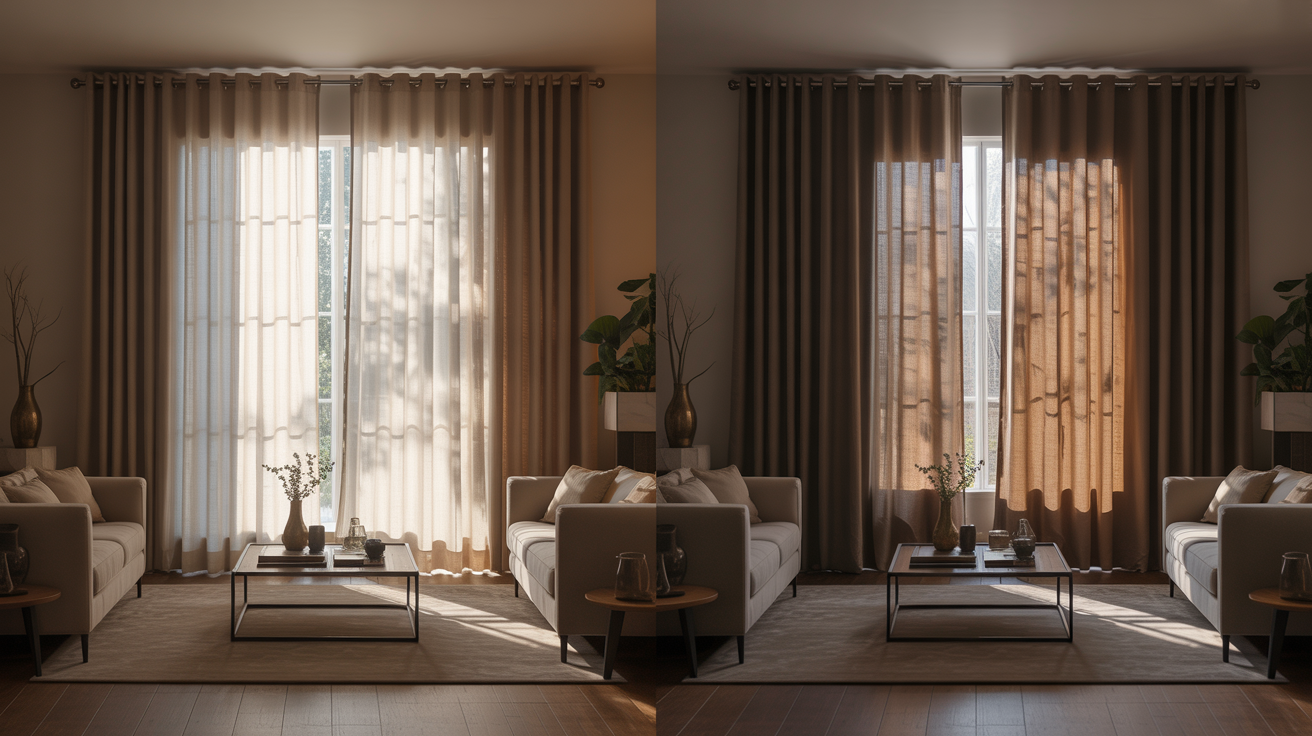
Room darkening curtains use heavier fabrics that block most outside light. Not total darkness, but close. They’re a step up in coverage from light filtering options.
- Bedrooms need room darkening for better sleep
- Living areas work better with light filtering
- Room darkening saves more energy
Light-filtering curtains create gentle illumination throughout the day. Room-darkening fabrics create dimness instead. Both have their place depending on what you need from each room.
Light Filtering vs Blackout Curtains
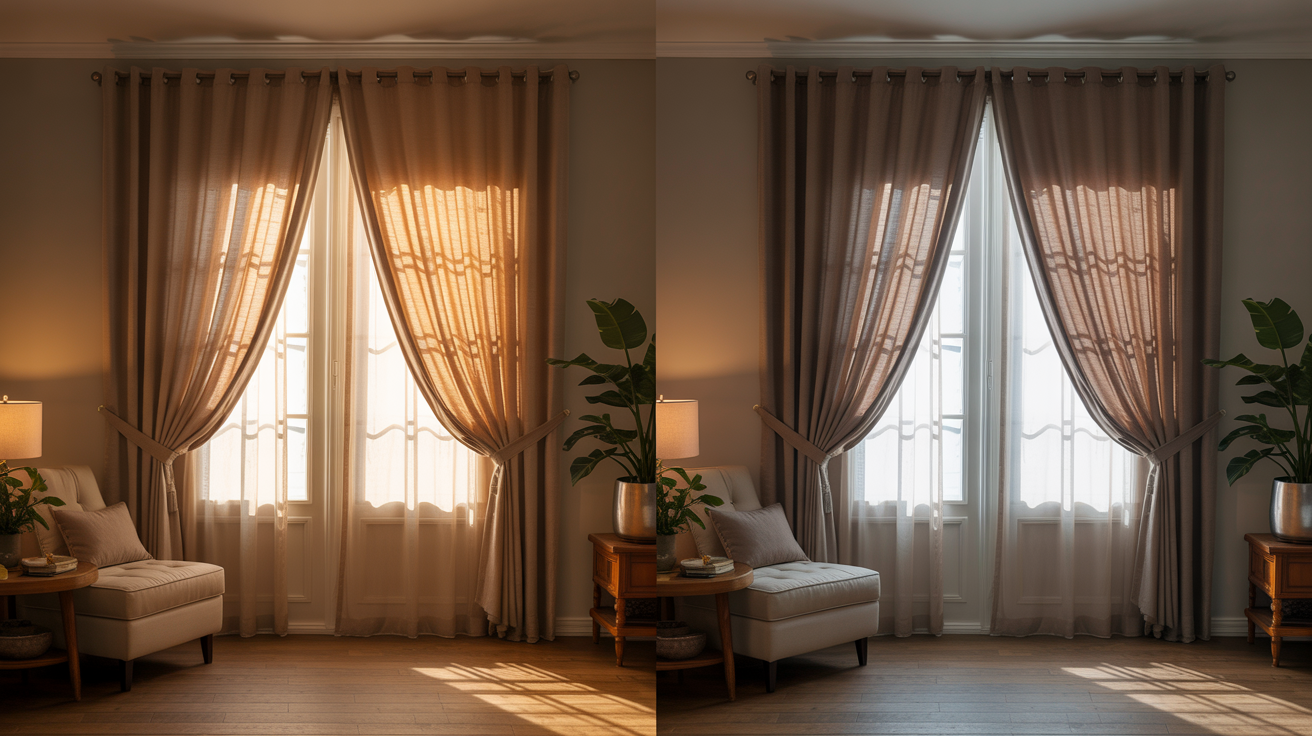
Blackout curtains are the heavy hitters. They’re lined or foam-backed to block up to 99% of light. Total darkness is their specialty. You’ll find them in nurseries, home theaters, or bedrooms for people who work night shifts.
- Blackout curtains block 99% of light.
- They provide maximum insulation and noise reduction
- Light filtering offers soft lighting instead
You want gentle daylight, not a cave. Blackout curtains serve specific needs where darkness matters. Light filtering curtains shine when you want a balance between light and privacy.
Choosing the Right Curtain for Your Space
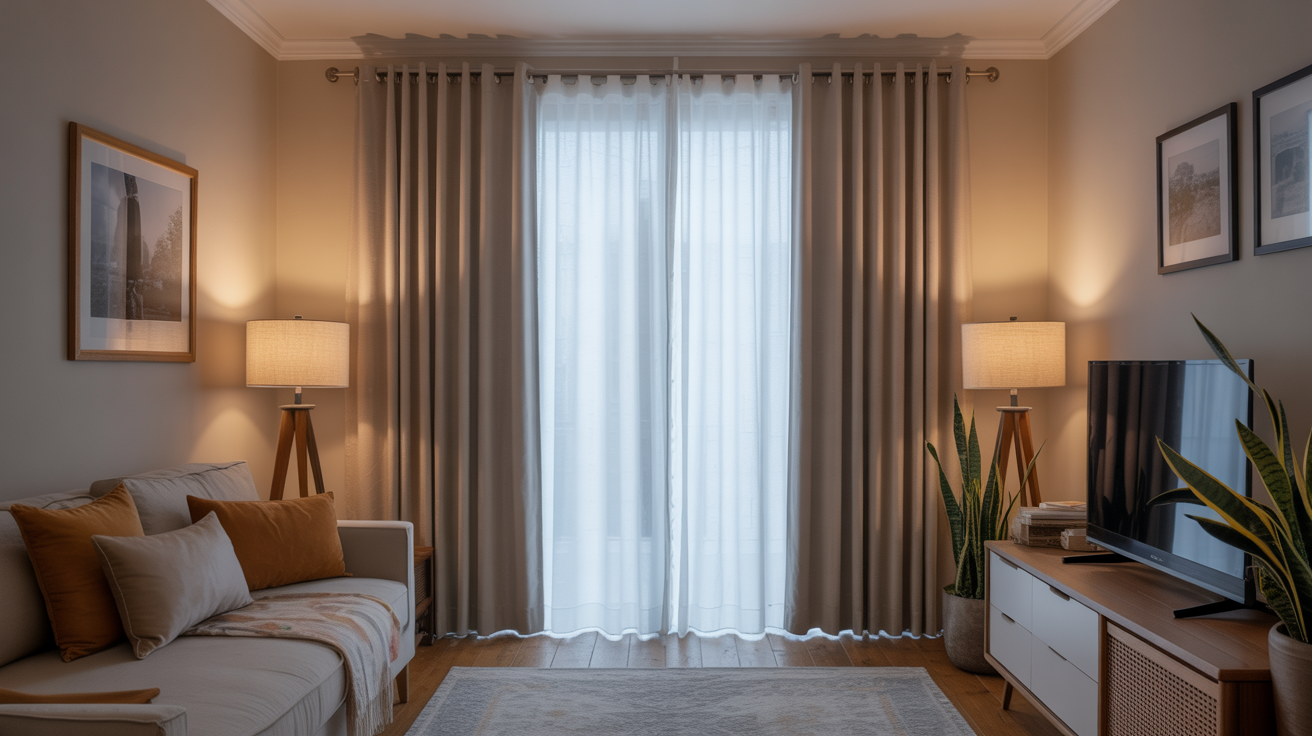
I know picking curtains can feel overwhelming. There are so many options. But I’ll help you narrow it down by focusing on what actually matters for your room.
Factors to Consider
Your room’s purpose matters most. Bedrooms need room-darkening or blackout curtains. You want good sleep, right? Living rooms work better with light filtering options. They let natural light in while still giving you some privacy.
Think about your windows too. Here’s what you should consider:
- Room purpose: Bedrooms need darkness. Living rooms need balance.
- Window direction: East-facing windows get strong morning light. You’ll need better light control there. Shaded windows? Go lighter.
- Privacy needs: High privacy areas need room darkening or blackout fabrics. Moderate privacy? Light filtering works fine.
- Design preference: Neutral tones fit minimalist spaces. Patterned fabrics add visual warmth.
Layering Options
Layering gives you flexibility. I recommend combining sheer curtains with light-filtering drapes. This setup lets you adjust throughout the day. Morning light? Keep the sheers closed. Evening privacy? Pull the heavier drapes.
You can also add blackout liners to existing curtains. This saves money. Motorized systems make life easier, especially for hard-to-reach windows. Dual-rod setups work too. They let you control each layer separately without the tech.
Conclusion
So, what are light-filtering curtains? They’re the middle ground between wide-open windows and total darkness. They soften harsh sunlight, give you privacy during the day, and keep your space feeling comfortable without blocking everything out.
Now you know how they stack up against blackout curtains, which rooms benefit most, and what to look for when shopping. You’ve got the information you need to make a smart choice for your home.
Still have questions? Drop a comment below. I read every one and I’m happy to help you figure out the best window solution for your specific situation. And if this guide helped, share it with someone else who’s tired of squinting in their own living room.
Frequently asked questions
What are light-filtering curtains?
Light filtering curtains are window treatments made from semi-sheer or loosely woven fabric that soften sunlight without blocking it completely. They reduce glare and UV rays while maintaining natural brightness in your room. Think of them as sunglasses for your windows; they dim harsh light but don’t create total darkness.
Do light-filtering curtains provide privacy?
Yes, during the daytime. Light-filtering curtains obscure the view into your home when it’s brighter outside than inside. However, at night with indoor lights on, people may see silhouettes or shadows from outside. For complete nighttime privacy, pair them with blinds or choose blackout curtains instead.
What’s the difference between light filtering and blackout curtains?
Light filtering curtains soften sunlight and allow visibility, while blackout curtains block 95-100% of light and provide complete darkness. Blackout curtains are thicker, heavier, and better for bedrooms or shift workers. Light-filtering curtains work best in living rooms, kitchens, and spaces where you want natural light.
Which rooms work best with light-filtering curtains?
Light filtering curtains excel in living rooms, dining rooms, kitchens, and home offices, anywhere you want soft, natural light throughout the day. They’re perfect for spaces where you socialize, work, or need to stay alert. Bedrooms work too if you don’t need pitch-black conditions for sleeping.
Can you see through light-filtering curtains at night?
From the outside looking in? Possibly. When your indoor lights are on at night, light-filtering curtains may reveal shapes, movement, or silhouettes to people outside. The thicker the fabric, the less visible you’ll be. For guaranteed nighttime privacy, add roller shades or switch to blackout curtains.
Leave a Reply